
Grow Your Business
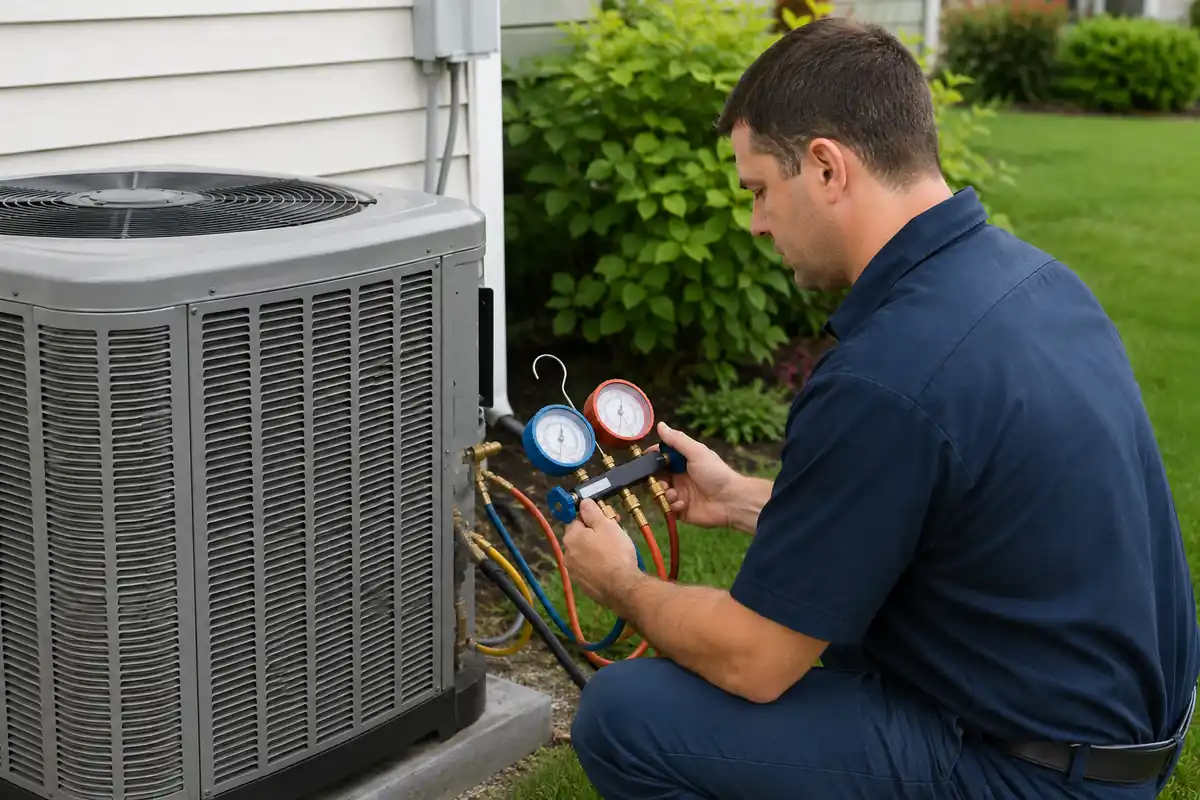
If you run an HVAC service business in 2026, the A2L refrigerant transition is no longer a "wait and see" headline — it shows up on every job ticket. As of January 1, 2025, new residential systems can no longer be manufactured with R-410A, and the replacements (R-454B and R-32) are A2L-classified, meaning mildly flammable. That single change ripples across technician training, parts inventory, fleet stocking, the dispatch logic in your hvac scheduling app, customer estimates, and warranty billing. The owners navigating this well stopped treating it as a refrigerant story and started treating it as a workflow problem. This A2L refrigerant transition for HVAC contractors playbook breaks down the operational changes you need to make right now.
Why the A2L Refrigerant Transition for HVAC Contractors Is an Operations Problem
Swapping refrigerants looks like a manufacturer problem on paper. In practice, A2L forces operational change in five places at once:
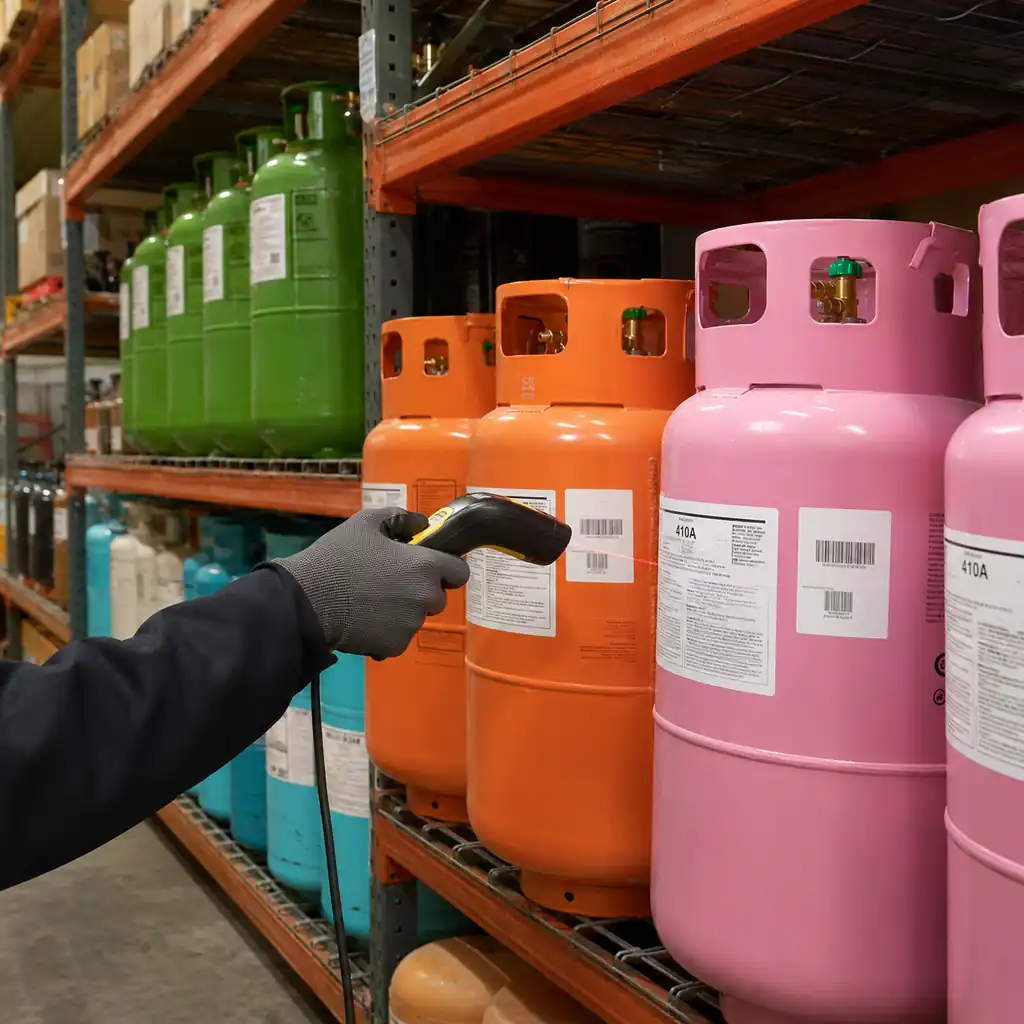
- Refrigerant cylinders and storage — A2L cylinders are physically different and cannot be co-mingled with R-410A on the same shelf.
- Tools and gauges — A2L-rated manifold gauges, recovery machines, leak detectors, and vacuum pumps are now standard.
- Technician certification — EPA Section 608 still applies, but every technician needs documented A2L safety training too.
- Customer pricing — Equipment, refrigerant, and labor have all moved up. Estimates that ran 8-12% lower in 2024 are baseline in 2026.
- Warranty and recovery documentation — Distributors require digital records of refrigerant recovered, refrigerant added, and serial numbers tagged on every system.
The shops losing money during this transition aren't the ones who can't service the equipment — they're the ones who can't track which truck stocks what refrigerant, which tech is certified for which gas, and which customer's system uses what. Those are FSM problems, not refrigerant problems. Solve them inside your dispatch and work order workflow before they cost you a callback.
Step 1 — Update Your Refrigerant Inventory and Truck Stocking
Most HVAC shops still treat refrigerant as a "we’ll grab some at the supply house" line item. That breaks during a transition. With three refrigerants in circulation — R-410A for legacy service, R-454B and R-32 for new installs — you need real A2L refrigerant inventory tracking by truck, by warehouse shelf, by job.
Tactical moves to make this quarter:
- Assign each refrigerant a SKU in your inventory management system. Track cylinder serial numbers, not just gas type.
- Audit every truck. Document the exact A2L cylinders, leak detectors, and spark-proof tools on board. Replace what’s missing before peak season.
- Set par levels per truck (for example, minimum 1 cylinder of R-454B, 1 of R-32, 2 of R-410A for service) and reorder when a tech logs usage on a work order.
- Use barcoded or QR-coded cylinder tracking. When a tech adds 4 oz of R-454B to a system, the platform deducts from that cylinder and updates the system’s lifetime refrigerant history.
- Reconcile monthly. Refrigerant losses above 5% per month are a leak detection issue — usually on your side, not the customer’s.
Inventory shortages during peak season are the single biggest cause of incomplete A2L installs in 2026. A dispatcher who can see, in real time, which truck has the right gas for the next call can route around shortages instead of sending a tech back to the supply house mid-shift. That visibility lives in your FSM software, not in a clipboard.
Step 2 — Track A2L Training and Certifications by Technician
EPA Section 608 has not gone away, but A2L safety training is bolted on top. Several states require A2L-specific endorsements, and most major OEM warranties require documented training before they honor a claim on an A2L install. If you can’t pull a clean training matrix for any tech on demand, you are exposed.
What to track per technician:
- EPA 608 type (I, II, III, or Universal) and expiration if your state requires renewal
- A2L safety training certificate (course name, date, hours, provider)
- OEM-specific A2L installation training (Carrier, Trane, Lennox, etc.)
- Annual refresher dates
- Brazing and torch handling certifications
Store these in your HVAC CRM or technician profile in your FSM platform, not in a binder in the office. When dispatch is building the day, the system should only route A2L install jobs to techs whose A2L training is current and surface a warning when a cert is within 60 days of expiring.
Two underused moves: attach a copy of each training certificate to the technician’s profile, and require a digital sign-off on every A2L work order confirming PPE worn, leak check completed, and ventilation verified. That paper trail shields you in any liability conversation later.
Ready to level up your business?
Try Bella FSM free and transform the way you work.
Step 3 — Adjust Dispatch and Scheduling for A2L Realities
Dispatching an A2L job is not the same as dispatching a legacy R-410A repair. Two operational rules now apply:
- Tech-to-job matching has to be refrigerant-aware. If the system on file is R-454B, the assigned tech must hold current A2L training and the truck must be carrying A2L-rated tools. Send the wrong tech and you burn a slot.
- Estimated time on site has gone up. A2L safety procedures — leak check before opening, ventilation, documented recovery — add 15-30 minutes per call compared to the equivalent R-410A job. Your scheduling logic needs to reflect that or you’ll consistently run late.
Inside your HVAC scheduling software, build the following:
- A custom field on every system record for refrigerant type (R-410A, R-454B, R-32, R-22 legacy)
- A skill tag on every technician profile flagging A2L-certified status, with an expiration date
- A dispatch rule that filters available techs by refrigerant compatibility when assigning service calls
- A buffer on A2L install jobs — add 30 minutes versus the legacy install template
- A reminder to dispatchers that A2L cylinders cannot be transported in passenger compartments or stored overnight in unventilated trucks
Done right, this is invisible to the homeowner — they get the right tech, on time, the first time. Done wrong, you book a non-certified tech, the system flags it on arrival, and the appointment has to be rescheduled. Use your dispatch software to enforce the rules automatically rather than relying on a dispatcher’s memory.

Step 4 — Communicate Pricing Changes to Customers Without Burning Trust
Equipment and refrigerant costs have moved up 8-12% since the transition started, and labor on A2L jobs is meaningfully longer. If the estimates and invoices coming out of your hvac invoicing software don’t explain why, you’ll get push-back on every quote.
The contractors winning this conversation are doing four things:
- Pre-quote education. When a customer requests an estimate, the email your HVAC CRM software sends auto-attaches a one-pager explaining the refrigerant transition. Use a templated message inside your HVAC CRM so it goes out every time.
- Line-item transparency. Don’t bury the refrigerant inside a lump sum. Show the customer the refrigerant type, charge size, and price. Trust scales with detail.
- System tagging at completion. Leave a labeled tag on every A2L install with refrigerant type, charge weight, and your phone number. The next tech will thank you.
- Recurring-revenue framing. A2L refrigerant is more expensive to add later, which makes annual tune-ups and leak checks an easier sell. Bundle them into a maintenance agreement.
Your HVAC invoicing workflow should auto-populate refrigerant type and quantity from the work order — no rekeying, no rounding errors, no disputed line items.
Step 5 — Document Every A2L Job for Warranty, Recovery, and Audits
The single most expensive mistake on an A2L install in 2026 is failing to document it. Distributors are denying warranty claims when paperwork is incomplete, and the EPA still tracks refrigerant recovery against your shop’s record.
A clean digital trail per A2L job should include the system serial number, install date, refrigerant type, total charge weight, a photo of the equipment nameplate, a photo of the leak-check gauge reading, the recovery log (quantity reclaimed and destination cylinder), the technician’s signed sign-off, and a customer sign-off confirming the system was demonstrated.
Capture this on the work order software so it is permanently attached to the customer record. Two payoffs: when a warranty claim opens 18 months from now, your paperwork is one click away, and when the EPA or a state regulator asks for a recovery record, you produce it in 30 seconds. Build a required "A2L Install" or "A2L Service" form inside your platform — the 90 seconds it takes a tech to complete is cheaper than one denied warranty claim.
Ready to take your business further?
Start using Bella FSM free and work smarter.
How HVAC Service Software Ties the A2L Transition Together
Each of the steps above looks small in isolation. Stacked, they exceed what a paper-and-clipboard shop can manage during a transition this fast. The HVAC companies executing well in 2026 share one trait: they run their refrigerant tracking, training records, dispatch rules, invoicing, and warranty documentation through a single piece of HVAC service software, not five disconnected tools.
When a tech logs A2L use on a job, that one entry should do five things:
- Deduct from cylinder inventory
- Append to the system’s lifetime refrigerant history
- Trigger an invoice line item
- Lock the work order until safety sign-off is recorded
- Flag low-stock reorders for the dispatcher
That’s a workflow problem — and FSM software solves workflow problems. If your tooling cannot do all five from a single entry, you’ll keep paying for the gap in callbacks and lost warranty money. For broader context driving these changes, see our HVAC industry trends overview.
Frequently Asked Questions
Bring the A2L Transition Under One Workflow
The A2L refrigerant transition is not going to slow down for any HVAC shop. It changes inventory, dispatch, training records, customer communication, and warranty documentation at the same time. Owners who treat it as a single workflow problem inside their service software come out ahead; owners who bolt it on with sticky notes lose margin every month.
If your current tooling cannot track refrigerant by cylinder, route by technician certification, and lock a work order until the A2L safety form is signed, it is time to upgrade the stack. See how Bella FSM’s HVAC software brings inventory, dispatch, scheduling, and invoicing into one workflow built for HVAC contractors.
Ready to grow your business?
Try Bella FSM free and simplify your work.