
Grow Your Business
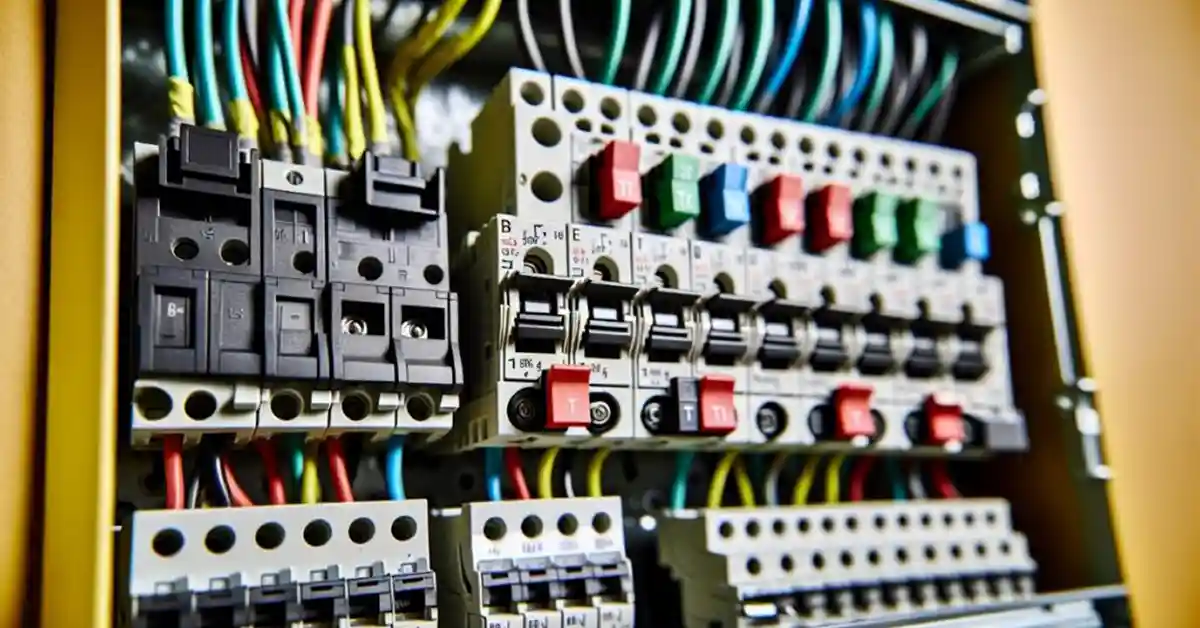
Are you interested in a career as an electrician? It’s a field that offers stability, demand, and often great pay. But to be successful, you need more than just a knack for fixing things; you need a proper license to work legally and safely. This article will take you step by step through the licensing process so you can be on your way to a fulfilling career as a licensed electrician.
Table of Contents
- Understanding the Electrician Licensing Process
- Types of Electrician Licenses
- Six Steps to Obtaining your Electrician License
- State-by-State Licensing Requirements
- Tips for Passing the Electrician Licensing Exam
- Specializing as an Electrician
- Understanding the Costs Involved
- Why Becoming a Licensed Electrician is Worth It
- Conclusion
Understanding the Electrician Licensing Process
What is an Electrician License?
An electrician license is an official certification issued by a state or local authority that confirms an individual is trained and qualified to perform electrical work. Licensing ensures electricians are knowledgeable about safety, building codes, and technical requirements. According to the U.S. Bureau of Labor Statistics (BLS), electricians earn a median salary of $60,040 per year, with projected job growth of 9% from 2020 to 2030. Visit our article on electrician salaries for more information.
Why is Licensing Important?
Licensing is crucial because electrical work involves potentially hazardous tasks that can pose serious risks to both the electrician and the public. Licensed electricians are trained in the safest, most effective methods to handle electrical installations and repairs. For clients, hiring a licensed electrician ensures that they are working with a qualified professional.
Researching State Requirements
Every state has its own set of rules for electrician licensing. Requirements can vary significantly depending on where you live. Some states require a certain amount of classroom education, while others may require extensive apprenticeship hours. Visit your state’s licensing board or Department of Labor website to learn the exact steps required.
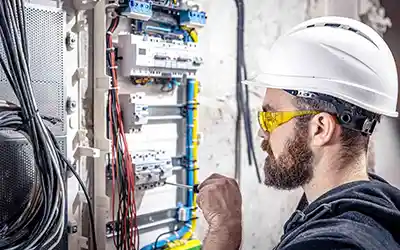
Types of Electrician Licenses
There are multiple levels of electrician licenses, each representing a different level of expertise and responsibility:
- Apprentice Electrician - Entry-level position where you work under supervision, learning the basics of electrical work.
- Journeyman Electrician - Allows you to work independently after completing an apprenticeship and passing an exam.
- Master Electrician - The highest level, allowing oversight of projects and management of teams. Requires additional experience and a challenging exam.
Some states offer specialty licenses for areas such as residential, commercial, or industrial work.
Six Steps to Obtaining your Electrician License
- Complete Required Education
- A high school diploma or GED is typically required.
- Recommended courses: mathematics, physics, and shop to build foundational skills.
- Many community colleges and trade schools offer pre-apprenticeship training.
- Enroll in an Apprenticeship Program
- Typically lasts 4–5 years, combining classroom instruction with hands-on experience.
- Offered by local unions, trade associations, and private companies.
- Key skills learned include blueprint reading, electrical code compliance, and installation techniques.
- Gain Required Experience
- On-the-job training helps solidify your skills and knowledge.
- Apprentices must complete between 4,000 and 8,000 hours of supervised work.
- Learn how to use tools like electrician software
- Pass the Licensing Exam
- Exams cover the National Electrical Code (NEC), local building codes, and practical applications.
- Use resources such as Mike Holt's Electrical Exam Prep for study guides and practice tests.
- Apply for a License
- Submit proof of completed apprenticeship, exam results, and identification.
- Some states require a background check and an application fee.
- Continuing Education and License Maintenance
- Licenses require renewal every 1–2 years, often with continuing education.
- Additional certifications (e.g., OSHA safety certifications, solar energy) can enhance job prospects.
Getting Pre-Apprenticeship Training
Some aspiring electricians benefit from a pre-apprenticeship program, which provides initial training and insight into what the profession entails. Programs like these cover electrical theory, basic wiring, and other introductory skills, making it easier to transition into an apprenticeship.
Many community colleges, trade schools, and industry organizations offer pre-apprenticeship programs, providing students with a competitive edge.
State-by-State Licensing Requirements
| State | Licensing Authority | Apprentice Requirements | Journeyman Requirements | Master Requirements |
|---|---|---|---|---|
| Alabama | Alabama Electrical Contractors Board | Not required | 8,000 hours of experience; pass exam | 12,000 hours of experience; pass exam |
| Alaska | Alaska Department of Labor and Workforce Development | Required | 8,000 hours of experience; pass exam | 12,000 hours of experience; pass exam |
| Arizona | Arizona Registrar of Contractors | Not required | No state electrician license - local requirements may apply | No state electrician license - local requirements may apply |
| Arkansas | Arkansas Department of Labor and Licensing | Not required | 8,000 hours of experience; pass exam | 12,000 hours of experience; pass exam |
| California | California Department of Industrial Relations | Required | 8,000 hours of experience; pass exam | 12,000 hours of experience; pass exam |
| Colorado | Colorado State Electrical Board | Required | 8,000 hours of experience; pass exam | 12,000 hours of experience; pass exam |
| Connecticut | Connecticut Department of Consumer Protection | Not required | 8,000 hours of experience; pass exam | 12,000 hours of experience; pass exam |
| Delaware | Delaware Board of Electrical Examiners | Not required | 8,000 hours of experience; pass exam | 12,000 hours of experience; pass exam |
| Florida | Florida Department of Business and Professional Regulation | Not required | No state electrician license - local requirements may apply | No state electrician license - local requirements may apply |
| Georgia | Georgia State Construction Industry Licensing Board | Not required | No state electrician license - local requirements may apply | No state electrician license - local requirements may apply |
| Hawaii | Hawaii Department of Commerce and Consumer Affairs | Not required | 10,000 hours of experience; pass exam | 15,000 hours of experience; pass exam |
| Idaho | Idaho Division of Building Safety | Required | 8,000 hours of experience; pass exam | 12,000 hours of experience; pass exam |
| Illinois | Local Municipalities | Not required | No state electrician license - local requirements may apply | No state electrician license - local requirements may apply |
| Indiana | Local Municipalities | Not required | No state electrician license - local requirements may apply | No state electrician license - local requirements may apply |
| Iowa | Iowa Electrical Examining Board | Required | 8,000 hours of experience; pass exam | 12,000 hours of experience; pass exam |
| Kansas | Local Municipalities | Not required | No state electrician license - local requirements may apply | No state electrician license - local requirements may apply |
| Kentucky | Kentucky Department of Housing, Buildings and Construction | Not required | 8,000 hours of experience; pass exam | 12,000 hours of experience; pass exam |
| Louisiana | Louisiana State Licensing Board for Contractors | Not required | No state electrician license - local requirements may apply | No state electrician license - local requirements may apply |
| Maine | Maine Electricians' Examining Board | Not required | 8,000 hours of experience; pass exam | 12,000 hours of experience; pass exam |
| Maryland | Maryland Board of Master Electricians | Not required | No state license - local requirements may apply | 7 years of experience; pass exam |
| Massachusetts | Massachusetts Board of State Examiners of Electricians | Not required | 8,000 hours of experience; 600 hours of education; pass exam | 12,000 hours of experience; pass exam |
| Michigan | Michigan Department of Licensing and Regulatory Affairs | Not required | 8,000 hours of experience; pass exam | 12,000 hours of experience; pass exam |
| Minnesota | Minnesota Department of Labor and Industry | Not required | 7,000 hours of experience; pass exam | 12,000 hours of experience; pass exam |
| Mississippi | Mississippi State Board of Contractors | Not required | No state license - local requirements may apply | No state license - local requirements may apply |
| Missouri | Local Municipalities | Not required | No state license - local requirements may apply | No state license - local requirements may apply |
| Montana | Montana State Electrical Board | Required | 8,000 hours of experience - pass exam | 12,000 hours of experience - pass exam |
| Nebraska | Nebraska State Electrical Division | Required | 8,000 hours of experience - pass exam | 12,000 hours of experience - pass exam |
| Nevada | Nevada State Contractors Board | Not required | No state license - local requirements may apply | No state license - local requirements may apply |
| New Hampshire | New Hampshire Electricians' Board | Not required | 8,000 hours of experience - pass exam | 12,000 hours of experience - pass exam |
| New Jersey | New Jersey Board of Examiners of Electrical Contractors | Not required | No state license - local requirements may apply | 5 years of experience - pass exam |
| New Mexico | New Mexico Electrical Bureau | Not required | 8,000 hours of experience - pass exam | 12,000 hours of experience - pass exam |
| New York | Local Municipalities | Not required | No state license - local requirements may apply | No state license - local requirements may apply |
| North Carolina | North Carolina State Board of Examiners of Electrical Contractors | Not required | 4,000 hours of experience - pass exam | 5 years of experience - pass exam |
| North Dakota | North Dakota State Electrical Board | Registration required | 8,000 hours of experience - pass exam | 2,000 additional hours - pass master exam |
| Ohio | Ohio Construction Industry Licensing Board | No state requirements - local municipalities regulate | Varies by municipality | State-level contractor license available - requires 5 years of experience; exam |
| Oklahoma | Oklahoma Construction Industries Board | Registration required | 8,000 hours of experience - pass exam | 2 years as journeyman - pass master exam |
| Oregon | Oregon Building Codes Division | Registration through state-approved apprenticeship | 8,000 hours of experience - pass exam | Supervising electrician license (no separate master license) |
| Pennsylvania | Local municipalities | Varies by municipality | Varies by municipality | Varies by municipality |
| Rhode Island | Rhode Island Department of Labor and Training | Registration required; apprenticeship | 8,000 hours of experience; pass exam | 2 years as journeyman; pass master exam |
| South Carolina | South Carolina Department of Labor, Licensing and Regulation | No state requirements; local municipalities regulate | Varies by municipality | State-level contractor license available; exam required |
| South Dakota | South Dakota Electrical Commission | Registration required | 8,000 hours of experience; pass exam | 2 years as journeyman; pass master exam |
| Tennessee | Tennessee Department of Commerce and Insurance | No state requirements; local municipalities regulate | Varies by municipality | State-level contractor license available; requires experience and exam |
| Texas | Texas Department of Licensing and Regulation | Registration required | 8,000 hours of experience; pass exam | 2 years as journeyman; pass master exam |
| Utah | Utah Division of Occupational and Professional Licensing | Registration required; apprenticeship | 8,000 hours of experience; pass exam | 4,000 additional hours or bachelor’s degree; pass master exam |
| Vermont | Vermont Office of Professional Regulation | Registration required; apprenticeship | 8,000 hours of experience; pass exam | 2 years as journeyman; pass master exam |
| Virginia | Virginia Department of Professional and Occupational Regulation | Apprenticeship or on-the-job training required | 8,000 hours of experience; pass exam | 1 year as journeyman; pass master exam |
| Washington | Washington State Department of Labor and Industries | Registration through apprenticeship | 8,000 hours of experience; pass exam | 4 years as journeyman or 12,000 hours of experience; pass exam |
| West Virginia | West Virginia State Fire Marshal | Registration through state-approved apprenticeship | 8,000 hours of experience; pass exam | 2 years as journeyman; pass master exam |
| Wisconsin | Wisconsin Department of Safety and Professional Services | Registration through apprenticeship | 8,000 hours of experience; pass exam | 1 year as journeyman; pass master exam |
| Wyoming | Wyoming Department of Fire Prevention and Electrical Safety | Registration required | 8,000 hours of experience; pass exam | 2 years as journeyman; pass master exam |
Tips for Passing the Electrician Licensing Exam
The licensing exam is challenging and requires preparation. Here are some tips:
- Study the National Electrical Code (NEC): Most exam questions are based on NEC regulations.
- Practice Problem-Solving: Work on circuit layouts and troubleshooting scenarios.
- Use Practice Exams: Simulate real exam conditions to build confidence.
- Review Local Codes: Familiarize yourself with state and municipal electrical codes.
Specializing as an Electrician
Electricians can pursue specializations to enhance their skills and job prospects. Common specialties include:
- Residential Electrician - Works in homes and apartment buildings.
- Commercial Electrician - Handles electrical systems in commercial properties.
- Industrial Electrician - Works in manufacturing facilities with complex electrical systems.
Each specialization may have separate licensing requirements and additional training depending on the state. Also, each may require the best electrician tools for that specific industry.
Understanding the Costs Involved
The path to becoming a licensed electrician involves various expenses:
- Tuition: $500 - $1,500 for coursework.
- Apprenticeship Fees: Paid programs often offset costs.
- Exam Fees: Typically range from $75 - $200.
- License Renewal: $50 - $150 annually.
Many apprenticeships are paid positions, helping to cover costs. Some organizations also offer financial aid or grants.
Why Becoming a Licensed Electrician is Worth It
Electricians with a valid license benefit from
- Increased job security and higher earnings.
- More opportunities for career growth and specialization.
- The ability to start their own business — typically run on electrical contractor business software — or work independently.
Licensed electricians are in demand across residential, commercial, and industrial sectors.
Conclusion
Becoming an electrician with a license is a journey of education, hands-on experience, and personal growth. Each step, from completing your apprenticeship to passing the licensing exam, brings you closer to a rewarding career. Start today by researching your local requirements, enrolling in an apprenticeship, and building a foundation of knowledge that will set you up for success.
FAQs
-
How long does it take to become a licensed electrician? The process usually takes about 4-5 years, including an apprenticeship and necessary on-the-job training.
-
Can I become an electrician without an apprenticeship? An apprenticeship is typically required as it provides essential hands-on experience.
-
What are the main benefits of an electrician license? A license allows you to work independently, access better job opportunities, and earn higher wages.
-
How often do I need to renew my license? Most states require renewal every 1-2 years, often with proof of continuing education.
-
Do all electricians need a license? In most cases, electricians who work independently need a license, while apprentices can work under supervision without one.