
Grow Your Business
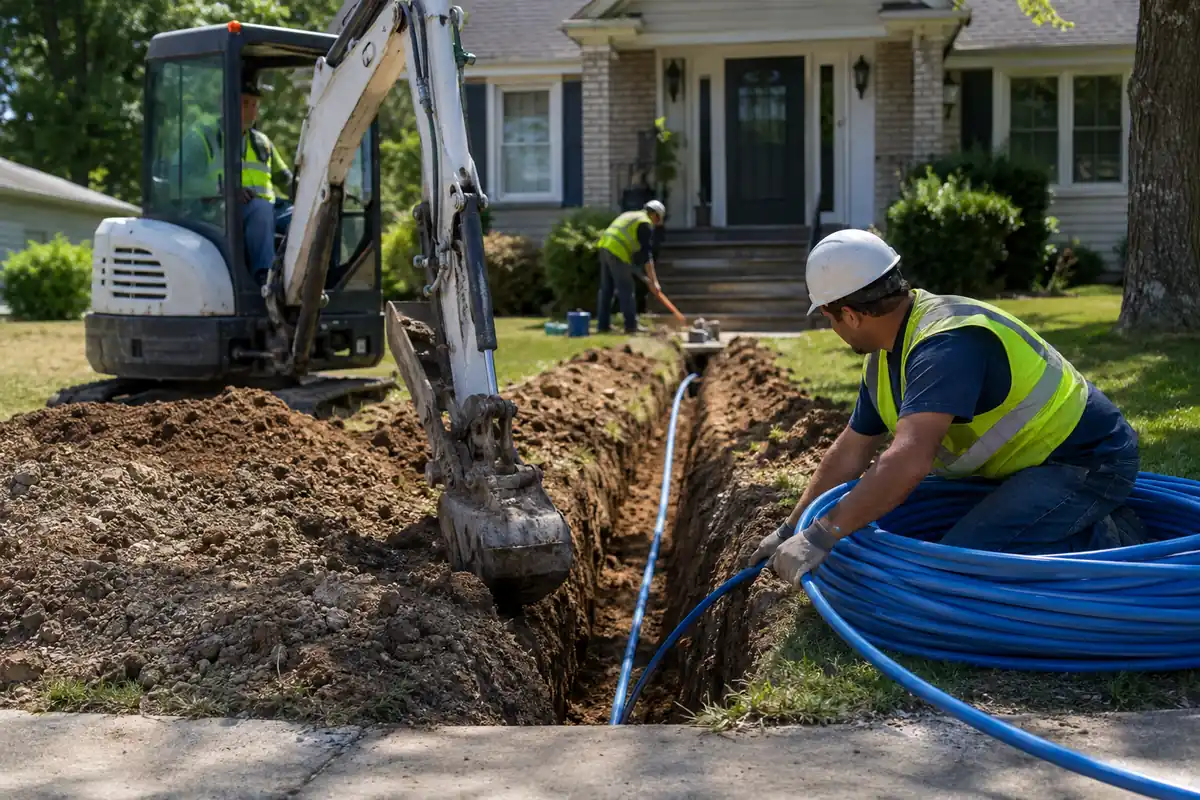
On Monday morning, a plumbing contractor in a mid-sized Midwest city fields three calls before 9 a.m., and two of them mention the same thing: a letter from the water utility about replacing a lead service line. Those letters are now landing in millions of mailboxes, and for a sharp plumber they are the opening of a lead service line replacement business that can run for years. The federal Lead and Copper Rule Improvements require water systems to replace nearly every lead service line in the country, and the clock is ticking toward a November 2027 compliance date.
This is not paperwork. It is the largest sustained source of new excavation and pipe work in a generation. Capturing it means getting your name on bid lists, pricing for volume, and running a workflow that keeps crews moving. Pair the field skills you already have with the right plumbing software and you can scale into this work instead of drowning in it.
Why the 2027 Deadline Changed the Math
The Lead and Copper Rule Improvements, finalized in late 2024, set a firm 10-year clock for replacing every lead service line in the United States. The rule also dropped the lead action level from 15 parts per billion to 10, which pulls more systems into mandatory action. Roughly 9 million lead service lines are still in the ground, and the total replacement cost is estimated at $45 billion to $60 billion. Federal funding covers about $15 billion of that, so the rest flows through utility budgets, ratepayers, and the contractors who do the digging.
Here is what matters for your shop. Water utilities are not staffed to swap thousands of service lines themselves. They subcontract. The municipalities that started early are already awarding multi-year replacement contracts, and the ones that waited are about to scramble. A plumber who is licensed, bonded, and ready to run volume work is exactly who they need to call.
This is steady, repeatable work with a known end date, which is rare in residential plumbing. The contractors who treat it like a program instead of a string of one-off jobs will capture the margin.

How to Win Lead Service Line Replacement Contracts
The work is real, but it does not land in your lap. Winning it takes the same discipline as any commercial bid pursuit, plus a few wrinkles specific to public water work.
Get on the utility and municipal bid lists
Most replacement work is awarded through the local water utility or the public works department. Call them. Ask how they qualify contractors, whether they use a prequalified vendor pool, and when the next round of bids opens. Many systems require:
- A master plumber license held by the firm or a named employee
- Performance and payment bonds, often 100 percent of contract value
- General liability and excavation or underground coverage above standard residential limits
- Proof of past excavation and water-line experience
If you are missing one of these, fix it now. Bonding capacity in particular takes time to build, and it is the most common reason a capable plumber gets shut out of public work.
Partner instead of competing head-to-head
You do not have to be the prime contractor. Many large replacement programs are run by civil or utility-scale firms that need plumbing subs for the customer-side connection, the meter pit, and the in-home tie-in. Position your crew as the residential-service specialist who handles homeowner communication — logged in your plumbing CRM software — and the final connection cleanly. That is work the big excavation outfits would rather hand off.
Price for volume, not for a single call
A one-off service-line repair might bill at $2,500 to $6,000. Full lead service line replacement, including excavation, the new copper or PEX line, restoration, and permitting, commonly runs $4,500 to $12,000 per line depending on length, depth, and surface restoration. When you bid a program, your unit price has to cover crew time, equipment, spoils disposal, and the restoration that homeowners always notice. Underbidding the restoration is the fastest way to turn a profitable contract into a money loser.
Ready to level up your business?
Try Bella FSM free and transform the way you work.
The Workflow Behind a Profitable Lead Service Line Replacement Business
Volume work breaks shops that run on sticky notes and a shared calendar. The difference between a profitable lead service line replacement business and a stressed one is a repeatable workflow that every crew follows the same way on every line.
Inventory and verification
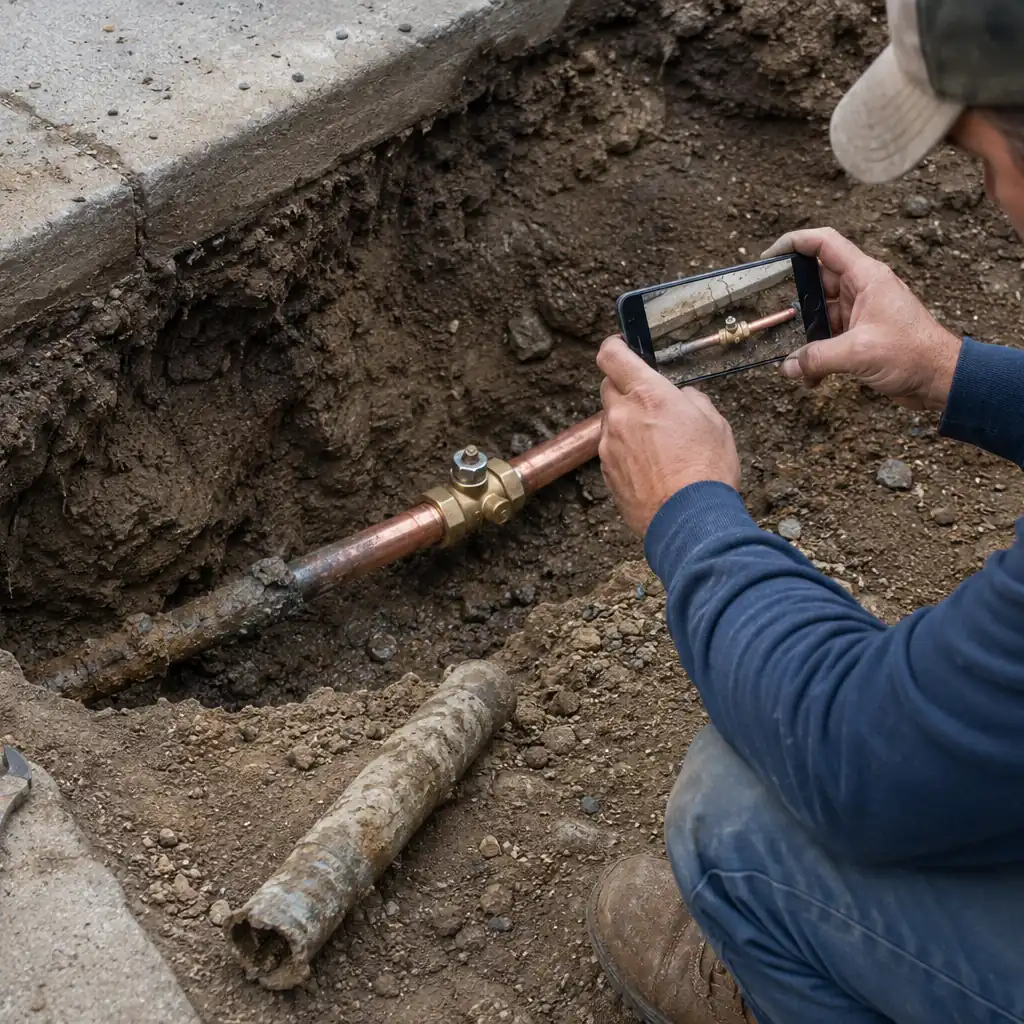
Before a shovel moves, the line has to be located and the material verified. Many utilities still have incomplete inventories, and a "suspected lead" line sometimes turns out to be galvanized or already copper. Potholing at the curb stop and the home confirms the material and saves you from billing disputes later. Log the verification with a photo and a GPS-tagged location on the job record so there is no argument about scope.
Scheduling and dispatch at volume
A replacement program means dozens of addresses, permit windows, utility locates, and homeowner availability all colliding. Trying to track that on a whiteboard instead of in plumbing scheduling software guarantees missed locates and idle crews. Strong scheduling lets you batch jobs by neighborhood, hold slots for permit and locate lead times, and rebook the inevitable weather delays without losing the thread. When a locate clears or a homeowner finally answers, dispatch software puts the nearest qualified crew on the address instead of sending a truck across town.
Documentation and compliance
Public water work lives and dies on documentation. Utilities require before-and-after photos, material confirmation, line length, restoration sign-off, and often a flush-and-test record for each line. Capture all of it in the field on a single digital work order software record so your office is not chasing crews for paperwork at month end. Clean records flowing into your plumbing invoicing software also speed up your draws, because most public contracts will not release payment until the documentation package is complete.
The Numbers to Track in a Lead Service Line Replacement Business
Treat the program like a production line and watch the metrics that actually move profit:
- Lines per crew per day. A trained two-person crew with a mini-excavator can often complete one to two short residential lines per day. Track it. Your bid math depends on it.
- Cost per line. Roll up labor, equipment, materials, spoils disposal, permitting, and restoration. If your true cost per line drifts above your bid unit price, you are losing money on every address.
- Cycle time from locate to restoration. The longer a line sits half-finished, the more it costs in callbacks and homeowner complaints.
- Restoration cost as a percent of the job. Concrete, sod, and driveway repair routinely run 20 to 35 percent of the total. Misjudge it and the contract turns red fast.
- Days to payment. Public draws can run 30 to 60 days. Connecting your billing to QuickBooks integration keeps cash flow visible so a slow utility draw does not surprise your payroll.
Ready to take your business further?
Start using Bella FSM free and work smarter.
Mistakes That Sink New Replacement Crews
The plumbers who struggle with this work usually make the same handful of errors:
- Underbidding restoration. The pipe is the easy part. The driveway, the lawn, and the sidewalk are where margin disappears.
- Weak documentation. No photos, no material confirmation, no test record means delayed payment and failed inspections.
- Poor homeowner communication. A confused homeowner with a torn-up yard leaves a one-star review. A homeowner who got a text the night before and a clean restoration becomes a referral.
- Ignoring permits and locates. Digging before the locate clears is dangerous, illegal, and a fast way to lose your spot on the bid list.
- Treating it as one-off work. Without a repeatable system, crews reinvent the process at every address and the program never scales. The shops that win build the system once, then run it hundreds of times as they grow their plumbing business.
Frequently Asked Questions
Turn the Mandate Into Recurring Revenue
The lead pipe mandate is the rare moment when a regulatory deadline hands trade businesses years of steady, fundable work. A plumber who gets qualified, prices the restoration honestly, and runs a documented, repeatable process will build a lead service line replacement business that carries the shop well past 2027. The crews that win will be the ones with a system, not just a backhoe.
If you want a single platform to schedule the work, dispatch the crews, document every line, and get paid faster, explore how Bella FSM’s plumbing business software keeps replacement programs organized from the first locate to the final draw.
Ready to grow your business?
Try Bella FSM free and simplify your work.