
Grow Your Business
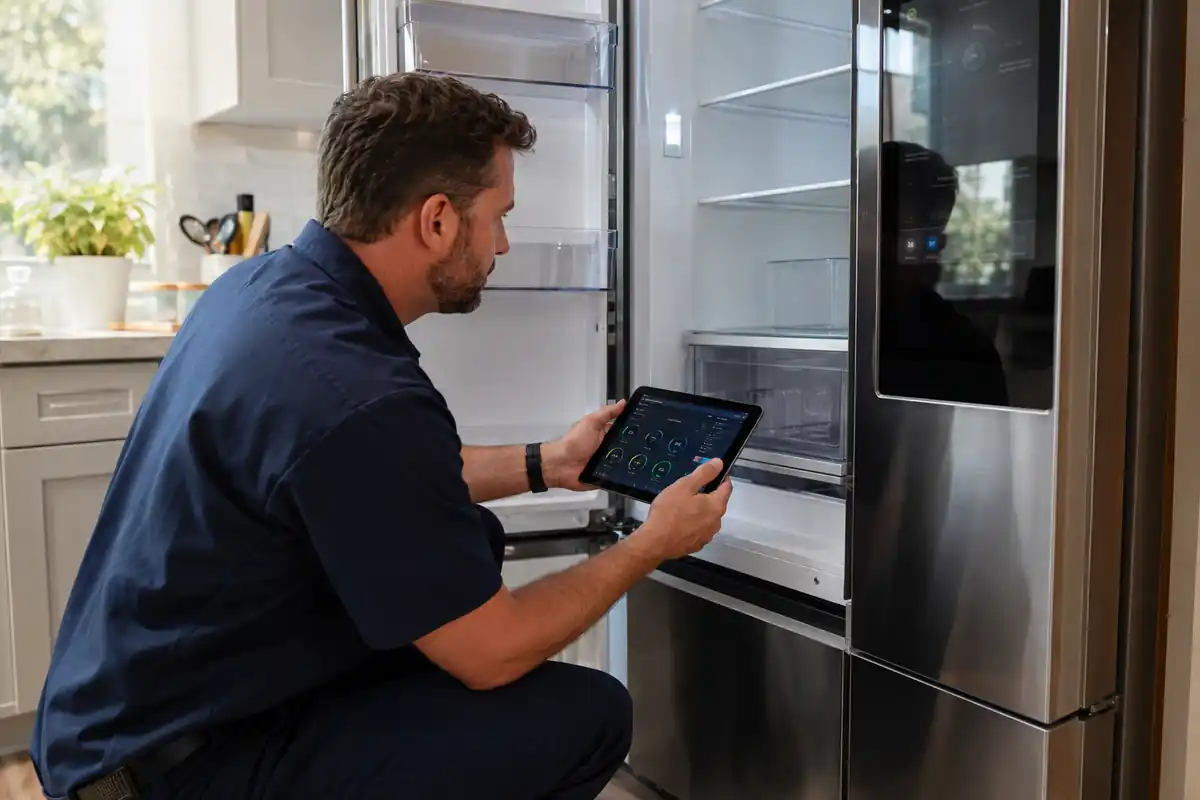
A technician opens a ten-year-old dishwasher and knows exactly where to look. Put the same tech in front of a Wi-Fi connected 2024 model and the error code is not on the door panel. It lives in an app the homeowner never finished setting up. Smart appliance repair is becoming its own discipline, and it rewards shops that treat diagnostics, training, and pricing as a system. More than a quarter of large appliances sold in the US now ship with Wi-Fi or app connectivity, and connected models fail more often than the simpler machines they replaced. That is a headache for homeowners and a real opportunity for repair businesses. The shops pairing connected-appliance skills with modern appliance repair software are booking the jobs their competitors turn away. Here is how to become one of them.
Why Smart Appliance Repair Is Different Work
A connected appliance is a normal appliance with a computer bolted on. Everything that could fail before can still fail. On top of that, you now have control boards, Wi-Fi modules, sensors that drift out of calibration, and firmware that updates itself overnight. J.D. Power reliability data shows owners who actively use Wi-Fi features report roughly 92 problems per 100 appliances, far above the rate for non-connected models. The machine did not get more reliable; it got more complicated.
Three failure patterns show up again and again on connected units:
- Phantom electronic faults. The motor and pump are fine, but a corrupted over-the-air update leaves the unit stuck in a boot loop or throwing codes that have no mechanical cause.
- Connectivity complaints. The appliance works, but it dropped off the home network. Customers still call a repair company because to them, the product is broken.
- Sensor and board cascades. One drifting sensor triggers a chain of error codes that point everywhere except the true root cause.
This complexity is exactly why the work pays. Handy homeowners who would happily swap a belt will not touch a firmware partition. Shops that can resolve electronic and connectivity faults face less DIY competition and less price pressure. With US appliance repair now a $7.4 billion market spread across roughly 37,500 businesses, the connected niche is one of the few places a small shop can clearly stand out.
The Connected Appliance Diagnostic Workflow
The biggest efficiency gain in smart appliance repair happens before the van leaves the lot. Most major platforms, including LG ThinQ, Samsung SmartThings, and GE Appliances SmartHQ, give authorized technicians access to service portals with weeks of historical telemetry. On many models you can pull up to 90 days of cycle history, error events, and sensor readings without removing a single screw.
A repeatable pre-visit workflow looks like this:
- Capture connectivity details at booking. When the call comes in, ask for the model number, whether the appliance is connected to Wi-Fi, and which app the customer uses. Log it on the work order and the customer record in your appliance repair CRM software so the assigned tech sees it before arrival.
- Pull telemetry before dispatch. If the unit is enrolled in an OEM portal, review error history the day before the visit. You will often know whether the fix is a $40 sensor or a $280 board while the job is still on the calendar.
- Stage parts against the diagnosis. Load the van with the two or three most likely parts for that fault signature instead of guessing.
- Confirm the fix in the data. After the repair, run a test cycle and verify clean telemetry before you leave. It is the difference between closed and called-back.
Slotting that workflow into your day requires scheduling discipline. Pre-visit triage only works when jobs are booked with accurate time blocks and technician assignments, which is where appliance repair scheduling software earns its keep. Attach the telemetry notes to a digital work order and your first-visit completion rate climbs without adding a single tech.
Training Techs for Connected Appliances
You do not need to hire software engineers. You need appliance techs who are comfortable with apps, portals, and a defined escalation path. Most of the training is free or cheap; the cost is the discipline to schedule it.
Start with manufacturer programs. GE Appliances offers no-cost smart appliance courses covering diagnostics, Wi-Fi setup, and model-specific repair. LG and Samsung run similar tracks through their service networks. Getting even one tech authorized on the two or three brands most common in your service area unlocks OEM parts access, service documentation, and portal credentials, and expanding right-to-repair laws keep pushing manufacturers to open those resources to independent shops.
Structure it simply: pick your two highest-volume connected brands, assign one tech per brand as the specialist, and block two hours a week for coursework until certification is done. Within a quarter you have in-house escalation instead of turning jobs away. If you are hiring, a candidate who can navigate a smartphone confidently is trainable; the appliance fundamentals are the harder part to teach, and they still come first.
Ready to level up your business?
Try Bella FSM free and transform the way you work.
Pricing Smart Appliance Repair Calls
Connected work deserves connected pricing. The skills are scarcer, the diagnostic value is higher, and the parts are more expensive. Import tariffs alone pushed many appliance parts costs up 5 to 20 percent, and electronic boards sit at the top of that range.
A pricing structure that holds up:
- Tiered diagnostic fees. If your standard diagnostic is $95, price a smart-appliance diagnostic at $120 to $145. You are billing for portal access, telemetry review, and firmware checks that a standard call does not include.
- Credit the fee toward the repair. Customers accept the premium far more readily when it disappears into the completed job.
- Quote boards with a decision point. When a control board pushes the repair past 50 percent of replacement cost, present both options in writing. You keep the trust and often keep the install job too.
- Bill firmware and reconnection work. A 30-minute reconnect visit is real labor. Give it a flat price, for example $75 to $95, instead of eating it as a favor.
Then invoice on the spot. A tech who closes the ticket and collects payment at the kitchen counter beats one who mails an invoice a week later, and appliance repair invoicing software makes same-visit payment the default rather than the exception.
Vans, Tools, and Parts for Connected Work
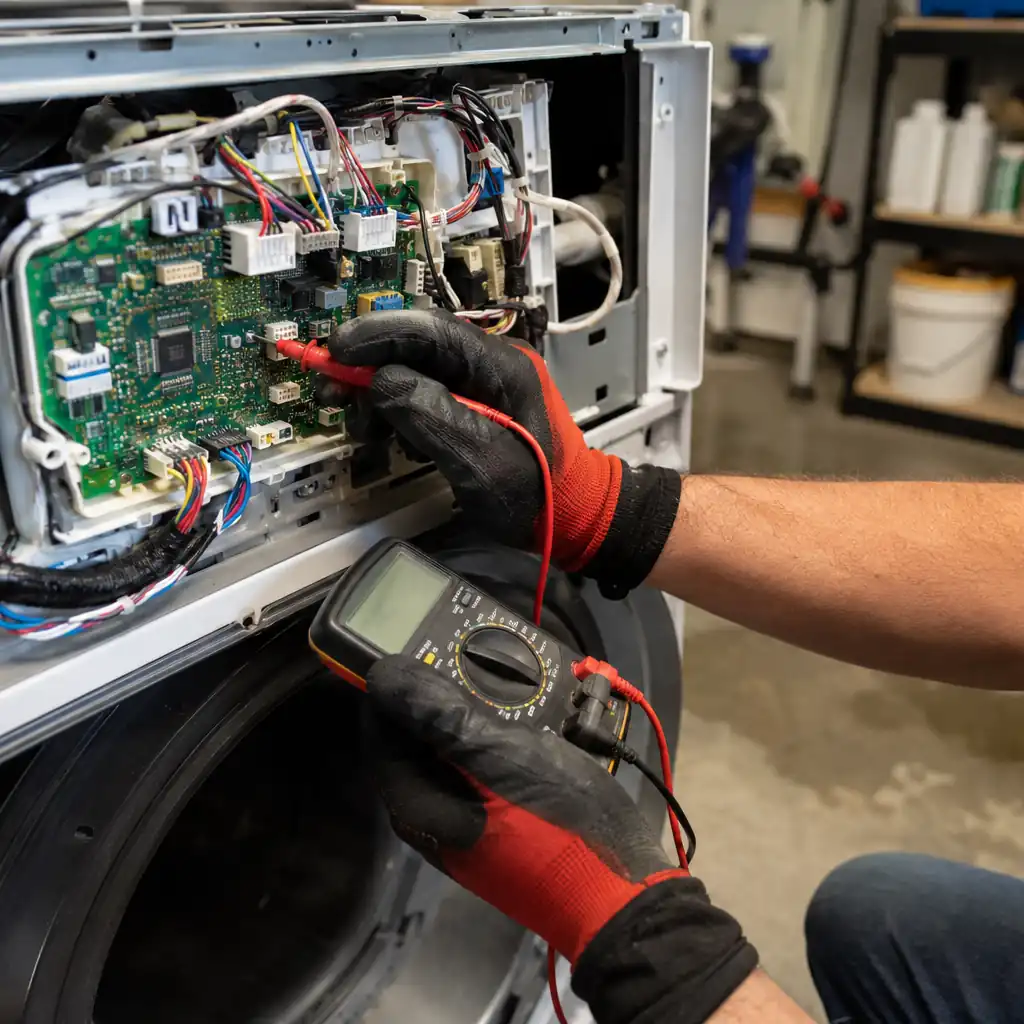
The physical side of smart appliance repair adds surprisingly little to your load-out. Beyond your existing kit, the additions are a service smartphone or tablet with OEM apps installed, brand-specific service dongles where required, a USB-C and micro-USB cable set, and a pocket Wi-Fi analyzer for diagnosing weak-signal complaints. Your core hand tools and meters do not change; if that baseline needs a refresh, our guide to essential appliance repair tools covers it in full.
Parts strategy matters more. Boards and Wi-Fi modules are expensive to stock and slow to arrive, which makes van inventory decisions higher-stakes than they were five years ago. Rather than repeat that playbook here, see our breakdown of appliance repair parts inventory for how to stock service vans so electronic faults get fixed on the first visit.
Ready to take your business further?
Start using Bella FSM free and work smarter.
Turning Connectivity Into Recurring Revenue
The same telemetry that speeds up diagnosis can feed a maintenance program. Connected appliances announce their own decline: rising fill times, drifting temperatures, repeated minor faults. A shop that watches those signals can sell prevention instead of waiting for failure.
Offer enrolled customers an annual connected-appliance checkup at $99 to $149 that bundles a physical inspection with a telemetry review, firmware updates, and reconnection of any dropped devices. Homeowners with $1,200 smart refrigerators say yes to that math, especially when replacement prices keep climbing and more owners choose repair over replacement. Each enrolled home — tracked in your appliance repair crm — becomes predictable winter and summer work you can drop into your appliance repair scheduling app during slow weeks, and every checkup surfaces legitimate repair jobs a reactive shop never sees.
Frequently Asked Questions
Make Smart Appliance Repair Your Edge
Connected appliances are not a passing feature war. They are the default product line at every major manufacturer, and every unit sold today is a service call somewhere down the road. The shops that win that work will be the ones that built the diagnostic workflow, trained the techs, and priced the skill honestly. Smart appliance repair is a systems game, and the back office is part of the system. Bella FSM’s appliance repair business software gives you the scheduling, work orders, and invoicing to run connected-era service calls profitably.
Ready to grow your business?
Try Bella FSM free and simplify your work.