
Grow Your Business

Most handyman business owners discover the same painful math by their second year: a single technician can only generate so much revenue when the schedule is built around one job at a time. Two service calls in the morning, a long lunch driving across town, one rushed appointment in the afternoon, and the day ends at four jobs when it could have hit eight. Handyman job stacking is the operational discipline that closes that gap. Done well, it lets a single technician complete six to ten short jobs per day, smooth the cash-flow swings most handyman businesses suffer from, and protect margin on every dispatch. Done badly, it produces angry customers, exhausted techs, and callbacks that wipe out the day's gains.
What Is Handyman Job Stacking?
Job stacking, sometimes called job batching or route sequencing, is the practice of grouping multiple short service calls into a single technician's day so that drive time, prep time, and customer arrival windows compress instead of overlap. A stacked route has the technician finishing one job and arriving at the next within twenty minutes, not an hour. It treats geography, skill mix, parts loadout, and customer windows as a single planning problem rather than five independent ones.
The reason handyman job stacking matters for handyman businesses in particular is the work itself. Unlike HVAC or plumbing, where a single repair can absorb a half-day, handyman jobs cluster in the 45-minute-to-2-hour range. Furniture assembly, drywall patches, faucet swaps, light fixture installs, ceiling fan replacements, and door hardware are all short. A handyman who only books one job per half-day is leaving the equivalent of a full daily wage on the table every week.
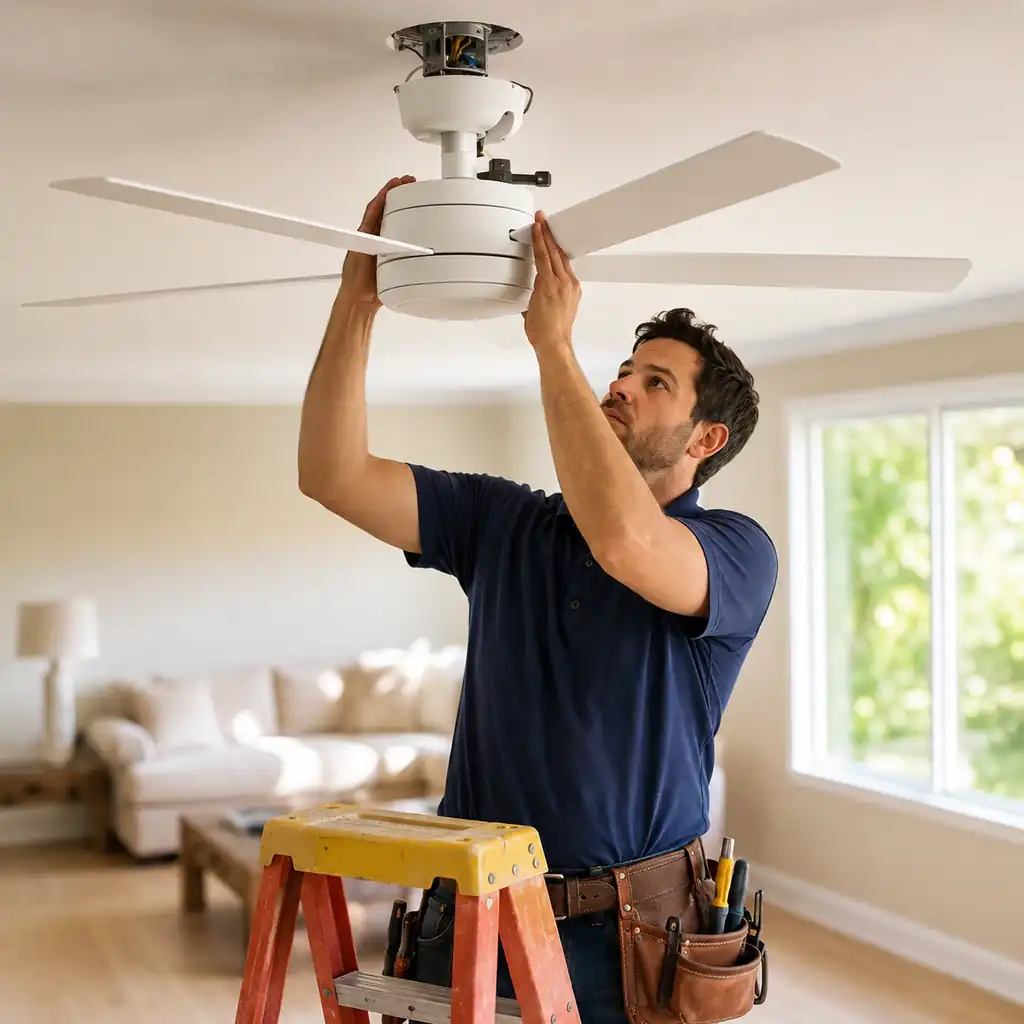
The True Cost of an Unstacked Day
The financial damage of running unstacked routes shows up in three places. First, billable utilization collapses: a technician on the clock for nine hours might only invoice for four. Second, dispatch costs rise because every additional job booked on a slow day requires a separate truck roll instead of being layered onto an existing route. Third, customer-acquisition cost effectively doubles because you paid the same lead-gen dollar to book that fourth job as you did to book the first.
Run the math on a 2026 handyman shop with three technicians billed at $95/hour. Lifting average daily jobs from four to seven per tech adds roughly $855 of billed labor per day, or about $213,000 of additional yearly revenue across the team, without hiring a single new person or running a single new ad. Stacking is the cheapest growth lever a handyman business has.
Six Rules for Stacking Handyman Jobs Profitably
The mistake most owners make is to confuse stacking with cramming. A schedule that's full doesn't mean the route is efficient. Use these six rules to build daily routes that actually finish on time.
1. Group by geography first, then chronology
Sort the day's open jobs by ZIP code or neighborhood before you slot in arrival windows. A common pattern: cluster the morning around the east side of the service area, the afternoon around the west side, and never zig-zag back. Even a $200 job is unprofitable when the technician drives 40 minutes to reach it from the prior stop.
2. Build realistic time windows with a 25% pad
Most underperforming handyman schedules pretend every job will finish exactly on the booked duration. They won't. Build in a 25% time pad. If you booked a 60-minute light fixture install, plan as if it'll take 75. Across an eight-stop route the pad absorbs the inevitable surprise wall stud, missing part, or longer-than-expected homeowner conversation without cascading delays into stop seven and eight.
3. Match the technician to the skill mix
Not every handyman on your roster handles every job. If today's stack includes two ceiling-fan installs, a deck-board replacement, and three drywall patches, assign the tech whose skill profile and parts inventory match. Forcing a low-experience tech onto a stack with one complex job creates either a callback or a late finish that blows up the last two stops.
4. Pre-load the van the night before
Stacked routes die at the supply house. If a technician has to detour to the hardware store mid-route, the rest of the day collapses. Build a stop-by-stop parts checklist at end-of-day and load the van before the technician leaves the yard. Tools, fasteners, drywall mud, anchors, common faucet cartridges, everything for the next morning, ready to go.
5. Confirm same-day before dispatch
The single biggest stacked-route killer is a no-show customer. A confirmed appointment that turns into an empty driveway can break a six-stop day. A simple text-message confirmation sent from your handyman scheduling app the evening before, and a phone call by 7:00 a.m. for any unconfirmed slot, protects the entire downstream route. The cost is a few automated messages. The upside is hours of saved technician time.
6. Leave a shock-absorber slot
Reserve the last 90 minutes of the day as a buffer slot. Use it for the inevitable add-on a homeowner requests at stop four (“while you're here, could you also…”), a longer-than-expected job earlier in the day, or a same-day emergency that came in by 11 a.m. Without that buffer, every surprise becomes a callback the next day or an angry text message at 6 p.m.
Ready to level up your business?
Try Bella FSM free and transform the way you work.
The Technology Stack That Makes Job Stacking Work
Stacking by hand on a paper schedule works for the first two technicians; past that, it falls apart. The right tools turn job stacking from a daily battle into a repeatable process. Look for handyman business software that combines four capabilities:
- A visual drag-and-drop dispatch board where you can see all technicians' days at once and rearrange stops in seconds
- Map-based routing that surfaces geographic clusters instead of just chronological order
- Automated customer reminders and same-day confirmations
- A mobile technician app with the day's stops, addresses, customer notes, and parts list
Purpose-built handyman scheduling software handles all four. Spreadsheets and generic calendars do not. The right system also lets office staff respond to add-on requests in real time, slotting them into the day's buffer or moving them to tomorrow's route without phone tag with the technician.

Metrics to Track After You Start Stacking
Once stacking is in place, watch these numbers monthly to confirm the new handyman dispatch workflow is actually paying off:
- Stops per technician per day. Industry-leading handyman shops average six to eight.
- Billable utilization. The percentage of paid technician hours that produced invoiced revenue. Target 75% or higher.
- Average drive time between stops. Stacking should pull this below 20 minutes inside metro service areas.
- Same-day completion rate. The percentage of stacked stops finished by the technician's scheduled end-of-day.
- Callback rate. A rising callback rate often means the stack is too aggressive and quality is slipping.
For shops that haven't yet documented what they charge per job type, build a clean rate card with help from our guide on pricing handyman jobs before tightening the route. You can't measure billable utilization without a reliable rate card.
Ready to take your business further?
Start using Bella FSM free and work smarter.
Mistakes That Kill a Stacked Route
Three patterns sink most early attempts at job stacking. First, stacking too many unknowns. If half the day's stops are “investigate and quote,” the schedule has too little signal to plan around. Pre-qualify with a phone call and a photo before booking, logged against the customer record in your handyman crm. A clean handyman estimate template helps your office team collect the right info up front.
Second, skipping the close-out at each stop. A stacked route assumes the technician finishes the invoice, collects payment, and clears the job in the system before leaving the driveway. Skipping that step pushes admin work to the evening, when the technician is too tired to do it well, and delays cash flow by a week. Pair the route with mobile handyman invoicing so the technician closes out on the spot.
Third, forgetting documentation. On a busy stacked day it's tempting to skip the photos. Don't. Before-and-after photos are how stacked-route shops protect themselves against disputes and upsell the next visit. See how before-and-after photos win more handyman work for the playbook.
Frequently Asked Questions
Stack Your Day, Grow Your Revenue
Handyman job stacking is the lowest-cost growth lever in the business. A shop that lifts average stops per technician from four to seven adds six figures in yearly revenue without spending a dollar on advertising. The mechanics are simple, group by geography, pad your windows, pre-load the van, confirm same-day, and reserve a buffer, but they only stay simple with the right dispatch system underneath. If your team is still planning the day on a whiteboard or a generic calendar, small business field service software from Bella FSM gives you the visual dispatch board, mobile technician app, and customer-confirmation flow that turn stacking from a theory into a habit. Book a demo today and see how Bella FSM’s handyman software helps shops run profitable, stacked routes every day.
Ready to grow your business?
Try Bella FSM free and simplify your work.