
Grow Your Business
Contractor CRM Software for Managing Bids, Clients & Projects
Track every bid, organize every subcontractor, and keep your project history in one place.
Try it free for 14 days — no credit card required
START FREE TRIAL

General contractors juggle dozens of moving pieces on every project. You are coordinating subcontractors, tracking bids across multiple properties, managing client expectations, and keeping project documentation organized. When client details live in spreadsheets, text threads, and sticky notes, things get missed. A missed follow-up on a bid means lost revenue. A forgotten change order means an unpaid invoice.
Bella FSM provides CRM software built specifically for general contractors. It centralizes bid tracking, client records, subcontractor details, and project documentation in one platform that connects directly with contractor scheduling software and contractor invoicing software as part of our complete general contractor software platform.
Why General Contractors Need a Trade-Specific CRM
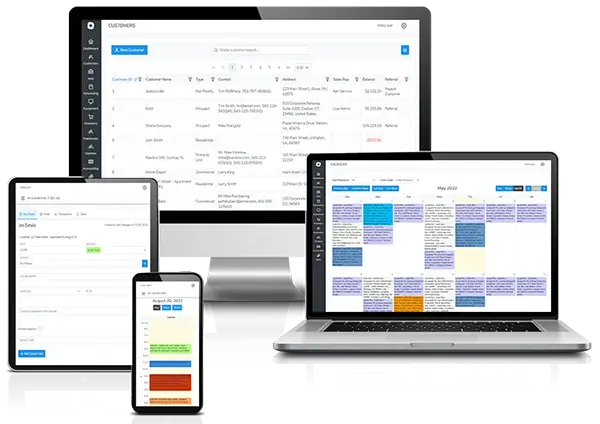
Generic CRM platforms like Salesforce or HubSpot are built for sales teams closing deals through email sequences and phone calls. General contracting does not work that way. A GC's sales pipeline involves site visits, detailed estimates, competitive bids, and projects that span weeks or months. The relationship does not end at the sale. It continues through every phase of construction.
A contractor CRM must handle:
- Bid pipeline tracking from initial inquiry through signed contract
- Multi-property client management for developers and property managers
- Subcontractor contact records with trade certifications and insurance docs
- Project-level document storage including permits, blueprints, and inspection records
- Change order history tied to specific projects and clients
- Communication logs so any team member can pick up where another left off
The average general contractor manages 5-12 active projects simultaneously. Without structured data, details fall through the cracks.
Manage Clients & Properties in One Place

General contractors work with diverse client types. A residential remodel client has different needs than a commercial property manager overseeing multiple buildings. Your CRM should reflect that complexity.
Bella FSM stores detailed client profiles that include:
- Contact information for homeowners, property managers, developers, and architects
- Property addresses and site details for multi-location clients
- Complete project history showing every job completed at each property
- Notes from site visits, phone calls, and walk-throughs
- Invoice and payment records linked to each project
- Document attachments including contracts, permits, and photos
This structure means when a repeat client calls about a new project, your office team instantly sees every past interaction. No digging through email or calling the field crew to ask what was discussed last time. And because billing records are stored alongside project history, your contractor invoicing data is always one click away from the client profile.
Track Bids, Estimates & Win Rates
For general contractors, the bid process is where revenue is won or lost. Most GCs submit 5-10 bids for every project they land. Without a system to track where each bid stands, follow-ups get missed and opportunities disappear.
Bella FSM's contractor CRM lets you:
- Track every bid from initial inquiry through acceptance or rejection
- Set follow-up reminders so no proposal goes cold
- Record bid amounts, scope details, and competitive notes
- Analyze win rates to understand which project types convert best
- Convert won bids directly into active projects with a few clicks
Pro Tip: Improve Your Win Rate
Contractors who follow up within 48 hours of submitting a bid close at nearly double the rate of those who wait a week or more. Use CRM follow-up reminders to stay on top of every open proposal.
Manage Subcontractor & Trade Partner Records

A general contractor's network of subcontractors is one of their most valuable business assets. Electricians, plumbers, framers, painters, roofers, concrete crews — you need reliable partners for every trade, and you need their information accessible when scheduling jobs.
Bella FSM lets you maintain detailed subcontractor profiles:
- Company name, contact info, and trade specialties
- Insurance certificates and expiration dates
- License numbers and certifications
- Performance notes from past projects (quality, timeliness, communication)
- Rate sheets and preferred payment terms
When you are staffing a new project and need an electrician licensed for commercial work, you can filter your subcontractor database instead of scrolling through phone contacts. And because the CRM connects with contractor scheduling, you can check a subcontractor's availability and assign them to a project phase without leaving the screen.
Project-Level Document Storage & History
Every construction project generates a paper trail: permits, blueprints, inspection reports, change orders, lien waivers, certificates of occupancy. Losing any of these can delay a project or create legal exposure.
Bella FSM's CRM organizes documents at the project level:
- Store permits, plans, and inspection records per job site
- Attach photos from each phase of construction
- Track change orders with approval documentation
- Maintain lien waiver records from subcontractors
- Access everything from the office or the job site via mobile
When your project manager is standing on the job site and needs to pull up the latest blueprints, they open the Bella FSM app and access the documents right from the project record. The same documents are visible in the contractor scheduling tool when dispatchers need to reference project details while coordinating trades.
Improve Follow-Ups & Build Repeat Business

Repeat clients are the foundation of a profitable contracting business. Property developers, facility managers, and homeowners who trust your work will call you first for the next project. But only if you stay on their radar.
Bella FSM's CRM helps you build long-term relationships:
- Track when clients last received service and schedule follow-up outreach
- Set reminders for seasonal check-ins with commercial property managers
- Review complete project history before meeting with a returning client
- Maintain organized communication logs so any team member can handle the call
When a client calls back, having their full history at your fingertips shows professionalism and builds confidence. Repeat customers spend significantly more than new customers on average. That is what separates a contractor who gets referrals from one who constantly chases new leads.
How CRM Connects with Scheduling & Invoicing
A CRM that lives in a silo creates double data entry and information gaps. Bella FSM integrates CRM with contractor scheduling and contractor invoicing so data flows through your entire operation:
- Client and project details carry through from the CRM to the job schedule automatically
- Completed project milestones generate invoices with the correct client information pre-filled
- Payment history feeds back into the client profile for a complete financial picture
- Subcontractor schedules connect to project records for full visibility
This integration means your office staff enters information once. It flows through scheduling, dispatch, job completion, invoicing, and payment tracking without re-keying data at each step. If you are ready to organize your operations and build predictable revenue, explore our complete general contractor software platform built for growing contractors.

Built for Multi-Project, Multi-Trade Operations
General contractor CRM must handle complexity that generic tools cannot:
- Multiple active projects across different job sites and clients
- Subcontractor coordination across trades (electrical, plumbing, framing, finish)
- Bid pipeline management with dozens of open proposals at any time
- Document management for permits, inspections, and compliance
- Long-term client relationships that span years and multiple projects
Bella FSM structures CRM around general contracting realities. Instead of forcing your project data into a generic sales pipeline, it gives you the fields, categories, and workflows that match how GCs actually operate. Explore all field service CRM features to see what is included.