
Grow Your Business
The 2026 ServiceTitan State of Roofing report dropped a number that should make every owner uncomfortable: only 16% of roofing contractors consistently follow up on unsold estimates the same day. Translation — 84% of roofers walk a roof, hand over a number, and then leave the close to chance. A solid roofing estimate follow up system is one of the highest-leverage operational changes a small or mid-size roofing company can make this year, and it does not require a new CRM, more sales reps, or a heavier ad budget. It requires a sequence, an owner, and roofing software that won’t drop the ball when crews are slammed and the office is fielding storm calls.
This is a working playbook, not theory. It is built around how roofing crews actually move — early morning loadouts, midday inspections, late afternoon estimates, and a 6 p.m. office that is supposed to keep the pipeline warm. If you tighten this loop, you can lift your roofing estimate close rate by 10 to 25 points without changing a thing about your pricing.
Why Roofing Estimates Go Cold
A roof is rarely an impulse purchase. The average homeowner gets two or three bids, talks to a spouse, checks insurance, and waits a week before pulling the trigger. That window is where deals are lost — not on the roof, in the silence afterward.
Two operational realities make roofing especially vulnerable to slow follow-up:
- Crew-led sales. In a lot of small roofing companies, the person who walks the roof is also the person who writes the estimate, and they are doing it from a truck between two other jobs. By the time they sit down to send the proposal, two days have passed.
- Storm-driven volume. When a derecho or hailstorm hits, estimate volume can 3x in a week. Without a system, the most recent estimates always get the attention and last week’s estimates die quietly.
Industry data on speed to lead is brutal: response within five minutes is roughly 100x more likely to convert than a response after 30 minutes. For a roofing job worth $14,000 to $45,000, that math shows up directly in your annual revenue. Improving same-day roofing estimate response from a coin flip to a guaranteed motion is the single fastest path to better close rates, and it ties directly to the same fundamentals that show up in our broader customer response time guide.
The 5-Touch Same-Day Follow-Up Sequence
A roofing estimate follow up system is not a single phone call. It is a sequence of touches, each one with a job to do. Here is the pattern I recommend for every roofing company doing more than $1M a year:
Touch 1 — On-Site Recap (Hour 0)
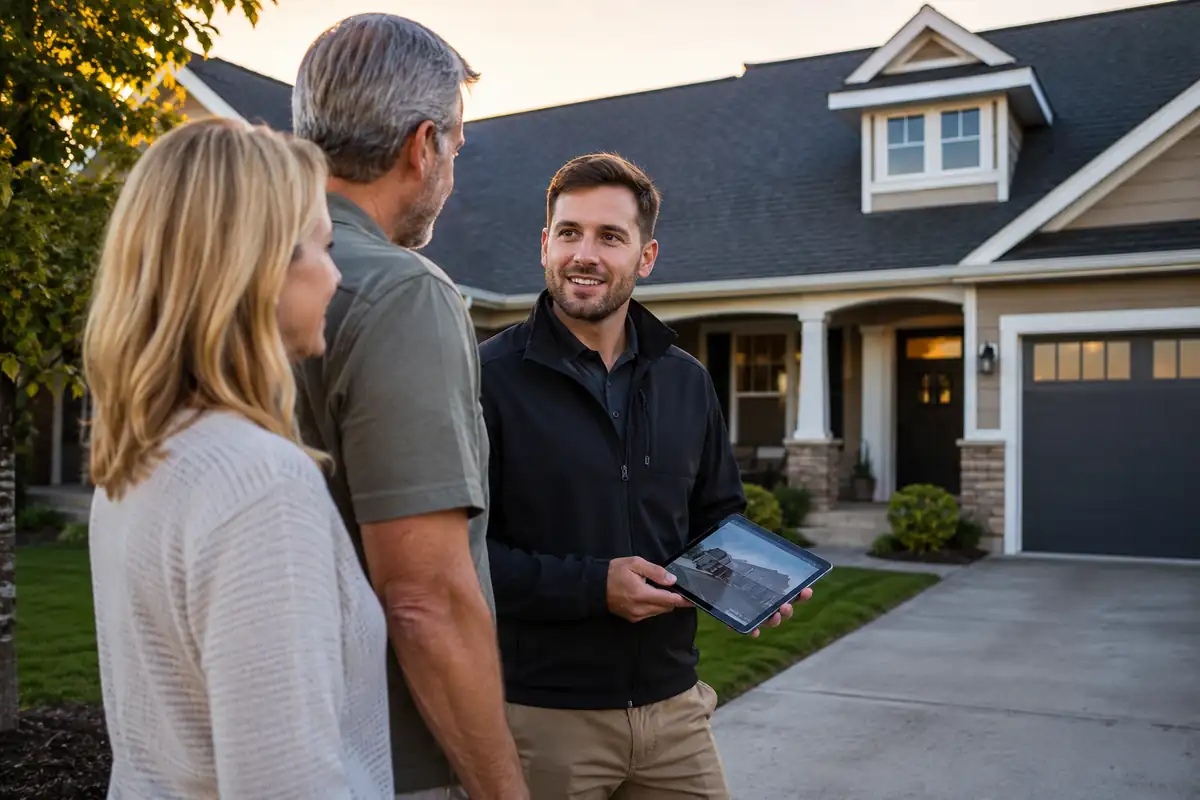
Before you leave the driveway, walk the homeowner through three things: what you saw, what you recommend, and what happens next. Hand them a one-page summary. Tell them the formal proposal will hit their inbox by 5 p.m. that day. This sets the clock and earns the first piece of trust.
Touch 2 — Same-Day Proposal (By 5 p.m.)
The proposal goes out the same day, period. If you can build it on the truck with a tablet and a roof measurement integration, do it. If not, the office must commit to a 5 p.m. cutoff for any estimate written before 2 p.m. Use a clean, branded roofing estimate template so the document looks professional and matches the price you quoted on site. Include photos from the inspection — homeowners share these with insurance and spouses, and they sell the job for you.
Touch 3 — Confirmation Text (Within 1 Hour of Sending)
A short text: “Hi [Name], I just emailed your roof proposal — let me know it landed and feel free to reply with any questions tonight.” This single message lifts open rates dramatically. People read texts; they triage emails.
Touch 4 — Next-Morning Phone Call (Hour 18)
A real call, not a voicemail blast. Two minutes. “Did you have a chance to look at the proposal? Anything I can clarify on materials, timing, or financing?” Most homeowners will be polite and tell you exactly where they are leaning.
Touch 5 — 72-Hour Decision Nudge
If they have not signed by hour 72, send a value-add — a financing option, a current promotional shingle color, a reminder that your crew has a slot the following week. This is also the right moment to mention warranty and insurance coordination if applicable.
This five-touch sequence works because it respects the homeowner’s pace while making sure your name is the one in front of them every step of the way.
Building Follow-Up Into Your Field Service Software
A sequence on a whiteboard does not survive a busy August. The reason most roofers skip follow-up is not laziness — it is that nothing is reminding them. The fix is to put the sequence inside the same roofing crm software you use to schedule crews and track jobs.
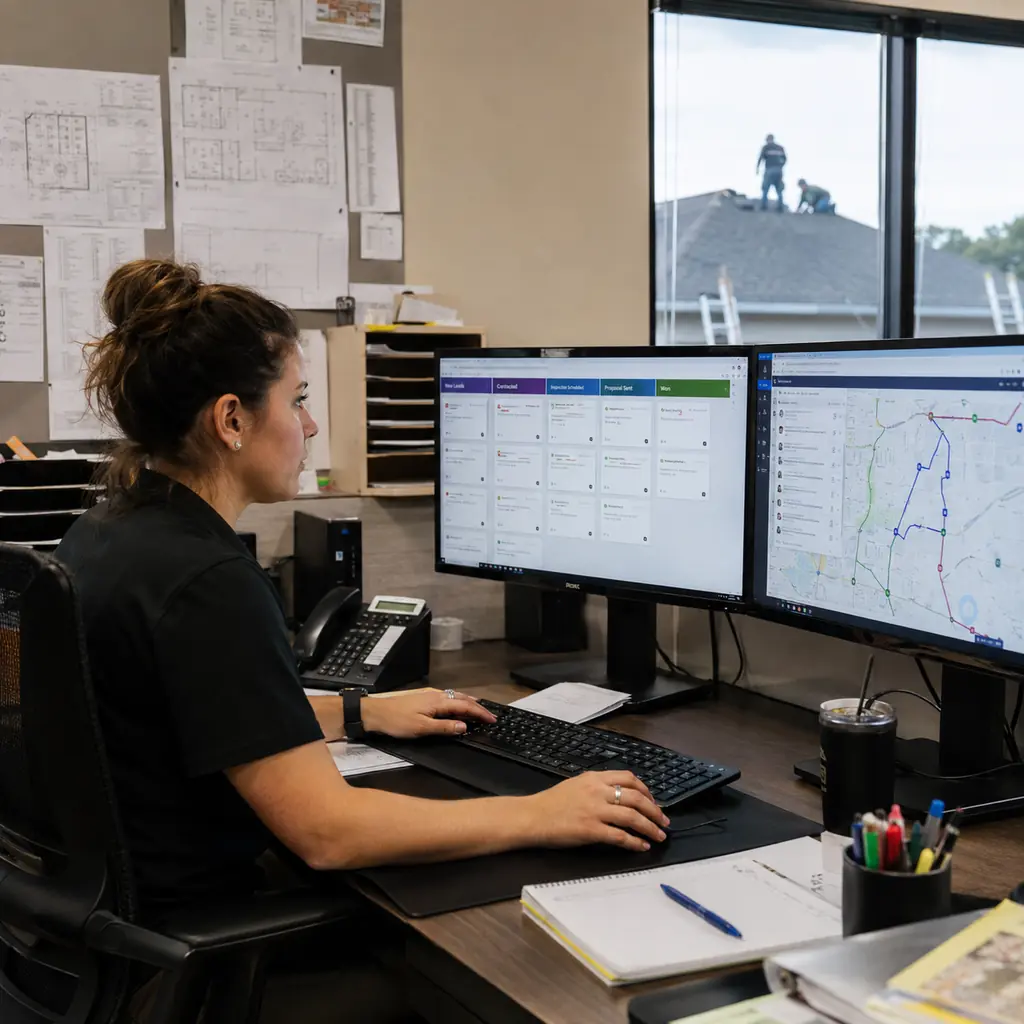
What that looks like in practice:
- Estimate stage gates. When a job moves to “Estimate Sent,” your system creates a 4 p.m. text-confirmation task, a next-morning phone-call task, and a 72-hour nudge task automatically.
- Sales pipeline visibility. The owner can see every estimate that has not been touched in 24 hours, color-coded red. No estimate gets buried.
- Tied to dispatch and scheduling. A signed proposal triggers a scheduling task immediately, so the homeowner is on the calendar before they cool off. Pairing follow-up with strong service scheduling software means the close hands off cleanly to install.
- Mobile-first capture. The estimator on the roof captures photos, measurements, and notes in the same app the office uses. No re-entry, no missing details, no proposal delays because somebody’s phone is in a truck.
The tool matters less than the discipline, but the right tool removes the willpower problem. If your team has to remember to follow up, your team will forget.
Ready to level up your business?
Try Bella FSM free and transform the way you work.
The Numbers That Tell You Follow-Up Is Working
If you cannot measure your roofing estimate close rate, you cannot improve it. Track these four numbers monthly:
- Estimate-to-proposal speed. Median hours between site visit and proposal sent. Target: under 6 hours during business days.
- Same-day proposal percentage. Of estimates written today, what percent went out the same day? Target: 80% or better.
- First-touch follow-up rate within 24 hours. Target: 95%+. This is the easiest one to hit and the one that moves the close rate most.
- Close rate by source. Insurance, retail, referral, and storm leads behave differently. A blended close rate hides where your sequence is leaking.
Roofers I work with who tighten these four numbers usually see close rate movement within 60 days, often before any pricing or marketing change. A 5-point lift on a roofing company doing $3M a year is roughly $150K in additional revenue at minimal incremental cost — the kind of number that makes operations the cheapest growth lever you have.
For owners thinking about scale, this discipline is also the foundation of any plan to grow your roofing business. You cannot grow what you cannot count, and follow-up is where the counting starts.
Common Follow-Up Mistakes Roofers Make
I see the same five mistakes in nearly every roofing company that calls me with a “lead quality” problem:
- Treating the proposal as the close. It isn’t. The proposal opens the conversation; the follow-up closes it.
- Letting the salesperson own the calendar. A great closer is a terrible task manager. The system has to remind them, not the other way around.
- Sending generic emails. “Just checking in” is invisible. Every touch should add something — a photo, a question, a financing option, a slot on the calendar.
Ready to take your business further?
Try Bella FSM free and transform the way you work.
- Not pricing right before they follow up. If your numbers are off, faster follow-up just gets you “no” sooner. Make sure your pricing is solid; our how to price a roofing job guide walks through the math most owners get wrong.
- No clear handoff to install. A signed proposal that sits in a folder for 10 days before scheduling kills referrals and review scores. The dispatch board should light up the second a proposal is signed — that is what good dispatch software is for.
Avoiding these five mistakes is not about working harder; it’s about removing the points in your workflow where deals fall through the floor.
Roofing Estimate Follow Up: FAQs
Close More Roofs With a System That Won’t Forget
A roofing estimate follow up sequence works because it converts a fragile, person-dependent process into a repeatable one. The five touches are not magic; the discipline is. The companies that grow fastest in 2026 won’t necessarily be the ones with the lowest prices or the slickest ads — they will be the ones whose homeowners hear back the same day, every time. If you want a tool built to run that sequence for roofing contractors specifically, take a look at how Bella FSM ties roofing estimates, scheduling, dispatch, and follow-up into one workflow your crews will actually use.
Ready to grow your business?
Try Bella FSM free and transform the way you work.