
Grow Your Business
Digital Pool Service Reports: How to Reduce Cancellations and Keep Recurring Customers
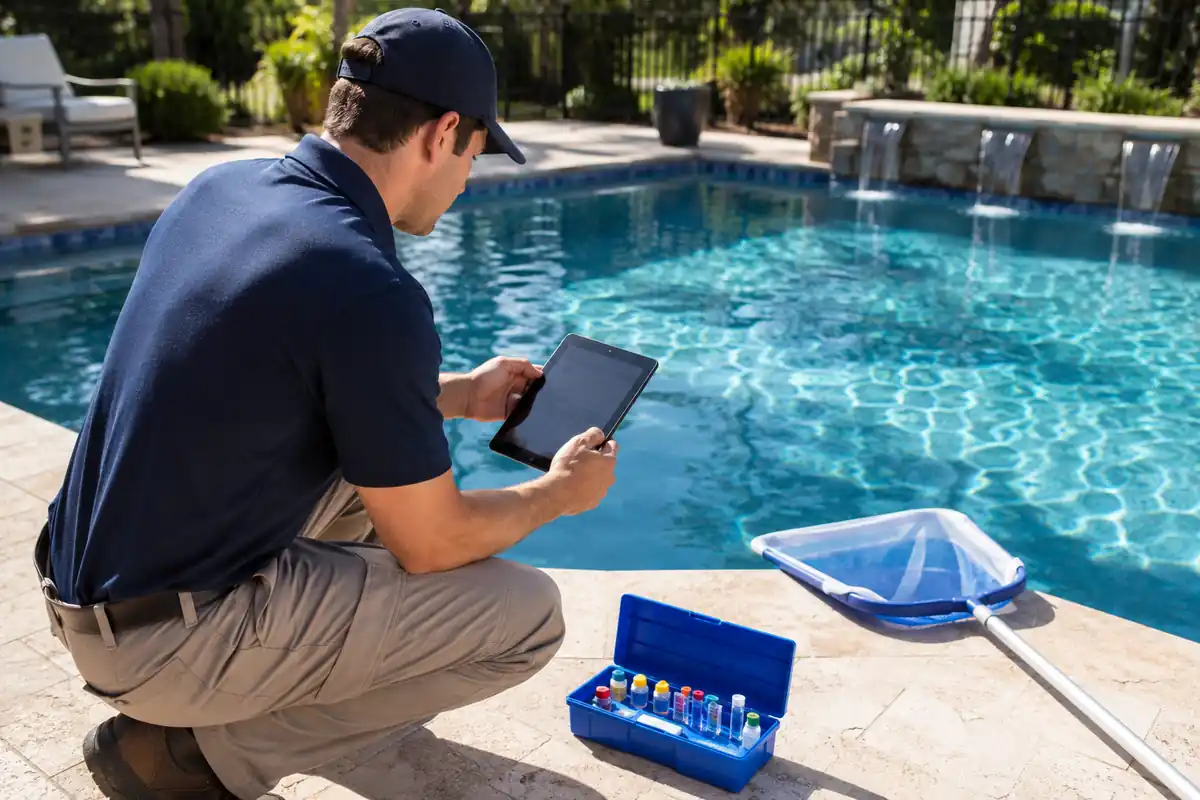
It is Monday morning in late June and a pool tech named Marco has already cleared six stops by 10 a.m. Every pool looks great. Then the office phone rings. A homeowner three streets over wants to cancel because she "never sees anyone show up" and is not sure the spa even got serviced last week. Marco was there. He brushed the walls, emptied the skimmer basket, and balanced the chemistry. The problem is that the customer saw none of it. That gap is the single biggest driver of churn in this trade, and digital pool service reports exist to close it. The work was real, but only proof makes it count. If you run a route-based business and lean on pool service software to keep visits on track, adding a proof-of-service layer is the highest-leverage retention move you can make this season.
Skimmer's 2026 State of Pool Service report describes an industry that is tightening up and going digital, with homeowners now expecting visibility into the work they pay for. The numbers back this up. Pool companies that give customers a portal or automated visit report retain accounts 15 to 20 percent longer, stretching average customer lifetime from roughly 3.2 years to nearly 4 years and adding $800 to $1,400 in lifetime value per pool. This article walks through what a digital pool service report actually contains, why it stops cancellations, and how to roll it out without slowing your techs down.
Why digital pool service reports reduce cancellations
The number one reason a pool customer fires their service company is the belief that the work is inconsistent or sloppy. Notice that the belief, not the actual quality of the cleaning, is what triggers the cancellation. Most pool work is invisible by design. The customer is at the office while the tech is in the backyard, and a clean pool looks the same whether you spent 20 minutes on it or skipped it entirely. That information gap breeds suspicion, and suspicion ends contracts.
A digital service report removes the gap. When a homeowner gets a timestamped message that reads "Arrived 9:14 a.m., brushed walls and steps, emptied skimmer and pump baskets, vacuumed, pH adjusted from 7.2 to 7.5, added 3 chlorine tabs," plus two photos of the sparkling water, the invisible becomes visible. You are no longer asking the customer to trust you. You are showing receipts. Companies that send this kind of proof report 55 to 65 percent fewer "did you come today" phone calls and roughly 40 percent faster invoice payment, because the value of the visit is obvious the moment the report lands.

What belongs in a high-trust service report
A report that builds trust is specific, not generic. A message that only says "Service complete, see you next week" does almost nothing. The reports that move retention include concrete, verifiable detail. At minimum, capture the following on every visit:
- Arrival and departure timestamps. Proof you were on site, and for how long.
- Chemistry readings before and after. Free chlorine, pH, total alkalinity, cyanuric acid, and the exact amounts of each chemical added.
- Tasks performed. Brushed, vacuumed, baskets emptied, filter checked, equipment inspected.
- Before and after photos. One or two images per visit. This is the element customers remember most.
- Notes and flags. A cracked tile, a weak pump, low water level, or an algae bloom forming. These notes double as upsell opportunities.
The chemistry log matters more than most operators realize. It turns your report into a health record for the pool, which protects you when a customer claims their water "went green on your watch." With a dated chemical history, you can show the pool was balanced at every visit. That same data, captured through a mobile field service app in the tech's hand, flows straight into the customer record instead of living on a clipboard that never makes it back to the office.
Ready to level up your business?
Try Bella FSM free and transform the way you work.
How to roll it out without slowing techs down
The fear every owner has is that documentation will add 10 minutes to every stop and blow up the route. Done right, it adds closer to 60 seconds. The trick is to make capture part of the existing workflow rather than a separate chore at the end.
Capture at the pool, not in the truck
Techs should log readings and snap photos while standing at the water, on a phone or tablet, before they pack up. Memory-based reporting written later in the truck is slower and less accurate. A good mobile workflow uses dropdowns and last-visit defaults so a tech taps through a checklist in under a minute. Pair this with your service scheduling software so the day's stop list, customer history, and report form all live in one place on the same screen.
Automate the delivery
The report should send itself. As soon as the tech marks the stop complete, the system emails or texts the formatted report to the homeowner with no office involvement. Manual send-from-the-desk workflows die within a week because nobody has time. Automated delivery tied to job completion is what makes proof of service stick across hundreds of weekly stops.
Feed the report into billing
The same completion event that fires the customer report should also feed your invoicing. When visit data flows into field service invoicing software, a documented visit becomes a billable line item automatically, which is a large part of why reporting companies collect payment about 40 percent faster. The customer who just saw photo proof of a thorough cleaning rarely disputes the charge that follows it.

The metrics that prove it is working
Treat proof of service as a measurable program, not a feel-good add-on. Track these numbers monthly so you can see retention move:
- Cancellation rate. Cancellations divided by active accounts. Expect this to fall within two to three billing cycles of consistent reporting.
- Inbound "did you service my pool" calls. A direct proxy for trust. Fewer calls means the reports are answering the question before it is asked.
- Average customer lifetime. Watch it stretch from roughly 3.2 years toward 3.8 to 4 years as documented accounts stay longer.
- Days to payment. Reports plus clean invoicing should pull this down noticeably.
- Upsell capture. Track repairs and equipment sales that started as a flagged note in a service report.
Pulling these together is easier when visit data, customer history, and communication live in one field service CRM rather than scattered across a spreadsheet, a texting app, and a separate billing tool. One record per pool means you can answer any retention question in seconds.
Ready to take your business further?
Start using Bella FSM free and work smarter.
Mistakes that quietly kill the program
Plenty of pool companies start sending reports and see no retention lift. The cause is almost always one of these avoidable errors:
- Generic, copy-paste reports. If every message is identical, customers learn to ignore them. Specific readings and fresh photos are what build trust.
- Skipping photos. The visual is the most persuasive element. A report without a photo is a receipt without a product.
- Reporting only when something is wrong. Silence on good weeks makes the rare problem report feel like an alarm. Consistency is the point.
- Letting the office send manually. It will not survive a busy July. Automate or it stops.
- Ignoring the flags. If techs note a failing pump and nobody follows up, you waste both a repair sale and the customer's confidence that you are paying attention.
Reporting also is not a substitute for sound pricing or marketing. If your routes are underpriced, proof of service will help you keep customers but not fix your margins, so pair it with a real look at how to price pool service jobs. And once retention climbs, reinvest that stability into growing your pool service business with referrals and route density rather than constant churn replacement.
Frequently Asked Questions
Turn every visit into proof your customers can see
In a tightening 2026 market, the pool companies that grow are the ones that make their work visible. Digital pool service reports convert the silent backyard visit into a timestamped, photo-backed message that earns trust week after week, and that trust is what keeps recurring accounts on the books for years instead of months. Start with chemistry readings and photos on every stop, automate the delivery, and feed the data into billing and dispatch so nothing falls through the cracks. If you are ready to standardize proof of service across your whole route, Bella FSM brings scheduling, a mobile app for your techs, customer records, and dispatch software together so every visit documents itself. See how Bella FSM’s pool service business software fits your operation and start turning routine stops into retention.
Ready to grow your business?
Try Bella FSM free and simplify your work.