
Grow Your Business
Heat Illness Prevention Plan: A 2026 Guide for Field Service Businesses
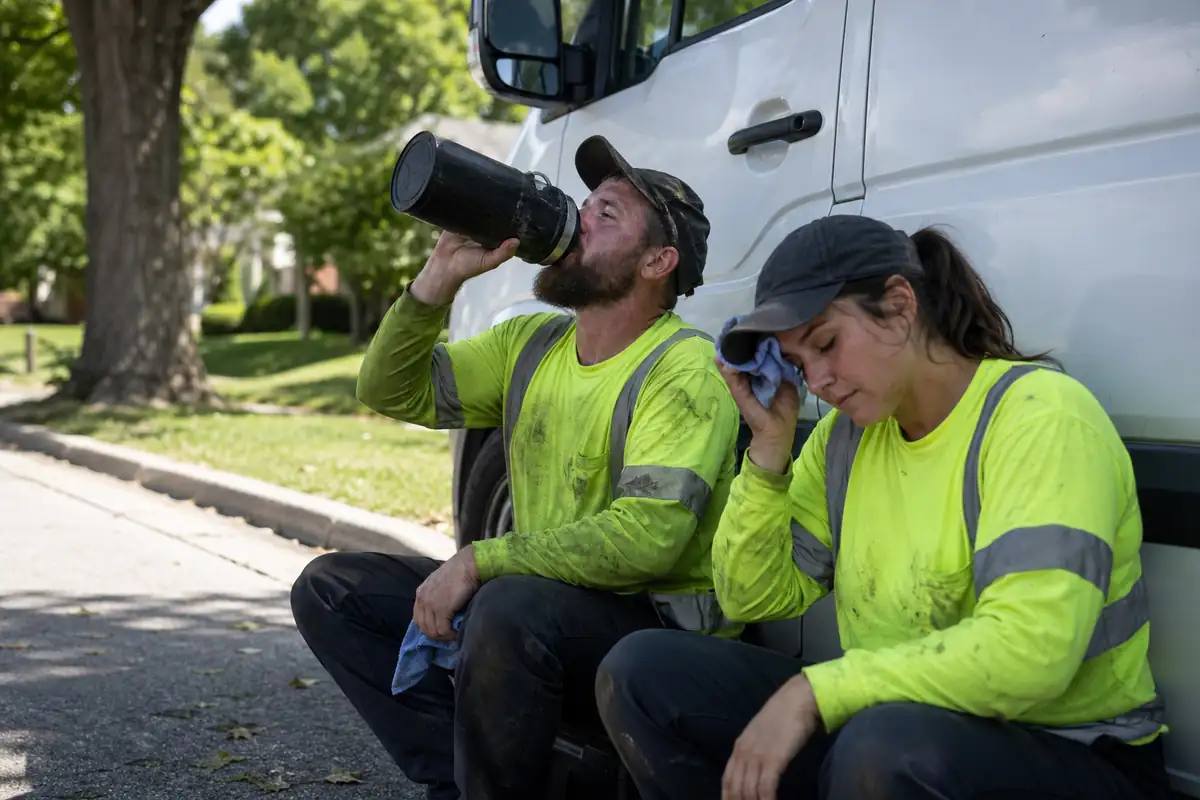
By 7 a.m. last June, the heat index in Phoenix hit 102°F. By 11 a.m., a 28-year-old tree service apprentice — three days into the job — collapsed on a lawn in Tempe. He survived, but the incident cost his employer $89,000 in OSHA fines, an inflated workers’ comp claim, and a customer who never called back. That is the reality of running outdoor crews in 2026: heat is no longer a “nice to plan for” risk — it is the most regulated, most insured, and most lawsuit-prone hazard in field service. This guide walks small and medium trade businesses through building a heat illness prevention plan for field service operations that holds up under OSHA scrutiny, keeps technicians on the truck, and protects margins through summer.
Why 2026 Is Different — The Regulatory Picture for Outdoor Crews
The federal Heat Injury and Illness Prevention rule from OSHA is the headline change. The proposed standard requires written plans, mandatory water and rest breaks at an 80°F heat index, expanded protections at 90°F, acclimatization for new and returning workers, and supervisor training. Federal enforcement timing remains uncertain in 2026, but inspectors are already citing employers under the General Duty Clause — and they are winning.
State rules are moving faster. California, Oregon, Washington, Nevada, Colorado, Maryland, Minnesota, and New Jersey have outdoor heat standards on the books, with Massachusetts and Virginia drafting their own. If you operate outdoor crews — landscaping, tree service software, roofing software, pool service, pressure washing, pest control, irrigation — you are already covered by some heat rule, even if you have not noticed.
Insurance carriers are tightening too. Several major workers’ comp underwriters now ask for written heat plans on renewal applications. Premium loadings of 8–15% are being applied where no plan exists. Litigation has followed: heat-related wrongful death suits more than doubled between 2022 and 2025. The plan below is not optional — it is table stakes for trade businesses that want to keep crews and contracts.
What a Compliant Heat Illness Prevention Plan Looks Like
A working heat illness prevention plan for field service is shorter than most owners expect — eight pages, not eighty. The pieces OSHA and state inspectors actually look for:
- A designated heat plan administrator named by title (Operations Manager, Field Supervisor) who owns updates and training.
- Heat trigger thresholds tied to the heat index, not raw temperature. Most rules use 80°F (initial), 90°F (high heat), and 95°F+ (extreme), with stepped requirements at each tier.
- Drinking water access — at least one quart per worker per hour, available within a short walk of the work zone.
- Shade or cool-down areas within 75 feet of active work whenever the index hits 80°F or higher.
- Mandatory rest cycles — typically 10 minutes per hour at 90°F+ and 15 minutes per 30 minutes at 95°F+.
- Acclimatization protocols for new hires (first 14 days) and returning workers (first 5 days back from a week or more away).
- Training records for every field worker and every supervisor.
- An emergency response procedure with named decision-makers, hospital addresses, and a 911 protocol.
- Daily monitoring logs showing heat index, rest breaks taken, and incidents reported.
The single biggest cause of heat plan citations is plans that exist on paper but are not reflected in dispatch, schedules, or daily routines. Tying the plan to your mobile workforce management system — so breaks, check-ins, and conditions are logged automatically — turns the document from a binder on a shelf into a defensible operating record.

How to Schedule Around Peak Heat
Compliance is cheaper when work happens before the heat index hits 90°F. The schedule, not the policy, is where outdoor worker heat safety actually plays out.
A practical 2026 summer schedule for outdoor crews looks like this:
- 5:30 a.m. dispatch, 6:00 a.m. on-site. The first customer of the day gets the longest, most physical job (roof tear-off, large turf install, full-service pool open).
- 9:30 a.m. mid-morning hydration check logged from each tech’s phone.
- 11:00 a.m. – 1:30 p.m. heat lull. Move to indoor work (warehouse stocking, equipment maintenance, drive-time-only stops) or release crews on a paid lunch in a cooled break room. Yes, paid — unpaid heat breaks are how OSHA cases get won by plaintiffs.
- 1:30 – 4:30 p.m. lighter physical load. Inspections, estimates, customer walk-throughs, secondary maintenance work.
- Cut hard work after 4:30 p.m. if the heat index is still 95°F+.
This kind of split shift is hard to dispatch by phone tag. Heat-aware service scheduling software lets you set rules — block roof and tree work above a 95°F index, route the heaviest jobs into early-morning slots, and surface real-time weather data on the dispatcher’s screen. Pair that with dispatch software that tracks travel time and forces a 10-minute rest before the next stop, and a 5-truck operation can absorb the schedule reshape without losing a single billable hour.
Tell customers what the schedule means. A short note in the booking confirmation — “We dispatch outdoor jobs early during heat advisories to keep our crew and your property safe” — pre-empts the 1 p.m. complaint about why nobody is working.
Ready to level up your business?
Try Bella FSM free and transform the way you work.
Training, Documentation, and Real-Time Monitoring
OSHA inspectors do not ask whether you trained — they ask to see signed sign-in sheets and quiz scores. Plan training in three layers.
Pre-season classroom training (April through early May) is a 90-minute session for every field worker and supervisor covering heat illness symptoms, the buddy system, hydration, the company’s escalation chain, and where the cooler and shade live on each truck. New hires brought on after April get the same session within their first 5 working days.
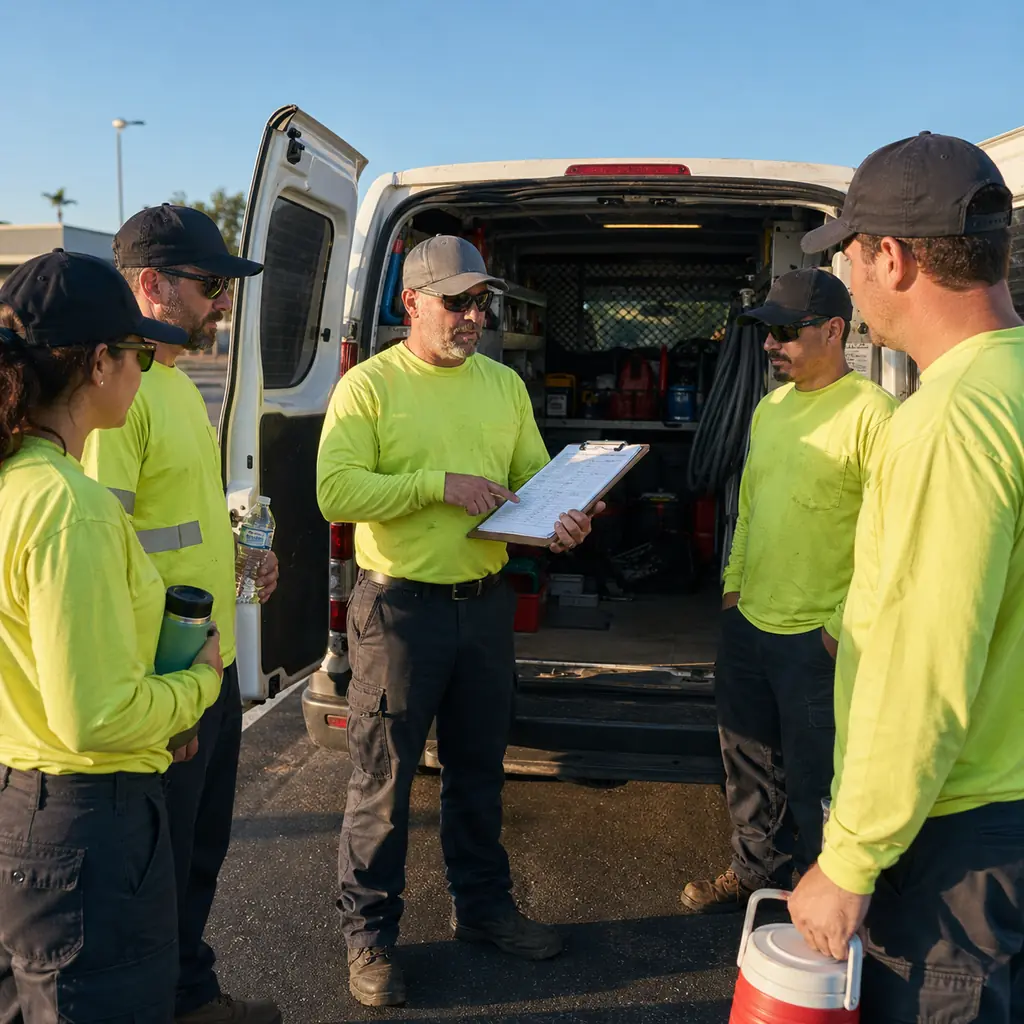
Daily safety stand-up (60 seconds) at the morning huddle: today’s expected high, today’s heat tier, who is the buddy of who, and any acclimatization workers (first-14-days status). Record it in your dispatch log.
Real-time monitoring is the 2026 differentiator. Truck-mounted thermometers are nice; technician-phone heat index alerts are better. Field service apps can pull NOAA forecasts, push a tier-change alert to every tech (“Heat index now 95°F — 15 minutes rest each half hour”), and force a check-in box for break compliance. Acclimatization tracking — automatically applying lighter workloads to anyone in their first 14 days outdoors — is the single most-cited failure point in heat fatalities. New hires are roughly 3.5 times more likely to die from heat illness than experienced crews.
These same systems double as recruiting tools. Crews who know they will not be sent to a 105°F roof at 2 p.m. stay longer. If you are worried about turnover, attract skilled field technicians by demonstrating the plan in interviews — it is a real differentiator against competitors who treat heat as an inconvenience.
Ready to take your business further?
Try Bella FSM free and transform the way you work.
Common Heat Plan Mistakes That Cost Trade Businesses
Even well-meaning operations get the same six things wrong:
- Copying a plan template without training to it. The plan binder is signed by the owner; the field crew has never seen it. OSHA case closed.
- Skipping acclimatization for new hires. This is the deadliest mistake. Workers are most vulnerable in their first two weeks, and most companies put new hires on the hardest jobs because experienced crews do not want them.
- Using raw temperature instead of heat index. A dry 95°F day is safer than a humid 88°F day. Plans that track only thermometer readings miss the actual risk.
- No paid heat breaks. Unpaid mandatory breaks are wage-and-hour violations. State labor boards will stack penalties on top of OSHA fines.
- Poor record-keeping. If you cannot show training records, daily logs, and break documentation when an inspector arrives, you do not have a plan — you have a story. Tie logging to the dispatch system so it is automatic.
- Ignoring the heat exposure for indoor trades. Attic HVAC work, garage installs, and lawn care software routes through enclosed yards can hit 110°F in the work zone even when ambient temperature is mild. The plan needs to apply wherever workers actually are.
Fix these six and you will be ahead of 80% of trade businesses heading into summer.
Frequently Asked Questions
Build the Plan Before the Heat Hits
A real heat illness prevention plan for field service is not paperwork theater — it is a scheduling discipline that protects your crew, your insurance rate, and your reputation. Name an administrator, set heat index thresholds tied to OSHA’s tiers, train every worker before Memorial Day, and tie daily logs to your dispatch system so the evidence is captured automatically. Bella FSM helps trade businesses turn the heat plan from a binder into a working operating system — early-morning dispatch routing, automated break tracking, real-time technician check-ins, and customer-facing schedule notes. Walk into summer 2026 with the documentation already in place, and you will spend the season billing instead of defending.
Ready to grow your business?
Try Bella FSM free and transform the way you work.