
Grow Your Business
Pressure Washing Route Optimization: How to Plan a Day That Maximizes Revenue and Cuts Drive Time
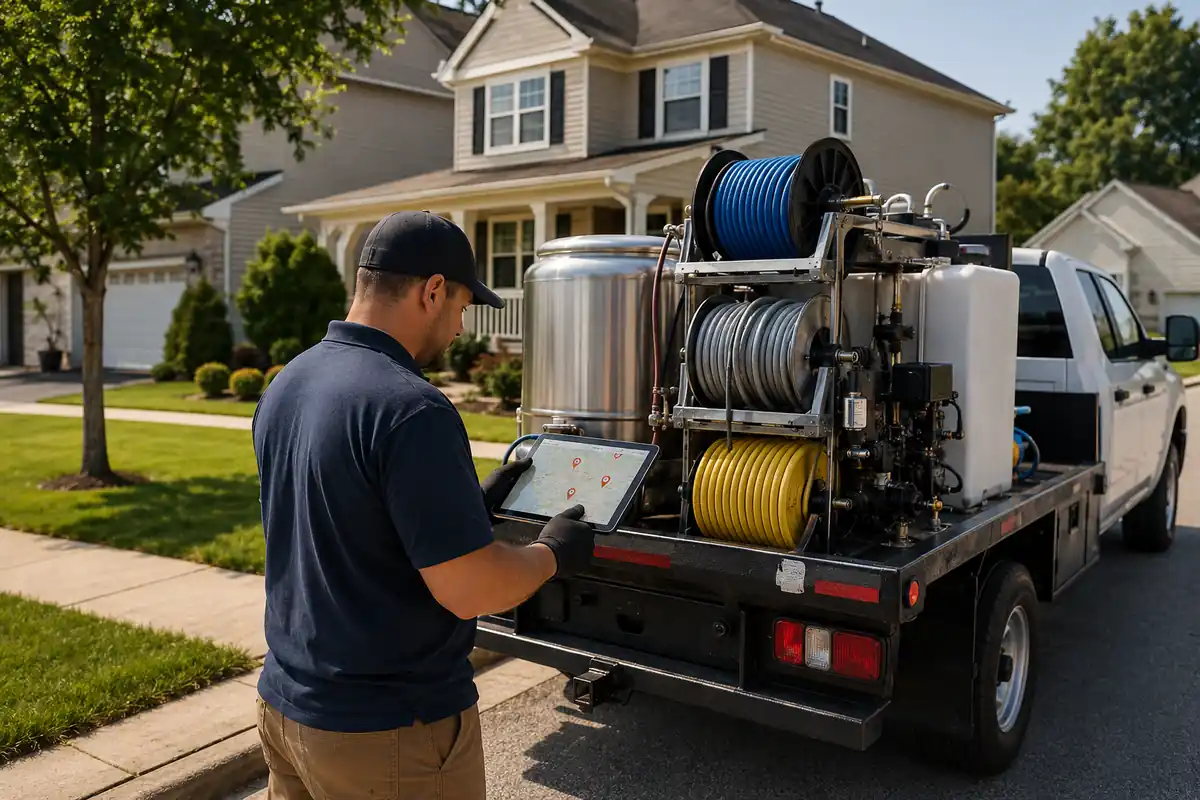
A pressure washing crew can be the fastest washers in the county and still lose money if the day is built around the wrong route. Drive time, water refills, awkward backtracking between residential and commercial stops, and idle waiting for a property to dry. These are the silent profit killers in this trade. Smart pressure washing route optimization is the single highest-leverage change most owners can make to push margins without adding trucks or technicians.
This guide walks through how trade-business owners are sequencing jobs, packing trucks, and tightening dispatch so each crew runs more billable hours without burning out. The tactics here are pulled from the field. The kind of stuff you only learn after a thousand jobs.
Why Pressure Washing Route Optimization Matters More Than in Other Trades
Other field service trades book one stop and sit on it for hours. Think HVAC tune-ups or roof inspections. Pressure washing is the opposite: short jobs, big equipment, and a rolling supply (water and chemicals) that limits how many stops you can string together without a refill. That mix makes routing a force multiplier. A poorly built day can leave a crew with three productive hours on the clock; a tightly built one yields six or seven.
Three structural factors make this trade especially sensitive to routing:
- Truck-mounted assets — a pressure rig is heavy, slow on highways, and costly to move between far-flung stops.
- Water and chemicals are the throughput limiter — once the tank is dry, the crew is hunting for a hydrant or hose bib, not earning.
- Job lengths cluster tightly — most residential exterior washes run 45 to 90 minutes. Drive time of even 25 minutes between two such jobs cuts effective billable hours by a quarter.
For owners and operators, this means the route is the production plan. Treat dispatch like a manufacturing schedule rather than an afterthought, and the same crew with the same equipment will quietly post 20–35% more revenue per workday.
The Five Variables That Make Pressure Washing Routing Unique
Generic route optimization software gets you partway there, but pressure washing has wrinkles a standard shortest-path algorithm doesn't account for. When you plan a day, weigh all five:
Water capacity
A 200-gallon tank typically runs two residential house washes or one mid-size commercial flat-work job before refill. Plot refill stops on the map at the right intervals. A friendly customer who lets you pull from their spigot is gold, and so is a known fill station along the route.
Chemical mix and dwell time
Soft washing requires mixing chemicals on-site or pre-batching for a specific surface. Switching between vinyl siding (lower concentration) and roof soft-wash (higher concentration) in the same day means more setup time. Cluster like surfaces back-to-back.
Setup and teardown windows
Backing into a driveway, prepping wands, running hose, and breaking down adds 12 to 25 minutes of unbillable time per stop. Routes with more, smaller jobs compound this loss. When you can pair two small stops into one neighborhood block, you cut effective setup time by 40% or more.
Dwell, rinse, and dry windows
A property that just got soft-washed often needs 10 to 20 minutes before rinse. That window is wasted unless you've routed a nearby quick stop into it. Pros use that time for a fence wash next door or a quick driveway etch around the corner.
Sun, wind, and surface temperature
Hot concrete dries chemicals before they activate. Wind blows soft-wash mix off siding. Routing the morning around shaded surfaces and the afternoon around dry-friendly work isn't optional, it's how you keep callbacks down.
How to Plan Tomorrow's Pressure Washing Route Tonight
The shop owners squeezing the most out of their crews don't dispatch on the morning of. They lock the route the night before. Here's the workflow most use:
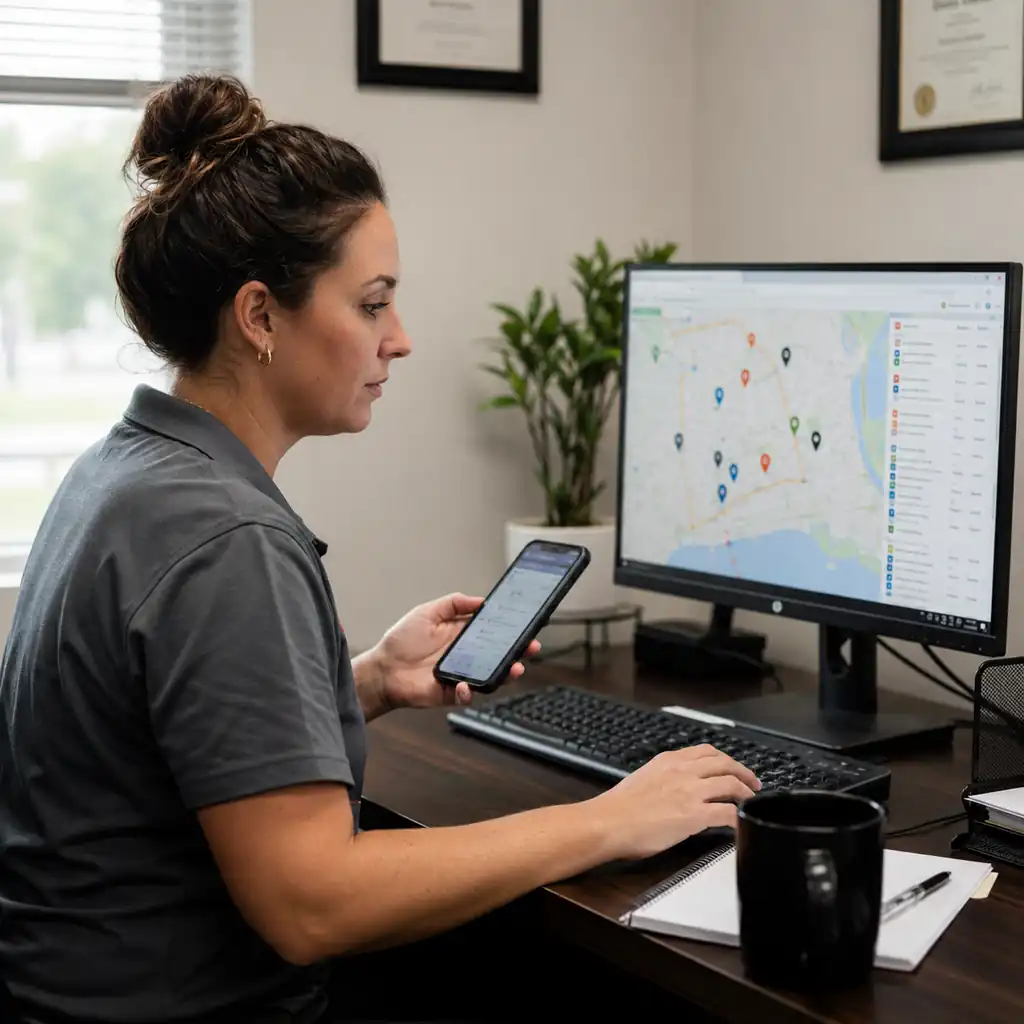
- Pull the next day's confirmed jobs into a single map view. Plot every stop with a pin, color-coded by job type (soft wash, hot-water flat work, fleet wash).
- Anchor the day with the longest job first. Big commercial flatwork or multi-bay fleet washes set the cadence; smaller residential stops fit around them.
- Cluster by neighborhood, then by surface type. Driving past a job to come back later is the single biggest waste in this trade.
- Sequence chemical needs. Roof soft-washes go before house washes (different mix concentrations). Concrete etching with hot water goes last — the rig stays heated and you're not switching back.
- Plan refills and lunch as fixed pins. Treat the water-refill stop as a real appointment, not a we-will-figure-it-out.
- Push the route to the crew the night before via your pressure washing scheduling software so the crew rolls without a morning huddle.
- Build in a 15-minute buffer per three stops. Real days hit traffic, leaks, and chatty homeowners — pretending otherwise breaks the schedule by stop four.
Ready to level up your business?
Try Bella FSM free and transform the way you work.
Software That Does the Heavy Lifting
You can do basic pressure washing route optimization on a paper map. You can also still cut hardwood with a hand saw. Modern field service management software for small business fold routing, dispatch, customer notes, water and chemical tracking, and post-job invoicing into one pass.
A purpose-built platform like Bella FSM's pressure washing software handles the trade-specific patterns most generic CRMs miss: route sequencing tied to job type, technician skill tags (not every washer can run hot-water or run roof soft-wash safely), and recurring-service triggers in your pressure washing crm software for annual house washes or quarterly commercial accounts. Pair that with a strong dispatch software workflow and a foreman can rebuild a route mid-day when one stop runs long or a no-show opens a gap.
Three features worth insisting on when you evaluate tools:
- Drag-and-drop dispatch board. If you can't move a stop from one tech to another in two seconds, your software is in your way.
- GPS-aware routing that respects time windows. Commercial stops often have access windows (after 5 p.m., before mall open). The route has to honor them automatically.
- Mobile invoicing on completion. Crews invoice and capture payment before they pull off the property using a pressure washing invoicing tool. Cash-flow gap closed.
Owners who graduate from spreadsheets to a real platform typically see same-day collection rates jump from 40-something percent to north of 80, and route compression of one to two more stops per truck per day inside the first month.
Metrics That Tell You Your Route Is Working
You can't fix what you don't measure. Track these five every week:
- Stops per crew per day — your baseline. A two-person residential crew should clear 5 to 7 stops in a typical day; below 4 means routing is bleeding hours.
- Drive time as percent of paid hours — target under 20%. Above 30%, your routes are sprawling.
- Revenue per route hour — flat dollar per hour the truck is on the clock, including drive. Aim to grow this 5 to 10% quarter over quarter.
- Refill events per day — more than two means your water plan is undersized or your route is criss-crossing zones.
- Cancellation gap recovery time — when a stop falls through, how fast does the next pin get filled? Under 30 minutes means dispatch is sharp.
Bake these into a Monday morning review and they will quietly steer every routing decision you make for the rest of the week.
Ready to take your business further?
Start using Bella FSM free and work smarter.
Common Pressure Washing Dispatch Mistakes to Avoid
Even sharp operators fall into a few habits that quietly erode margin. Catch yourself doing any of these and tighten up:
- Booking new jobs without checking the existing route. Inbound leads are tempting, but a yes on the wrong side of town wrecks the day. Your office team needs the dispatch board open when they book.
- Treating Saturday like a flexible cleanup day. Saturdays are your highest-margin day in residential — they deserve the same routing rigor as Tuesdays.
- Letting techs pick their own order. Crews default to easiest first, which is rarely most efficient. Lock the sequence and let the foreman flex within it.
- Skipping post-job notes. A note like spigot off the deck, bring 50 ft hose saves 15 minutes next time. Without it, the next tech reinvents the wheel.
- Pricing without a routing lens. Two $400 jobs ten minutes apart beat one $700 job 45 minutes out. Use your job pricing approach to factor routing density into discounts for cluster bookings.
Frequently Asked Questions
Pull More Profit Out of the Same Truck
The fastest way to grow a pressure washing business isn't another truck — it's tighter pressure washing route optimization on the truck you already own. Map your stops the night before, cluster by zone and surface, build refills into the route, watch your stops-per-day metric, and lean on software that understands how this trade actually works.
If you're ready to put structure around dispatch, take a look at how Bella FSM helps pressure washing pros plan routes, push jobs to crews, invoice from the field, and keep recurring service contracts on rails. The same crew, planned better, is the cheapest growth lever in this business.
Ready to grow your business?
Try Bella FSM free and simplify your work.