
Grow Your Business
How to Build a Window Cleaning Maintenance Program That Locks In Year-Round Recurring Revenue
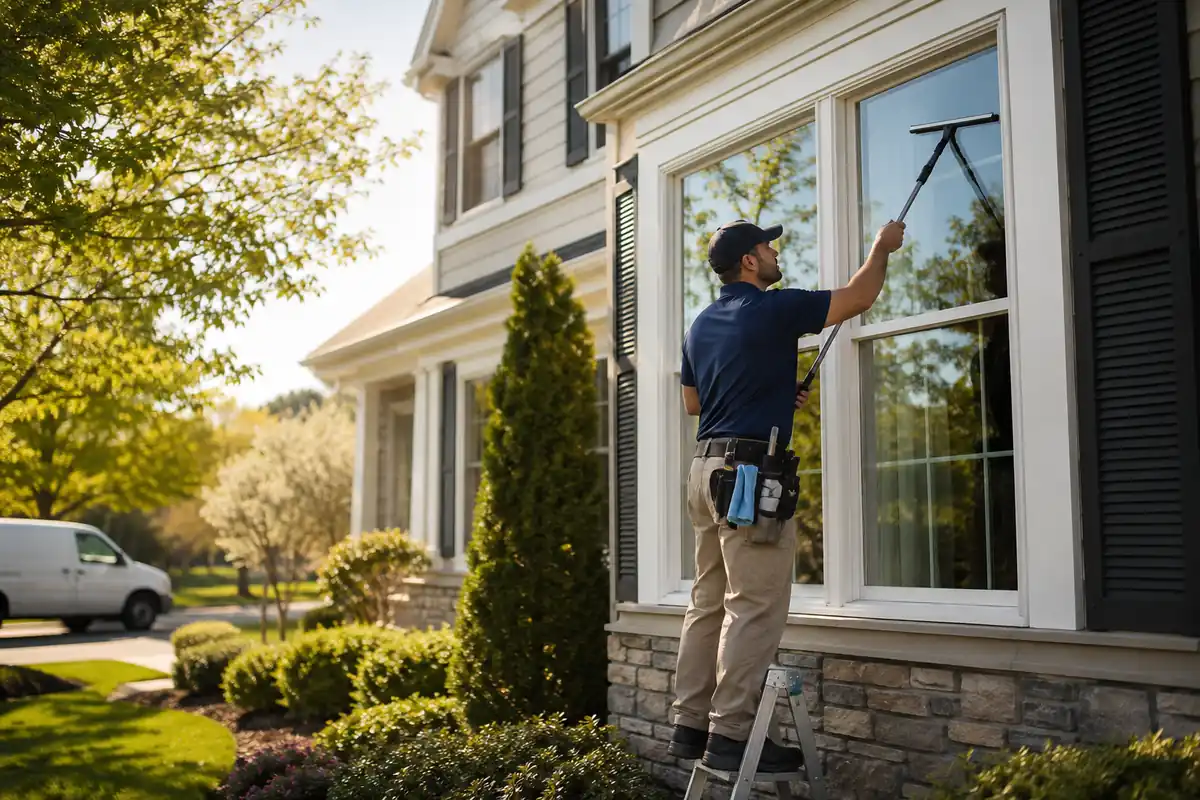
For most window cleaners, the calendar tells the truth. Spring books three weeks deep, August calls dry up, and the December cash crunch arrives like clockwork. The fix is not more ads. It is a structured window cleaning maintenance program that turns one-time customers into recurring accounts with predictable schedules, automated billing through window cleaning invoice software, and a clear annual price tag. The biggest names in the trade run on this model because it smooths revenue, raises customer lifetime value, and makes routing cheap. For a small or mid-size shop, the playbook is repeatable and the tooling is affordable. Field service software for small business keeps every recurring visit, invoice, and reminder on autopilot. Here is how to build one, price it, sell it, and run it without dropping balls.
Why a Window Cleaning Maintenance Program Beats One-Off Jobs
A maintenance program changes the math of your business in four ways at once. Revenue gets predictable — you sign annual or semi-annual contracts and know exactly what is coming in. Route density goes up because recurring stops cluster on the same streets, so windshield time drops and gross margin climbs. Customer acquisition cost spreads across more visits — a $90 Google Ads lead is a bargain when that customer books four cleanings a year instead of one. And churn drops, because plan customers are far less likely to shop around when the next visit is already sitting in your window cleaning scheduling software.
Industry data backs this up. Subscription-based window cleaning plans are one of the fastest-growing service models in the cleaning sector, and bundles that wrap windows with gutter, exterior wash, and screen cleaning grow faster still. The implication is simple: every job you book without offering a plan is money left on the table.
Designing the Program: Frequency Tiers and Service Bundles
A good maintenance program has three or four tiers, not ten. Anything more confuses customers and slows your closer.
A residential structure that works for most markets:
- Twice-Yearly (Spring + Fall): Interior and exterior windows, screens cleaned, sills wiped. The base tier for nearly every homeowner. Roughly 60% of plan customers end up here.
- Quarterly (4x/year): Exterior every quarter, interior twice a year. Fits homes near trees, beach property, or hard-water areas.
- Monthly (Exterior Only): Pure exterior maintenance for premium homes or vacation rentals. Higher price, very low time-per-visit.
For commercial accounts, build by traffic and visibility:
- Storefront/Restaurant: Weekly or bi-weekly exterior plus entry glass. The most profitable per-minute work in the business.
- Office/Medical: Monthly exterior, quarterly interior, with shared common areas as add-ons.
- Multi-Tenant Retail: Monthly route stop with bulk pricing per linear foot of glass.
Bundles add a clear price advantage. Pair window cleaning with gutter cleaning (semi-annual), pressure washing the entryway or driveway (annual), and screen repair as a labor add-on. Bundled programs convert at roughly 2x the rate of single-service plans because customers feel they are getting a maintenance roof over their whole exterior. Make sure your crews have the right tools and reach for the job — Bella FSM's best window cleaning tools guide covers what the top operators carry on a route truck.
Whatever tiers you publish, name them simply — "Sparkle," "Crystal," "Premier" works fine — and put the recommended option in the middle.

Pricing Your Window Cleaning Maintenance Program
Most owners price plans wrong in one of two ways. They either copy a competitor's flat number, or they discount so aggressively to "lock the customer in" that the math stops working.
The correct starting point: figure out your true per-pane or per-window cost based on labor, supplies, drive time, and overhead. (For a full breakdown, see Bella FSM's window cleaning pricing guide.) Then build the plan price from that — not the other way around.
A few principles that hold up across markets:
- Discount the frequency, not the visit. A customer paying for four cleanings a year should get 8 to 15% off the single-visit price, billed monthly. A customer paying for twelve should get 15 to 25% off. Past 25%, your margins die.
- Lock in the annual price for 12 months. No mid-year price hikes. This is the single most powerful retention lever you have.
- Charge a small annual deposit, not a per-visit fee. Industry leaders use a 25% deposit at signup or first-visit completion, with the rest billed in equal monthly or quarterly amounts. This keeps cash flow healthy and gives the customer skin in the game.
- Auto-bill, do not invoice. Recurring revenue means recurring payment. Card on file or ACH only — no monthly chasing of $80 checks.
For commercial contracts, price on linear feet of glass plus an access factor (ladder, lift, hard-to-reach). Quarterly invoicing is fine; monthly is better for cash flow.
If you are upgrading existing customers into a plan, offer a "founders" rate that locks them in at 10% off for year one, then moves to standard. Conversion runs 35 to 45% in most markets.
Ready to level up your business?
Try Bella FSM free and transform the way you work.
The Software and Workflow Stack That Makes It Run
A maintenance program lives or dies on operational discipline. Six recurring customers is a spreadsheet. Sixty is a problem. Six hundred is a fire.
The stack you actually need:
- A field service platform that handles recurring jobs natively. This is non-negotiable. Bella FSM's window cleaning software auto-generates the next visit when the previous one closes, so you never miss a service date. Cheap calendar apps fall apart at 50+ accounts.
- Smart scheduling and route building. Recurring stops should auto-cluster by neighborhood and visit date. See how scheduling for window washing pairs recurring jobs with technician routes.
- Customer record with full service history. Every plan customer should have their pane count, ladder needs, gate codes, dog warnings, and last visit notes attached. A purpose-built window cleaning CRM handles this without manual data entry.
- Auto-invoicing on a schedule. Whether you bill monthly, quarterly, or per-visit, the system should send the invoice and pull the payment automatically. Bella FSM's window cleaning invoicing tools do this without bookkeeper babysitting.
- A customer portal. Plan customers should be able to view their next service date, reschedule one visit, see invoices, and add a one-off service without calling the office.
The simple rule: if a task in your maintenance program requires a human to remember it, you will lose money. Automation is not optional once you cross a few dozen accounts.

Selling the Program to Existing and New Customers
Two sales motions run in parallel.
Convert your existing customers first. Pull your customer list from the last 18 months. Group by neighborhood and service date. Send a one-page email and a follow-up text offering them the plan that fits their last visit pattern. Lead with the lock-in price benefit and the no-call-needed scheduling. Expect 25 to 40% to convert in the first 60 days if the price math is reasonable. This is the cheapest revenue lift available to any window cleaning business.
Bake the program into every new estimate. Whenever a tech or office staffer quotes a one-time clean, the estimate should show two prices side-by-side: the one-time price and the plan price, with the savings line called out. Customers self-select into the plan more often than they will if you only offer it after the first visit. Companies that use estimate-stage program offers report plan attach rates between 30 and 55%, depending on market. For prospecting net-new accounts, Bella FSM's guide to finding new window cleaning customers covers the channels that produce the highest plan-attach leads.
A few sales scripts that work:
- "Most of our customers go on the twice-a-year plan because it locks in this price and we just show up — no calls needed."
- "Book the plan today and your spring cleaning is included in your first month's payment."
- "We hold the same rate for 12 months, even if our prices go up for new customers."
For commercial sales, target property managers with the route-density argument. Quote a per-month rate 15% below their current ad-hoc spend if they sign for 12 months. Most will say yes, especially where the incumbent only shows up when called.
Ready to take your business further?
Start using Bella FSM free and work smarter.
Mistakes That Kill Maintenance Programs (and How to Avoid Them)
Five failure patterns show up repeatedly:
- Pricing too low to "win" the contract. A 35% discount looks great in month one and looks terrible in month nine when your techs are doing it for free. Stay above 15% off and walk away from contracts that need more.
- Manually tracking renewals. Once you cross 30 accounts, manual renewals slip. Automate the renewal email 45 days out, with auto-renew language in the original agreement.
- No clear cancellation policy. Customers who try to cancel mid-term and get a fight will burn you on Google. Build a clean policy — 30 days notice, prorate the remaining months — and put it in writing.
- Treating commercial and residential the same. Different sales cycle, different decision-makers, different pricing model. Run them as two separate programs with two different scripts.
- Forgetting to upsell inside the plan. Plan customers are the easiest gutter, pressure-washing, or screen-repair upsells you will ever get. Pre-stage a once-a-year "annual exterior tune-up" offer inside the plan email cadence.
The pattern across all five: each is an operational discipline problem, not a marketing problem. A maintenance program is built once and protected forever.
Frequently Asked Questions
Conclusion: Start Building the Plan This Quarter
A window cleaning maintenance program is the single highest-leverage move a small or mid-size window cleaning business can make in 2026. The pricing is straightforward, demand is documented, and the operational tooling has never been cheaper. The only real question is whether you have the discipline to design the tiers, automate the workflows, and protect the program from one-off discounting.
If you are ready to set up a recurring program, Bella FSM's window cleaning platform handles every operational piece — recurring scheduling, automated invoicing, CRM history, and a customer portal — out of the box. Pair it with a clean pricing model and a 60-day push on the customer list in your window cleaning crm software, and you will end 2026 with a maintenance revenue line that pays rent before you book a single new lead.
Ready to grow your business?
Try Bella FSM free and simplify your work.