
Grow Your Business
How to Build a Roofing Production Schedule That Survives Material Delays and Labor Shortages
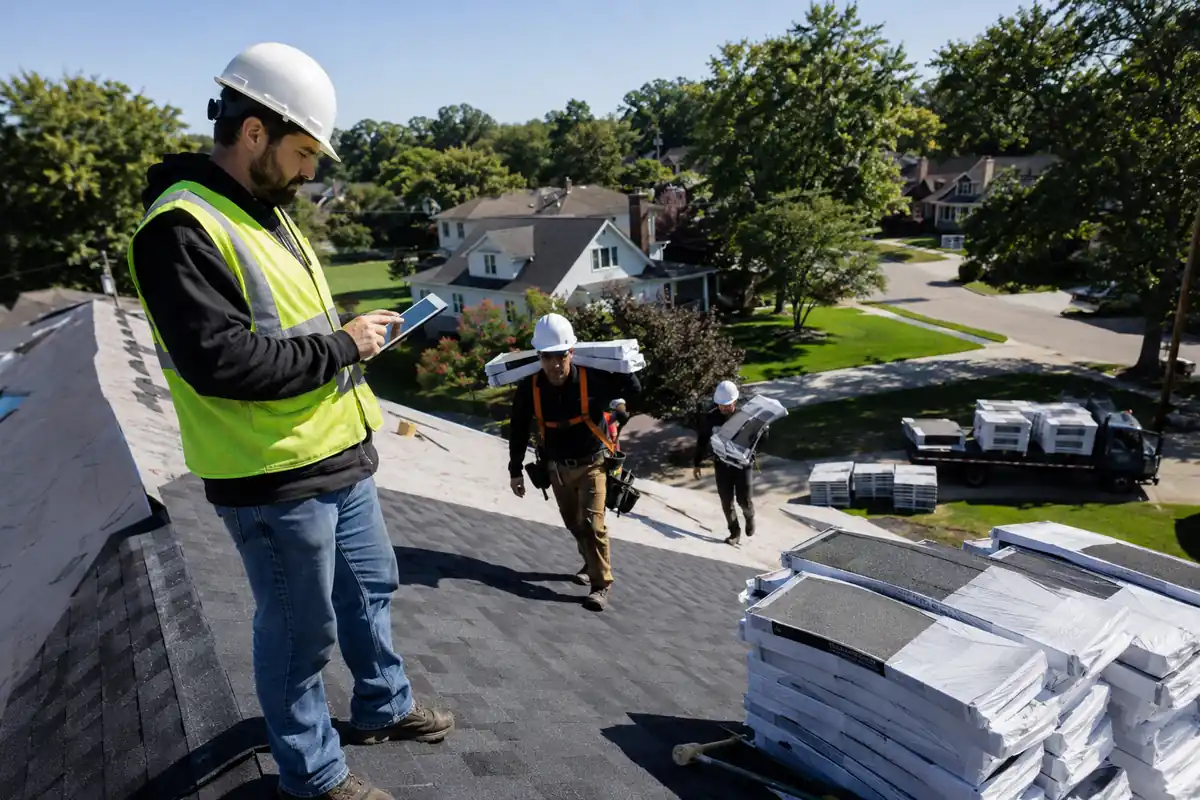
It is 6 a.m. on a Tuesday and your board says three crews are rolling. Then the supply house calls. The architectural shingles for your biggest job are back ordered another nine days. Now you have a homeowner who took the day off, a crew with nothing to tear off, and two more jobs stacked behind it. That single phone call is the kind of thing that breaks a roofing company's week. A reliable roofing production schedule is what keeps it from turning into a cascade of blown dates and shrinking margins. If you already run roofing business software, the production schedule is where it earns its keep. This guide shows you how to build one that holds up when materials and labor refuse to cooperate.
Why Roofing Production Schedules Break in 2026
Most roofers do not lose money because they cannot sell. They lose it in the gap between a signed contract and a finished, inspected, paid job. In 2026 that gap got wider for three concrete reasons.
- Material delays. Distributors report asphalt shingles, TPO membrane, and polyiso insulation sitting on back order for weeks at a time. A job that used to be a one-day tear-off now stretches across two weeks when a partial delivery shows up short.
- Labor shortages. Roofing is a skill trade, and trained crews are harder to find every season. When a lead foreman is out, productivity does not drop a little. It drops across every job that foreman was supposed to run.
- Backlog compression. Margins are tighter, collections are slower, and the cushion that used to absorb a bad week is gone. One stalled job now pushes three others off their committed dates.
The schedule is where all three pressures collide. Build it to expect them and the bad Tuesday becomes a 20-minute reshuffle instead of a lost week.
What a Roofing Production Schedule Actually Tracks
A calendar tells you what day a crew shows up. A roofing production schedule tells you whether the job is actually ready for that crew. Those are not the same thing, and confusing them is the root of most missed dates. A real production schedule tracks each signed job through five gates:
- Material confirmed. The full order is committed by the supplier with a firm delivery date, not a "should be in soon."
- Permits and HOA cleared. Nothing legal is blocking the tear-off.
- Crew assigned. A specific foreman and crew, sized to the square count, owns the job.
- Install scheduled and confirmed with the homeowner. The customer knows the date and the arrival window.
- Inspection and closeout. Final inspection passed, photos captured, invoice sent.
A job does not move onto the install board until the first three gates are green. That one rule prevents the most expensive mistake in the trade: rolling a crew to a job that was never ready.

Build the Schedule Around Material Availability, Not the Calendar
The old way was to promise a homeowner a date the moment they signed, then scramble to make the material fit. With roofing material delays now routine, that order is backwards. Confirm supply first, then commit the date.
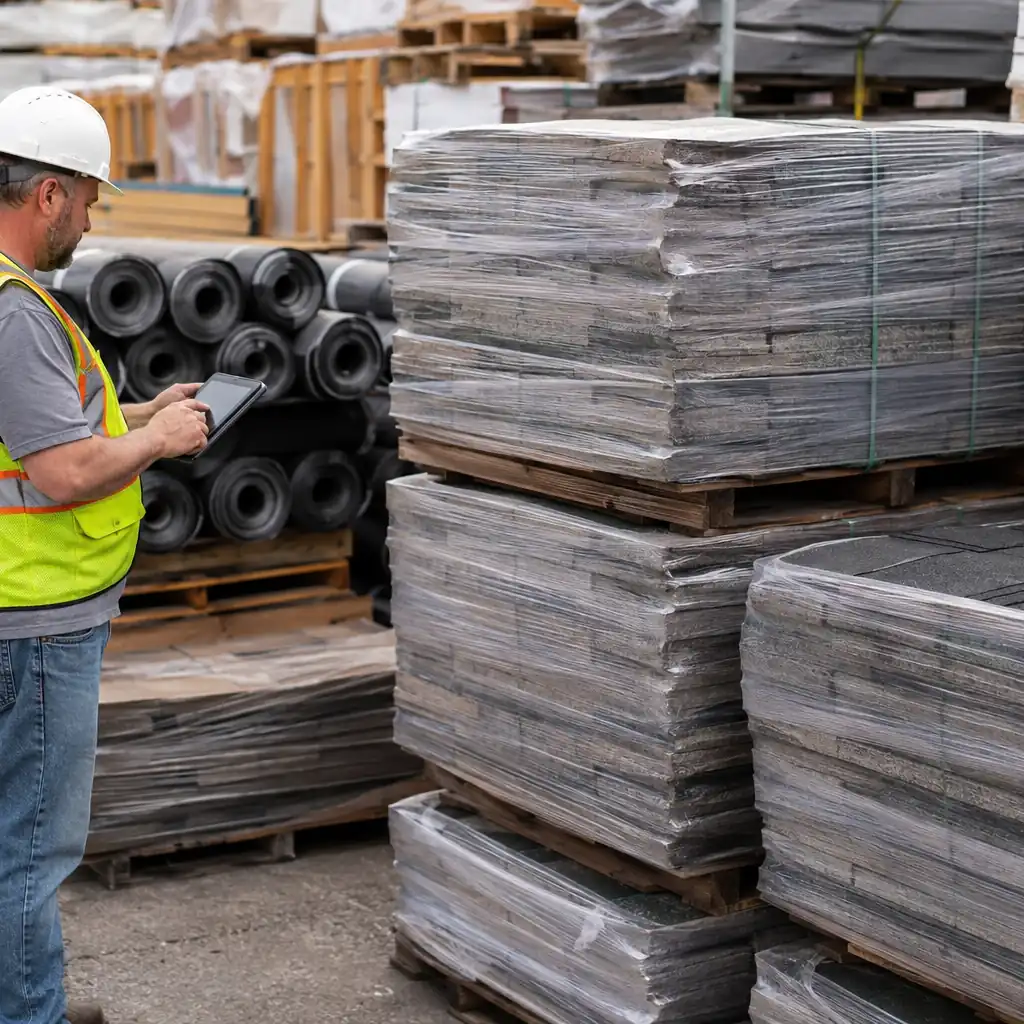
Push material verification to the front of the pipeline. The day a contract is signed, the order goes to the supplier and someone owns getting a firm delivery date back. Until that date exists, the job sits in a "pending material" lane, not on the install board. This single change removes the most common source of last-minute chaos.
Track the material status on the job itself so the office and the field see the same thing. When you manage that detail inside work order software, the delivery date, the supplier confirmation number, and the square count all live on the work order instead of in someone's text messages. Pair it with real inventory tracking so you know what is already on the shelf versus what has to be ordered before a date is safe to promise.
Practical rules that keep material from wrecking the board:
- No install date is promised to a homeowner until the supplier confirms a delivery date in writing.
- Build a 48-hour buffer between confirmed delivery and tear-off so a short or late truck does not strand a crew.
- Flag long-lead items (specialty metal, low-slope membrane, custom color shingles) the moment they are quoted, not the week of install.
- Keep a short list of "fill-in" jobs with material already on hand that a crew can pivot to when a delivery slips.
Ready to level up your business?
Try Bella FSM free and transform the way you work.
Treat Labor Like Inventory: Crew Capacity Planning
The best operators plan labor the way they plan materials. You have a finite number of crew-days each week. Roofing crew scheduling works when you book against real capacity instead of wishful thinking.
Start by knowing each crew's true throughput. A three-person crew might average 25 to 35 squares a day on a standard pitch, less on steep or cut-up roofs. When you schedule by square count instead of by job count, you stop overbooking the fast crews and underusing the rest.
Assign work by crew strength, not just availability. Put your most experienced foreman on the steep, complex, or high-dollar jobs where a callback would hurt most. Use newer crews on straightforward gable roofs where they can build speed safely. A good service scheduling software view shows crew capacity by day so you can see, at a glance, who is overbooked and who has room.
When a foreman calls out, you need to move fast. Dispatch software lets you reassign a job and push the new details to the field crew's phones without a round of confusing calls. Give every crew a mobile field service app so the foreman has the work order, the material list, the homeowner notes, and the site photos in their pocket on day one.
The Metrics That Tell You the Schedule Is Working
You cannot improve roofing production management by feel. A handful of numbers tell you whether the schedule is healthy or quietly bleeding money.
- Schedule adherence. The percentage of jobs that install on their first committed date. Below 80 percent and your promises are not reliable enough to plan around.
- Cycle time. Average days from signed contract to final inspection. Watch the trend. A creeping number usually means material or labor bottlenecks you have not named yet.
- Crew utilization. Billable squares installed versus crew-days available. If crews sit idle waiting on material, this number exposes it in dollars.
- Reschedule rate. How often a committed install date moves, and why. Tag the reason every time so you can see whether material, labor, or weather is your real constraint.
- Backlog age. How long signed jobs wait before install. Healthy roofing backlog management keeps the queue moving instead of letting deposits sit for two months and inviting cancellations.
Review these weekly with your production team. The point is not a perfect dashboard. The point is catching a bottleneck while it is one slipped job, not after it has spread to ten.
Ready to take your business further?
Start using Bella FSM free and work smarter.
Common Mistakes That Wreck a Roofing Production Schedule
Even disciplined shops fall into the same traps. Watch for these.
- Promising dates at signing. The salesperson commits an install date to close the deal before material is confirmed. Every one of those becomes a reschedule.
- Booking by job count, not square count. Three small jobs and one massive one are not "four jobs." Schedule by volume or you will strand a crew.
- One person holding the schedule in their head. When the schedule lives in a notebook or one manager's memory, it collapses the day that person is out sick.
- Ignoring closeout. A job is not done until it passes inspection and the invoice is out. Roofs that pass install but stall in inspection quietly tie up cash.
- No buffer for weather. In storm-heavy regions, a schedule with zero slack falls apart the first rainy week. Build in catch-up days on purpose.
Frequently Asked Questions
Turn Your Production Schedule Into a Competitive Edge
The roofers who win in 2026 are not the ones with the cheapest price. They are the ones who say a date and hit it, even when shingles are on back order and a foreman is out. A disciplined roofing production schedule is how they do it. Confirm material before you commit, plan labor by real capacity, watch the five numbers that matter, and keep the whole pipeline in one place your office and field both trust.
Bella FSM gives roofing contractors that single source of truth, from the work order and material status to crew dispatch and final invoicing. If missed dates and idle crews are eating your margins, see how purpose-built roofing crm software can turn your schedule into something customers can count on.
Ready to grow your business?
Try Bella FSM free and simplify your work.