
Grow Your Business
Pressure Washing Wastewater Compliance: A 2026 Guide for Business Owners
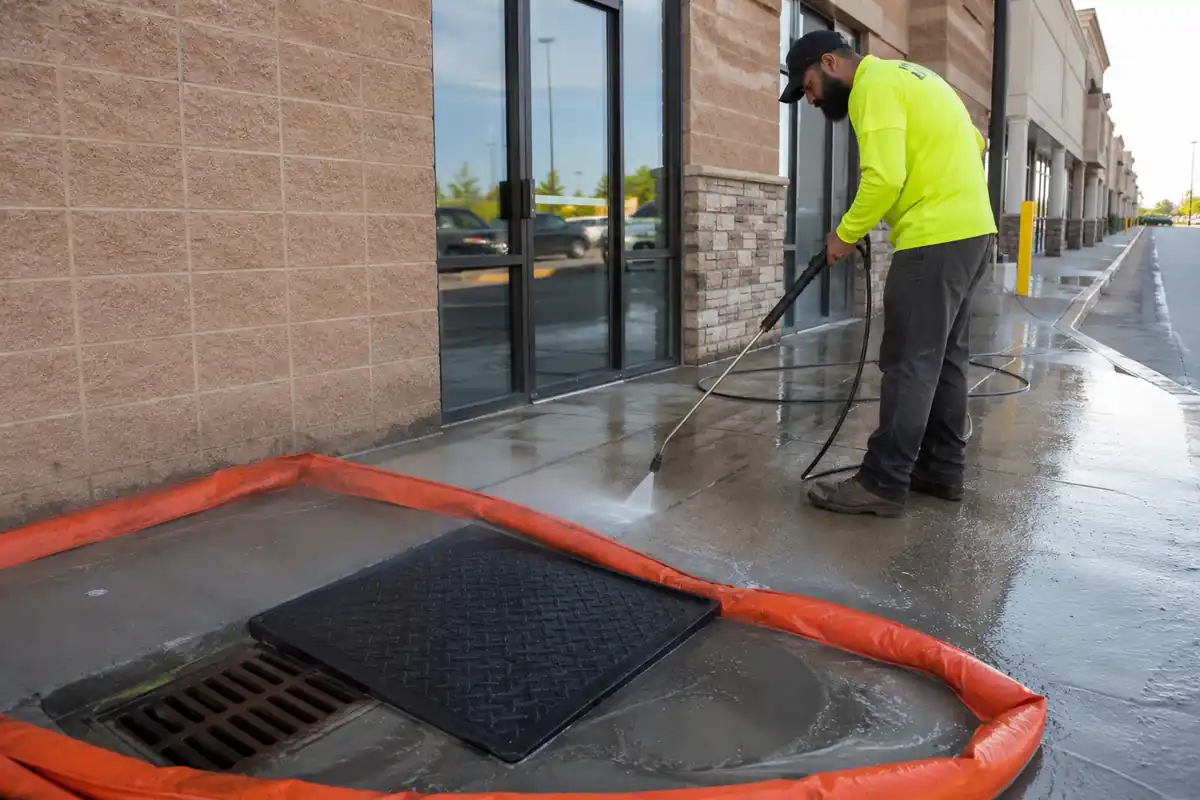
Your crew is halfway through a Saturday flatwork job at a strip mall when a stormwater inspector pulls up, watches gray water curl toward the storm drain, and starts writing a citation. That scene is playing out more often in 2026. Cities have stepped up runoff enforcement, and pressure washing wastewater compliance has become a make-or-break operational skill rather than a nice-to-have. The good news is that compliance is a repeatable process. Capture the water, dispose of it correctly, document what you did, and price the work so the equipment pays for itself. This guide covers the rules, the recovery methods, and the workflow habits that keep every job legal. Owners who run their operations on pressure washing software already have most of the documentation tools they need; the rest is technique and training.
Why Wash Water Became a Compliance Problem
The legal foundation is the federal Clean Water Act. Section 301 prohibits discharging pollutants into waters of the United States without a National Pollutant Discharge Elimination System (NPDES) permit. Storm drains matter here because most of them flow directly to creeks, rivers, and bays with zero treatment. Regulators treat pressure washing runoff as process wastewater, and it usually carries detergents, oil, grease, paint chips, and heavy metals picked up off the surface you cleaned.
Enforcement used to be rare. It is not anymore. Municipalities operate under MS4 stormwater permits that require them to police illicit discharges, so many cities now employ dedicated inspectors, respond to photo complaints from residents, and levy fines locally instead of waiting for federal action. Penalties for contaminated discharges can reach $50,000 per day in serious cases, while routine local citations run from a few hundred dollars to $10,000 per incident. Property owners get cited too, and they pass that pain straight to the contractor who created the runoff. One citation can erase the profit from a month of flatwork.
The Rules Behind Pressure Washing Wastewater Compliance
Three layers of rules apply to a mobile washing business, and they fit together more simply than most owners expect.
Federal: the Clean Water Act and NPDES program. Very few pressure washing companies ever obtain an NPDES permit. Instead, the standard compliance path is to never discharge process water to a storm drain or surface water in the first place. No discharge, no permit needed.
Local stormwater ordinances: your city or county almost certainly publishes best management practices (BMPs) for mobile cleaners. These documents tell you exactly what your local inspector expects: block the drains, capture the water, and dispose of it at an approved point. Reading your local BMP guide takes 20 minutes and is the single highest-value compliance step you can take this week.
Sanitary sewer rules: the sanitary sewer (not the storm drain) leads to a treatment plant, which makes it the preferred disposal point for captured wash water. Most treatment authorities allow contractors to discharge filtered wash water to a sanitary cleanout with prior permission, though some require a short discharge authorization form first. Call before you dump.
One more trap: washing painted surfaces on pre-1978 buildings can trigger the EPA's lead paint RRP requirements, which add containment rules beyond normal runoff control. And remember that environmental compliance is separate from business licensing; if you are still sorting out the basics, see our guide to pressure washing license requirements.
Capture and Recovery: Four Ways to Keep Runoff Legal
Block and divert
The entry-level method. Seal nearby storm drains with rubber drain covers or weighted mats ($75 to $300 each), then use berms or sandbags to steer water toward a landscaped area where it can soak in. Many jurisdictions allow discharge to grass or gravel if you use biodegradable detergents and the water shows no visible sheen. This works well for house washes and low-volume residential work.
Collect and pump
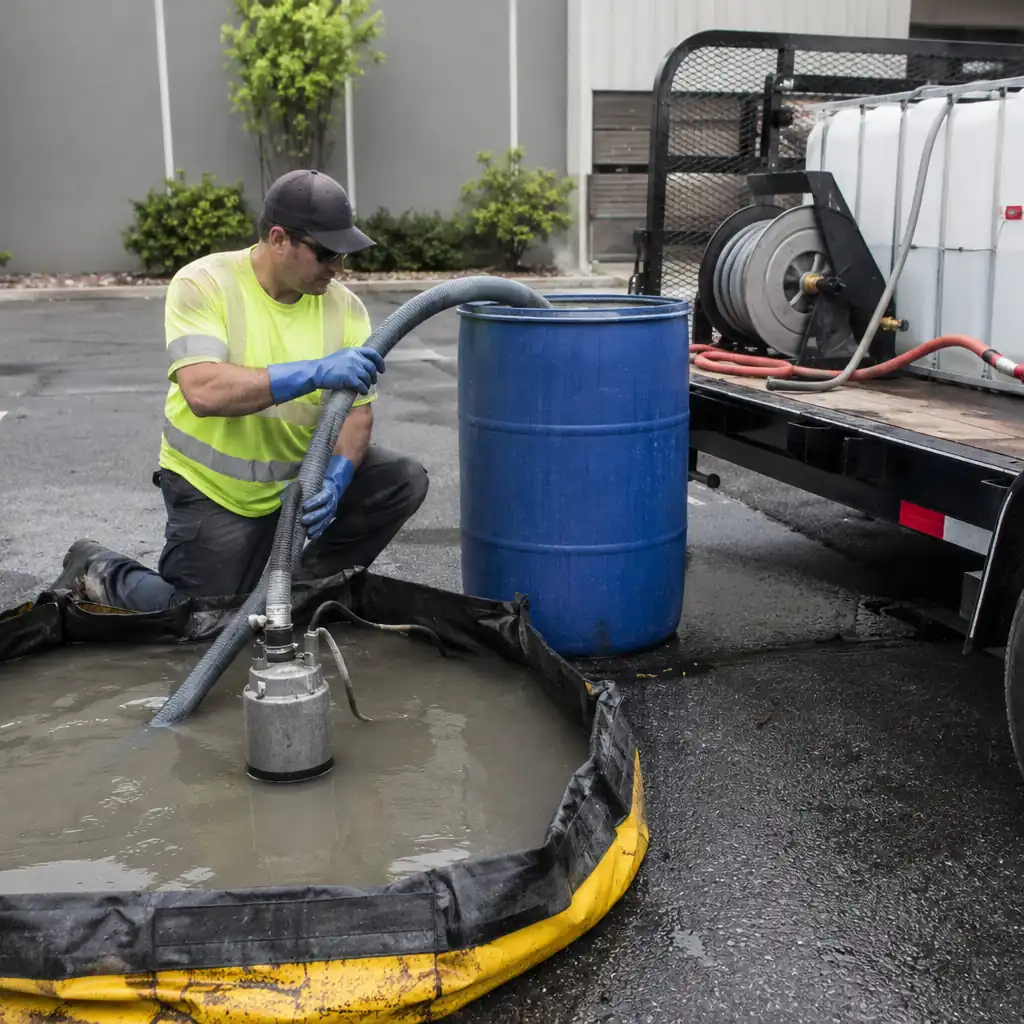
For flatwork, use berms to pool water at the lowest point of the surface, then move it with a submersible sump pump into 55-gallon drums or a poly tank on your trailer. A complete berm-and-pump kit costs $500 to $1,500 and handles most sidewalk and dumpster-pad jobs without specialized equipment.
Vacuum recovery
The professional standard for commercial contracts. Vacuum boom systems suck water off the surface as you work, and enclosed surface cleaners with built-in recovery capture wash water at the source. Trailer-mounted reclaim systems with multi-stage filtration let you reuse the water on the same job, which also cuts your fresh water hauling. Expect $2,000 for a basic vacuum setup and $10,000 to $25,000 for a full reclaim trailer.
Dispose correctly
Captured water has three legal exits: a sanitary sewer connection with the treatment authority's permission, on-site landscaping where local rules allow it, or a licensed wastewater disposal facility for heavily contaminated loads such as degreasing jobs. Facilities typically charge by the gallon. The storm drain is never an option, even for "just water" rinse jobs, because regulators treat everything coming off a work surface as process water.
Ready to level up your business?
Try Bella FSM free and transform the way you work.
Build Compliance Into the Job Workflow
Equipment does not keep you compliant. Process does. The companies that never get cited treat runoff control as a standard job phase, the same as setup and teardown.
Start at the estimate. When you walk a property, map every storm drain, note the slope, and decide the capture method before you quote. A dumpster pad next to a drain inlet is a different job than one in the middle of a parking lot, and your price should reflect that.
Then push the plan onto the work order. Give crews a per-job checklist: drain covers placed, capture method used, gallons recovered, disposal point, and photos of the containment setup before and after. Time-stamped photos attached to a digital work order are your best defense if a complaint comes in a week later. Work order software makes that documentation automatic instead of optional.
Compliance also changes your calendar math. A flatwork job with full recovery takes 20 to 30 percent longer than wash-and-walk, so build setup and teardown time into every booking with pressure washing scheduling software instead of letting the day silently overrun. If you haul captured water, sequence jobs so disposal stops fall along the day's path; our guide to pressure washing route optimization covers how to plan that day.
Finally, train the crew. A monthly 15-minute toolbox talk on containment, plus a clear rule about who speaks to an inspector on site, prevents most violations from ever happening.
What Compliance Costs and How to Charge for It
Owners avoid recovery equipment because they see cost without revenue. Price it correctly and it becomes margin.
Startup costs are modest at the entry level: drain covers, berms, and a pump kit run $800 to $2,000 total. A vacuum reclaim system is a bigger swing at $5,000 to $25,000, and it makes sense once commercial flatwork is a steady part of your mix. Ongoing costs include filter media, disposal fees that often land between $0.10 and $0.35 per gallon, and the extra labor time on each job.
Recover those costs as a visible line item in your pressure washing invoicing software. Add a wastewater recovery charge of $75 to $250 per commercial job, or fold 10 to 20 percent into your flatwork rates. Commercial buyers rarely push back; property managers understand that the citation would cost them far more than the line item. For the full framework on rate-setting, see how to price pressure washing jobs.
Ready to take your business further?
Start using Bella FSM free and work smarter.
Compliance as a Competitive Edge
Here is the upside hiding inside the regulation: most of your competitors are not compliant. National retail accounts, REITs, and municipal contracts increasingly require written proof of BMPs before a vendor gets approved. When your proposal includes your containment procedure, your equipment list, and sample photo documentation from past jobs stored in your pressure washing crm software, you are often the only bidder who can produce it. That wins contracts at full price. Environmentally cautious commercial clients do not shop for the cheapest wash; they shop for the contractor who will not put their property on a violation notice.
Frequently Asked Questions
Make Wastewater Compliance a System, Not a Scramble
Pressure washing wastewater compliance comes down to four habits: know your local BMP rules, capture the water on every job, dispose of it at an approved point, and document everything with photos on the work order. Owners who build those habits into estimates, their pressure washing scheduling app, and crew checklists stop worrying about inspectors and start using compliance to win better contracts. Keeping each property’s containment notes and photo history in a pressure washing crm means the next quote starts from what worked last time. Bella FSM’s pressure washing business software gives you the scheduling, work orders, and job documentation to run that system without adding office work. Start a free trial and see how it fits your operation.
Ready to grow your business?
Try Bella FSM free and simplify your work.