
Grow Your Business
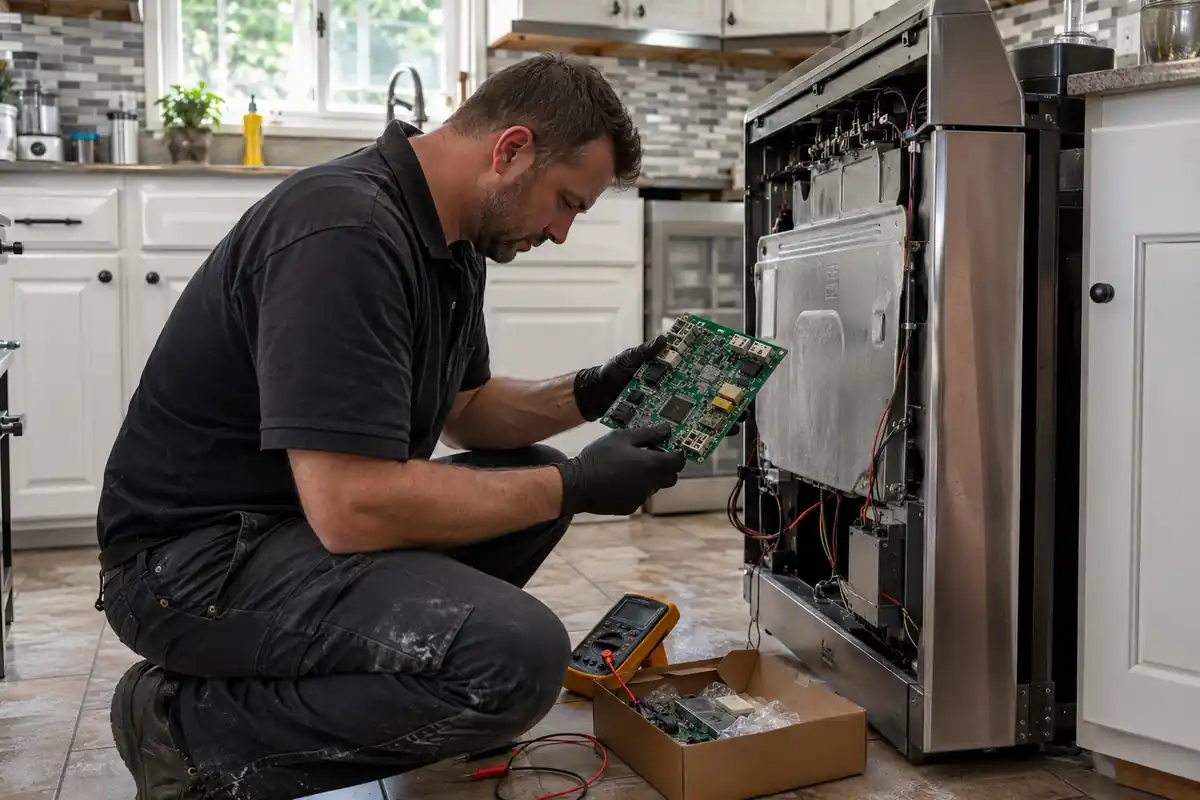
A customer calls on a Tuesday about a four-year-old induction range throwing an F47 code. You know the fault. You also know the control board has only ever been sold to the manufacturer's authorized network, so you quote nothing and the call goes to a competitor. Independent shops have been losing that job for a decade. The appliance right to repair law is changing who gets to take it. California's SB 244, Colorado's HB 1121 and a growing run of similar statutes require manufacturers to sell parts, tools and documentation to independent repairers on the same terms their authorized servicers get. That widens what you can quote, and it changes what your appliance repair software needs to capture when a call comes in for a brand you used to turn away.
What the appliance right to repair law actually requires
The statutes vary more than the headlines suggest, and several do not cover appliances at all. New York's Digital Fair Repair Act, the first broad law of its kind, was written for consumer electronics, and a washing machine is not in scope. The ones that do matter to an appliance shop, as written today:
| State | Law | In force | Appliances covered? |
|---|---|---|---|
| California | SB 244 | July 1, 2024 | Yes, for products sold on or after July 1, 2021 |
| Minnesota | Digital Fair Repair Act | July 1, 2024 | Partly, with carve-outs |
| Colorado | HB 1121 | January 1, 2026 | Yes, including HVAC equipment |
| Oregon | SB 1596 | July 1, 2027 | Yes, and it restricts parts pairing |
California's is the one most shops feel first, because it sets duration by price. Manufacturers must supply parts, tools and documentation for at least three years on products priced between $50 and $99.99, and seven years at $100 or more. Every residential appliance clears the $100 line, so seven years is the practical number. Colorado's law is broader and reaches HVAC equipment too.
One phrase does the heavy lifting in all of them. Parts, tools and documentation must be offered on terms equivalent to those given authorized providers, and diagnostic software counts as a tool.
Start here: write down the brands you currently decline over parts access. That list is your opportunity map, and it belongs beside the customer history in your appliance repair CRM software.
Deciding which newly serviceable brands you actually want
Being able to buy a part does not make the job worth taking. You still have to price it, source it, stock it and stand behind it, and some of these calls will quietly eat an afternoon for a $180 ticket. Screen each brand against four questions before you say yes:
- What does the common failure part cost, and what is the OEM lead time?
- Does the repair need manufacturer software to validate the part, or will it work once fitted?
- What is the machine worth used? A $310 board in a $900 range is a different conversation from a $70 thermistor.
- Do you have a technician who has been inside that platform, or are you buying the education on this job?
The answers sort into three buckets: take it, take it with a parts deposit, and still decline. Shops that skip this step say yes to everything in the first excited month, then eat the cost of three special-order boards on a shelf.
Whoever answers the phone now needs brand, model, serial and error code before a slot is booked. Build those fields into the intake screen, and let your appliance repair scheduling software route the job to the technician who has opened that platform before rather than whoever is nearest.
Publish that three-tier list where the phone is answered, and review it monthly.
What parts, tools and documentation access really costs
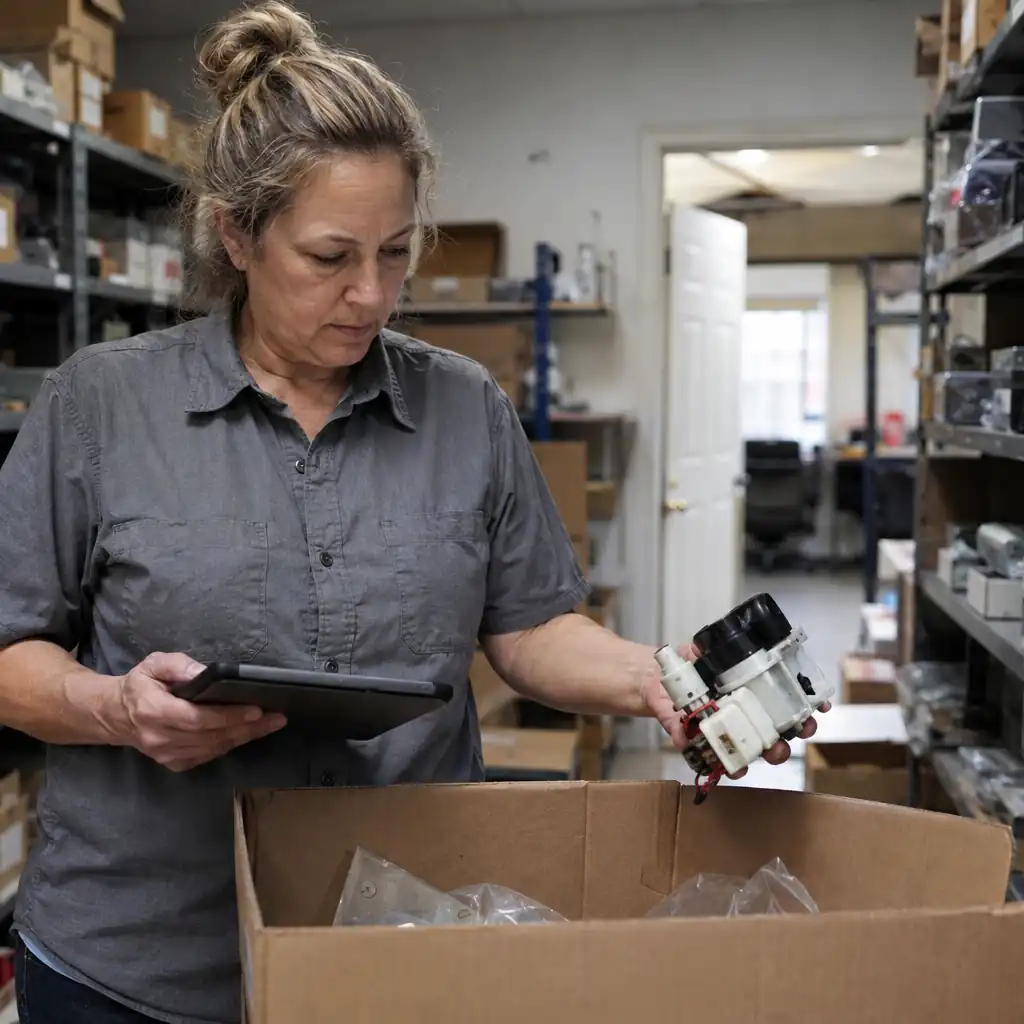
Fair and reasonable terms means the same price an authorized servicer pays. It does not mean free. GE sells an Appliance Service Tool dongle that lets its service app talk to control boards on non-connected models back to roughly 2012, bundled with a SmartHQ Service subscription. Whirlpool runs its technical documentation and warranty administration through the ServiceMatters portal. Expect a per-brand cost for tooling and portal access, renewed annually, before the brand has earned you anything.
Then there is the parts float. Control boards commonly land between $120 and $400 at distributor pricing, so six spares across two new platforms ties up $900 to $2,400 in slow-turning stock.
Deciding what earns a permanent slot on the van is its own discipline, and our guide to appliance repair parts inventory covers the stocking method in detail.
The rule for a new brand is that its parts belong in the warehouse, not on a truck, until the failure pattern repeats. Running parts inventory tracking software with separate counts for the warehouse and each vehicle is what makes that rule enforceable.
Treat each brand as a line item with a payback target. If tooling, portal and starter parts cost $1,400, you need eight to ten completed repairs to break even. Check at ninety days.
Ready to level up your business?
Try Bella FSM free and transform the way you work.
Pricing the diagnostic while you absorb the learning curve
Independent shops commonly charge around $90 to diagnose a major brand, credited toward the bill when the repair is approved. That number was set on platforms your technicians know cold. The first few jobs on a newly opened brand will not run to that time, and pretending otherwise is how margin disappears quietly.
You have three honest options. Hold the customer-facing fee and treat the extra time as training with an end date. Quote labor from a padded book time for the first few jobs, then reset once you have data. Or send those jobs to your best technician and accept the higher labor cost.
What you should not do is let the extra time land invisibly. An unplanned return visit costs roughly $85 to $140 once you count wages, vehicle cost, dispatcher time and the slot you gave away. Capture actual time on the ticket, and let appliance repair invoicing software bill from what the technician recorded rather than what the estimate assumed.
Separate the work streams too. Warranty claims, cash repairs and the new right-to-repair jobs all bill differently, and the reporting is worthless if they land in one pile. Good appliance repair business software keeps those revenue types apart from the moment a job is created.
Track completion time for the first five jobs on a new platform, then reprice labor from the gap.

The records that protect you when a manufacturer stalls
Having the right and being able to prove you exercised it are different problems. Compliance is uneven, and shops still report parts requests that go unanswered. Most of these statutes are enforced by the state attorney general rather than by private lawsuit, which means a dated paper trail is the only thing you can actually take to them. For every OEM request that stalls, record five things:
- The date and channel of the request
- The part number and the model or serial involved
- The price and lead time quoted back, or that nothing came back
- The job number it belongs to
- A screenshot of the exchange
The mistake is keeping this in an inbox. Six weeks later nobody can find the thread, and the customer whose repair stalled is the one asking. Put it on the job record, which is what customer management software for appliance repair is for.
A homeowner who can see you requested the part on the eleventh and chased it on the twenty-second stays patient. Send that history with the invoice when the job closes, which is straightforward if your appliance repair billing software pulls from the same record.
One field on the job template, called OEM request date, turns a vague complaint into a dated one.
Ready to take your business further?
Start using Bella FSM free and work smarter.
Five mistakes shops are making in the first year
The first is assuming the law covers everything. Price thresholds, sale-date cutoffs and category definitions all narrow the scope, and a 2018 dishwasher sold in California falls outside SB 244's window.
The second is quoting before confirming the part. Access does not mean stock, so confirm part number, price and lead time before you give a figure. A two-week backorder discovered after approval is a conversation nobody enjoys.
The third is ignoring parts pairing. Some manufacturers serialize components so a genuine replacement is rejected by the machine's own software until the manufacturer validates it. Few states restrict the practice, Oregon among them, so check before you commit to a platform.
The fourth is leaving labor rates where they were. The first job on an unfamiliar platform is research, and if you never revisit the rate you have permanently discounted a brand you fought to get access to.
The fifth is scattering new-brand work across the crew. Cluster early jobs with one or two technicians so the experience compounds, then widen it once the platform is familiar. Sensible appliance repair dispatch software makes that a filter rather than a daily argument.
The shops that handled smart appliance repair well when connected machines arrived concentrated the learning in the same way.
Pick two brands rather than eight. Get them profitable, then move to the next two.
Frequently Asked Questions
Turning access into billable work
The appliance right to repair law hands independent shops something they have wanted for years, but it arrives as an opening rather than a windfall. The shops that profit will choose two brands deliberately, price the learning curve honestly, keep a record of every parts request, and put the model, serial and service history of every machine they touch where the whole team can reach it. That last piece is the difference between a one-off repair and a customer who calls you about the next five appliances in the house.
Bella FSM keeps parts counts, unit history and payment on one job record, so a widening brand list does not become a widening pile of paperwork. Start a free 14-day trial and see how the week runs when the parts and the history sit in the same place as the money.
Ready to grow your business?
Try Bella FSM free and simplify your work.