
Grow Your Business
Every fall the same math problem shows up on a painting company's desk. Exterior work winds down in October, crews still need hours, and payroll does not pause for the weather. Learning how to price cabinet painting jobs is the most practical fix for that gap in 2026. Kitchens sit indoors, homeowners keep choosing a repaint over a five-figure replacement, and the margin beats wall work when the job is scoped right. That last part is where good painters stumble. Bid a kitchen like a bedroom repaint and you eat twenty unbilled hours of prep and masking. This guide breaks down per-door, per-linear-foot, and hourly pricing with current cost data, then shows how shops run cabinet work through painting contractor software to turn one kitchen into a full winter pipeline.
Why Cabinet Refinishing Is the Winter Work Painters Need in 2026
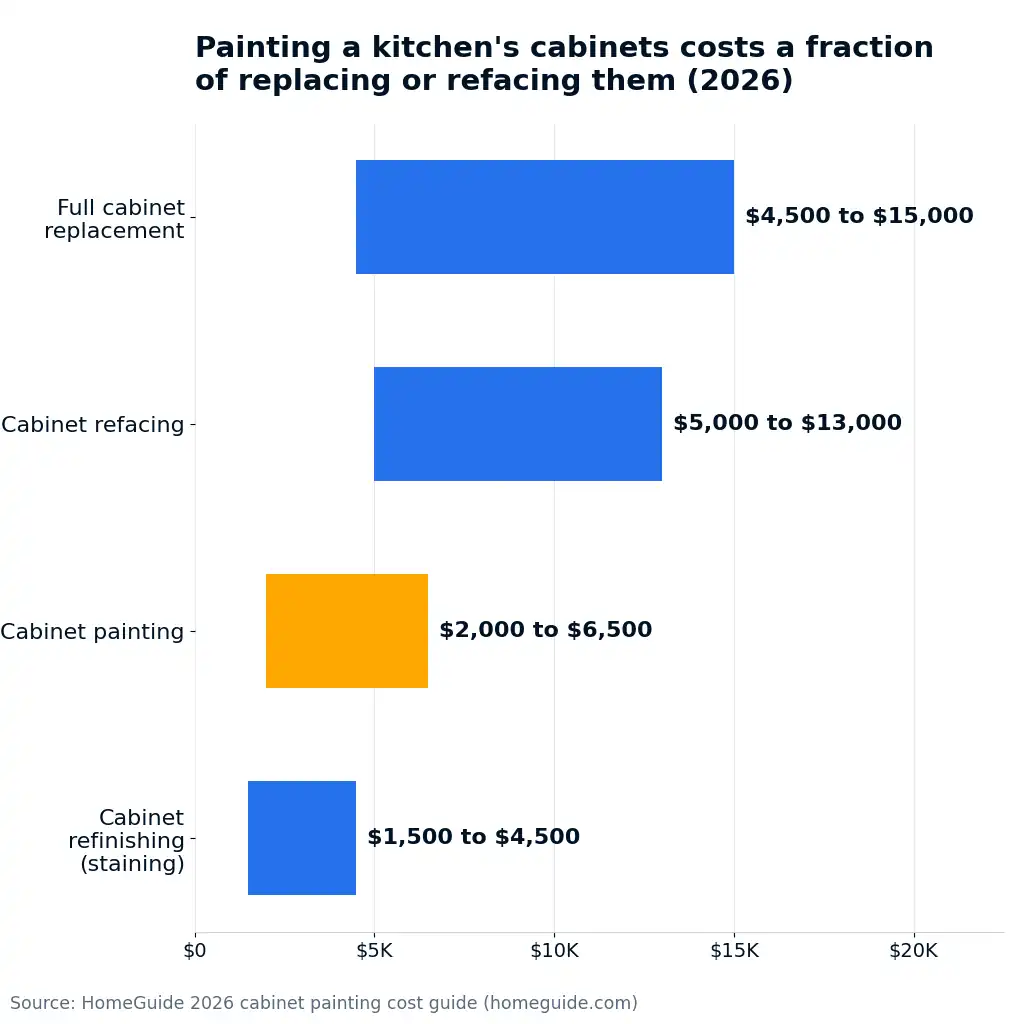
Cabinet painting is winning winter for one simple reason: it is the cheapest way for a homeowner to get a new kitchen, and homeowners know it. According to HomeGuide's 2026 cabinet painting cost guide, painting an average kitchen's cabinets costs $2,000 to $6,500, while a full cabinet replacement runs $4,500 to $15,000 and refacing costs $5,000 to $13,000. That price gap sells the job for you. For the contractor, the work is indoors, immune to frost dates, and finishes in 3 to 5 days per kitchen according to the same guide, which means one crew can turn three to four kitchens a month through the coldest stretch of the year. A shop that books six kitchens between November and February at mid-range prices adds five figures of revenue during the months most painters lay crews off.
The same guide puts staining-based cabinet refinishing at $1,500 to $4,500, so a shop that offers both painting and refinishing can quote whichever fits the cabinet condition and still stay far under replacement cost.
The catch is that cabinet jobs punish loose scheduling. Doors cure between coats, so a crew bounces between two active kitchens on alternating days. Shops that run their calendar through service scheduling software can stagger those cure windows on purpose instead of losing half days to paint that is not ready for recoat.
How to Price Cabinet Painting Jobs: Three Models That Work
There are three ways to price cabinet work, and most successful shops use per-door pricing because homeowners understand it instantly. HomeGuide's tracked estimates put professional cabinet painting at $70 to $125 per door, $30 to $110 per drawer front, and $30 to $70 per linear foot of cabinetry, with materials and labor included. Labor is the real cost driver: cabinet painters charge $25 to $75 per hour, and labor makes up 80 to 85 percent of the total project price per the same guide. Whichever model you pick, quote from a written count of doors, drawers, and linear feet taken during a walkthrough, not from photos a homeowner texts you. The counting method matters less than the consistency. Pick one model, build your rate sheet around it, and your estimators will produce quotes that match your actual production costs within a few percent.
Per-Door Pricing
Count every door and drawer front, multiply by your rates, and add a fixed charge for the boxes and face frames. Using HomeGuide's ranges, a kitchen with 18 doors at $95 and 8 drawer fronts at $60 comes to $2,190 before the boxes. Price the low end of the range for flat slab doors and the high end for raised panels, glazing, or anything with carved detail.
Per-Linear-Foot Pricing
Measure the run of upper and lower cabinets and apply your rate inside the $30 to $70 per linear foot band. This model works well for galley kitchens and commercial break rooms where door counts vary less. If you spray, HomeGuide prices sprayed work at $40 to $100 per linear foot because masking the kitchen takes real hours, so hold a separate spray rate rather than absorbing the difference.
Hourly Pricing for Odd Jobs
Bathroom vanities, laundry cabinets, and repair-heavy projects fit an hourly model at the $25 to $75 rate HomeGuide reports, plus materials. Hourly protects you when cabinet condition is unpredictable. It sells poorly on full kitchens, though, because homeowners want a fixed number before they clear out their dishes.
Quoting speed closes these jobs as much as the number does. A homeowner comparing you against a remodeler is deciding this week, and the same-day painting estimates workflow gets your bid in front of them before the remodel quote arrives.
Ready to level up your business?
Try Bella FSM free and transform the way you work.
How Do You Estimate a Kitchen Without Underbidding It?
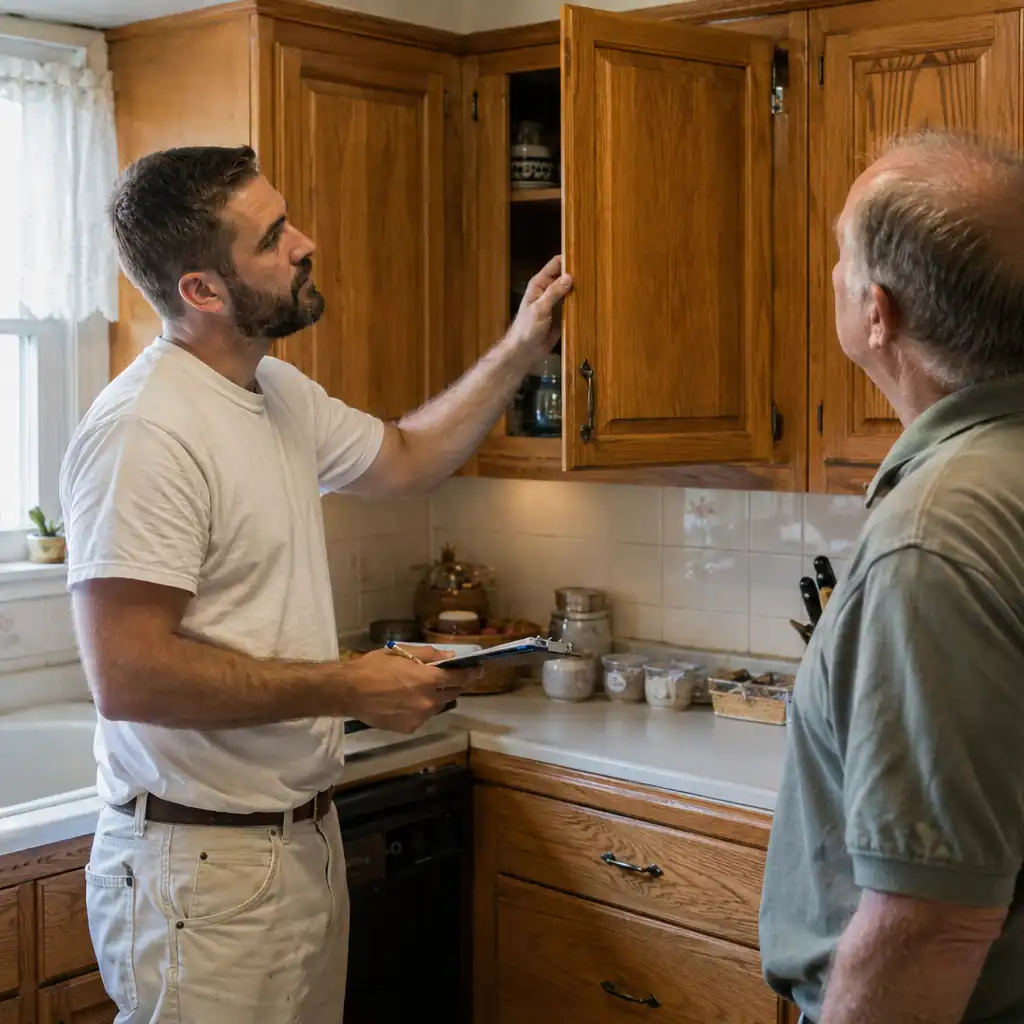
Walk the kitchen with a checklist and count four things: doors, drawer fronts, linear feet of boxes, and repairs. Open every door. Grease near the range means extra degreasing hours, and water damage under the sink means repair work that HomeGuide prices at $120 to $600 on top of painting. Note the material too, because laminate needs scuff sanding before primer will grip, and dark-to-light color changes need an extra coat.
Then price the materials honestly. Cabinet-grade alkyd paint costs 15 to 20 percent more than standard latex per HomeGuide, and it is worth every dollar on a surface that gets handled thirty times a day. A test door is your insurance policy. Paint one door, let it cure, and check adhesion before the full crew shows up. Photograph everything during the walkthrough and attach the photos to the work order in a mobile field service app so the crew knows which doors have damage before they unload the van.
Here is a worked example. A 1990s oak kitchen: 22 doors, 9 drawer fronts, 24 linear feet of boxes, two water-stained lowers. At $85 per door, $55 per drawer, and a $500 box-and-frame charge, the paint scope lands at $2,865, plus $350 for repairs and a $150 alkyd upcharge, for a $3,365 quote that sits comfortably inside HomeGuide's average kitchen range. Owners who run job costing in painting business management software can compare quoted hours against actual clock-ins after each kitchen and tighten these rates every month.
What Should You Collect Up Front on a Cabinet Job?
Collect enough to cover materials before you order them. Alkyd paint, primer, and masking supplies for a full kitchen are a real cash outlay, and on a multi-day job you do not want your own money financing the work. A workable structure is a deposit at booking that covers materials, a progress payment when doors go back on, and the balance at the final walkthrough. Put the payment schedule in the written quote so nobody negotiates it in the kitchen.
The billing mechanics matter more on cabinet work than on repaints because the job spans 3 to 5 days and often overlaps another kitchen. Shops that invoice from the field through field service invoicing software collect the final payment at the walkthrough itself instead of mailing an invoice and waiting three weeks for a check.
When Should You Book Cabinet Work to Fill the Winter Schedule?
Sell cabinet jobs in September and October and schedule them for November through February. That timing works because homeowners start thinking about holiday hosting in early fall, and it works for you because those are the exact weeks your exterior backlog dries up. Every exterior estimate you run in late summer is a cabinet lead: the crew is already in the driveway, and a two-minute walkthrough of the kitchen costs nothing. HomeGuide reports that painted cabinets last 8 to 15 years before they need a fresh coat, which means any customer whose cabinets you painted a decade ago is due, and any house with an original 2010s kitchen is a candidate. A crew that would otherwise sit idle in January can instead run two kitchens in parallel, alternating between them as coats cure, and the shop enters spring with cash in the bank instead of a line of credit drawn down.
Your past customer list is the cheapest source of these bookings. Pull everyone with an interior job older than eight years out of your field service crm for small business records and send them a before-and-after of your last cabinet project in early September. Repeat customers already trust your crew in their house, and that trust is the hardest part of a kitchen sale.
Ready to take your business further?
Start using Bella FSM free and work smarter.
Five Mistakes That Eat Cabinet Painting Margins
These five show up in almost every shop's first winter of cabinet work:
- Skipping the test door. Adhesion failures on thermofoil or greasy oak turn a profitable kitchen into a warranty callback that costs more than the original job paid.
- Quoting from photos. A texted picture hides grease, sun fade, and water damage, and every one of those is hours you did not bill.
- Absorbing spray masking. Sprayed finishes look better and sell higher, but masking a kitchen takes half a day. Charge the spray rate for it.
- Burying the service in your general advertising. Cabinet work deserves its own before-and-after gallery; the playbook in marketing for painting contractors covers how to spotlight a specialty service without rebuilding your whole campaign.
- Leaving without a touch-up policy. Edges chip first on the doors a family opens most. A written one-year touch-up promise prevents the angry call and books you back into the house where the next referral lives.
Frequently Asked Questions
Make Cabinet Season Pay for Itself
Knowing how to price cabinet painting jobs turns the slowest quarter on a painter's calendar into the most profitable one. The demand is already there, the cost data backs your quote, and the same crew that painted siding in July can be spraying doors in January. Bella FSM gives painting companies one place to run the estimates, the staggered cure schedules, and the field invoicing that cabinet work demands. Start a free trial and have your winter pipeline priced before the first frost.
Ready to grow your business?
Try Bella FSM free and simplify your work.