
Grow Your Business
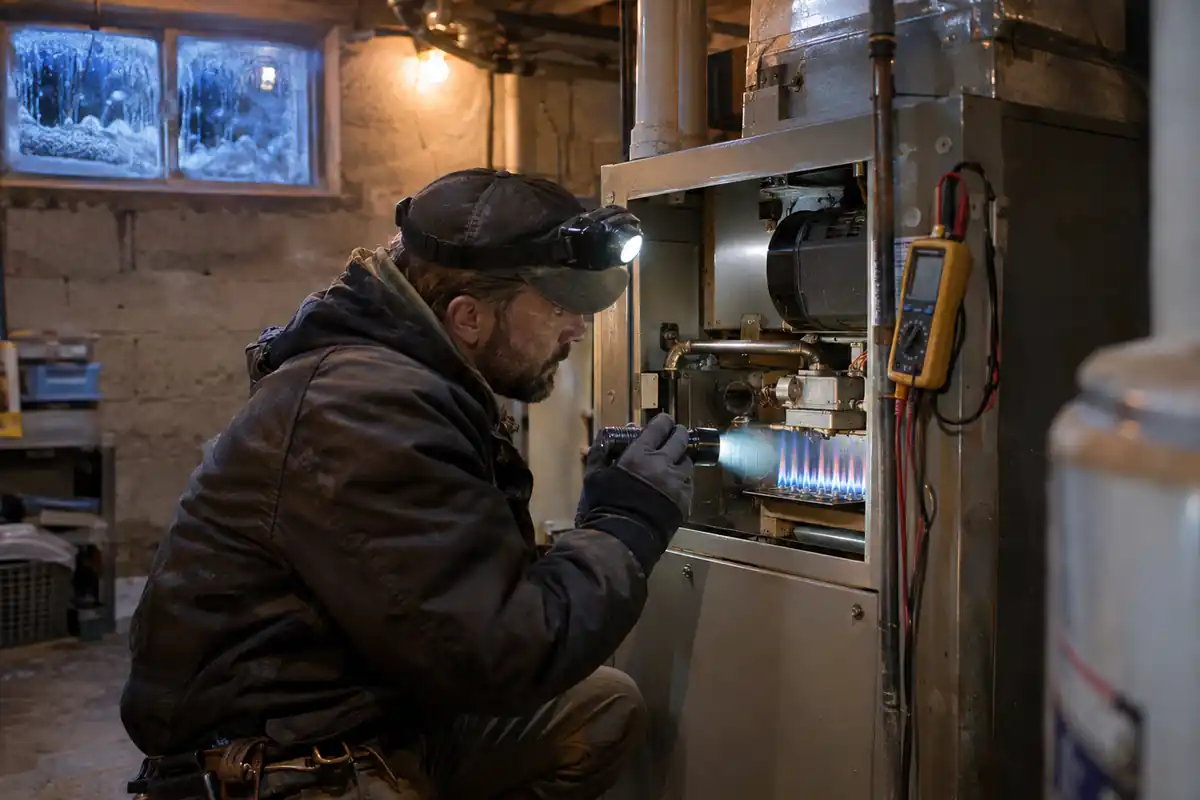
It is 6:40 on a Monday morning after the first hard freeze, and the voicemail box holds 23 messages. Most say the furnace runs but the house is cold, or it will not start at all. Utility gas heats 46.6% of occupied U.S. homes and electricity heats 41.8%, according to the Census Bureau's 2024 American Community Survey, so most shops get furnace and heat pump failures on the same morning. No heat calls are the most urgent work an HVAC company handles all year, and they arrive in clusters. If you run your board in hvac software, every step below maps to a screen you already use.
Why do no heat calls spike when the temperature drops?
No heat calls spike in a cold snap because a system that limped through mild weather has no spare capacity once it runs for hours without a break. A weak igniter, a dirty flame sensor or a tired inducer motor might still light on a 45-degree afternoon, then fail on the first night of real cold, when the equipment cycles hardest. Demand stacks up too: when half a ZIP code calls within 48 hours, a shop staffed for normal volume falls behind by lunch. The safety stakes climb as well. In CDC surveillance data for 2001 to 2003, January produced 2,511 nonfatal unintentional carbon monoxide exposures treated in emergency departments, against 524 in July, and medical record narratives tied 18.5% of incidents to faulty furnaces. All three climb in the same few weeks, so winter dispatch needs its own rules.
The standard intake sequence still applies, and our walkthrough of how hvac companies schedule service calls covers it step by step.
What your market's heating fuel mix tells you
Your no heat calls depend on where you work. In Illinois, where 75.5% of homes heat with utility gas, January means igniters, flame sensors and pressure switches. In North Carolina, where 66.0% heat with electricity, expect heat pump defrost problems and auxiliary strip calls. In Maine, fuel oil still heats 50.3% of homes.
| State | Utility gas | Electricity | Propane | Fuel oil |
|---|---|---|---|---|
| United States | 46.6% | 41.8% | 4.7% | 3.5% |
| Illinois | 75.5% | 18.9% | 3.8% | 0.1% |
| Michigan | 74.8% | 12.5% | 8.7% | 0.8% |
| California | 60.6% | 30.1% | 2.9% | 0.2% |
| New York | 59.8% | 16.5% | 4.7% | 14.6% |
| Texas | 35.4% | 60.5% | 2.7% | 0.1% |
| North Carolina | 25.0% | 66.0% | 5.4% | 1.6% |
| Florida | 5.9% | 89.7% | 0.9% | 0.2% |
| Maine | 8.3% | 13.5% | 16.0% | 50.3% |
Source: U.S. Census Bureau, American Community Survey 2024 1-year estimates, table B25040 (House Heating Fuel), share of occupied housing units. Other fuels not shown; nationally, wood heats 1.3% of homes.
Stock trucks and train phone staff for your own area's fuel mix, not the national average.
How should you triage no heat calls on the phone?
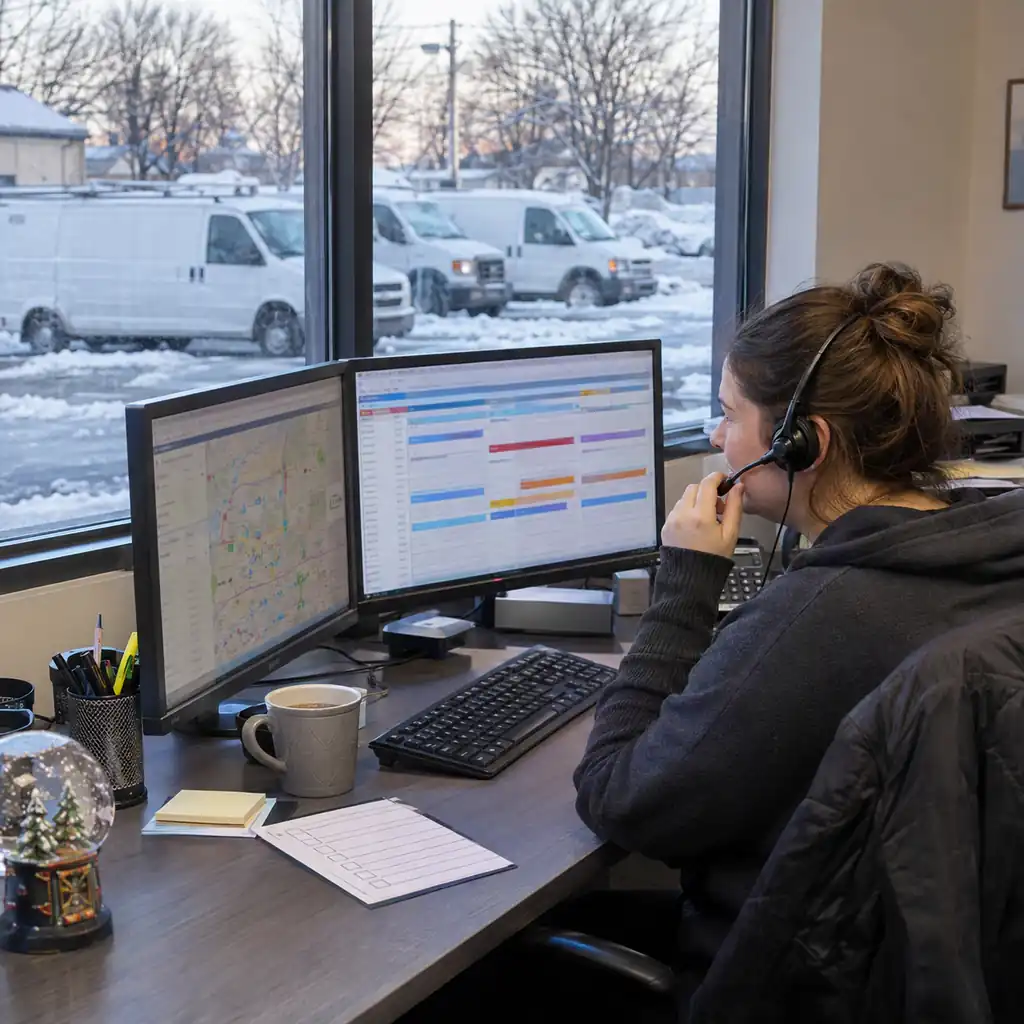
Triage no heat calls by asking the same five questions on every call and ranking each job by risk to people, not by who called first. Is anyone in the home elderly, an infant or medically fragile? Is a carbon monoxide alarm sounding, or does anyone smell gas? What does the thermostat read right now? Is the system completely off, or is it blowing cool air or running on emergency heat? Has your company repaired this equipment recently? The first two answers decide whether the call belongs to you at all. A CO alarm or a gas smell is not a dispatch decision: the caller leaves the house and calls 911 or the gas utility from outside, and your technician follows once responders have cleared the home. The other answers sort everything else into three tiers a dispatcher can assign in under a minute.
Priority 1: dispatch tonight
No heat with a vulnerable occupant, an indoor temperature below your company's floor (say, 55 degrees), or a callback on a repair from the last 30 days.
If the account in your hvac crm software already notes an oxygen concentrator, a newborn or a rental tenant, the dispatcher does not depend on a stressed caller remembering it.
Priority 2: first slot tomorrow
Complete loss of heat, healthy occupants, an indoor temperature holding above your floor and a space heater on hand. Book the first morning slots and text the arrival window.
Priority 3: within 48 hours
- A heat pump on emergency heat that still holds temperature.
- One zone out, or a room that will not warm up.
- Short cycling or noise from a system that still heats.
Put the tier on the job record itself, not on a sticky note, so the dispatch software board shows which red jobs are truly red.
Print the questions and tiers on one card for everyone who answers the phone.
Ready to level up your business?
Try Bella FSM free and transform the way you work.
Dispatching no heat calls without wrecking tomorrow's schedule
After a late emergency night, the on-call tech starts late and every morning job slides. Two habits prevent most of that.
Run an on-call rotation with real limits
Rotate on-call duty weekly and cap it, say at two calls after midnight before a backup tech takes over. Tired techs cause callbacks, and a no heat callback is the most expensive call of the winter.
Block the on-call tech's first morning slot as flex time in your hvac scheduling software, so a 2 a.m. call does not turn an 8 a.m. appointment into a 10 a.m. apology.
Stock the truck for the failures you will see
Most first-visit furnace fixes come down to a short list of parts. HomeAdvisor's 2026 guide shows what homeowners typically pay for each.
| Part | Typical repair cost range |
|---|---|
| Flame sensor | $150 to $250 |
| Ignitor | $150 to $500 |
| Gas valve | $200 to $600 |
| Control or circuit board | $200 to $600 |
| Draft inducer motor | $200 to $1,500 |
| Blower motor | $150 to $2,000 |
Source: HomeAdvisor, furnace repair cost guide, updated June 20, 2026, average cost range by part.
When the board, customer record and invoice live in one hvac business software platform, the tech sees which parts the last visit used before arriving.
From November through March, keep flame sensors, universal igniters, pressure switches and common boards on every truck.
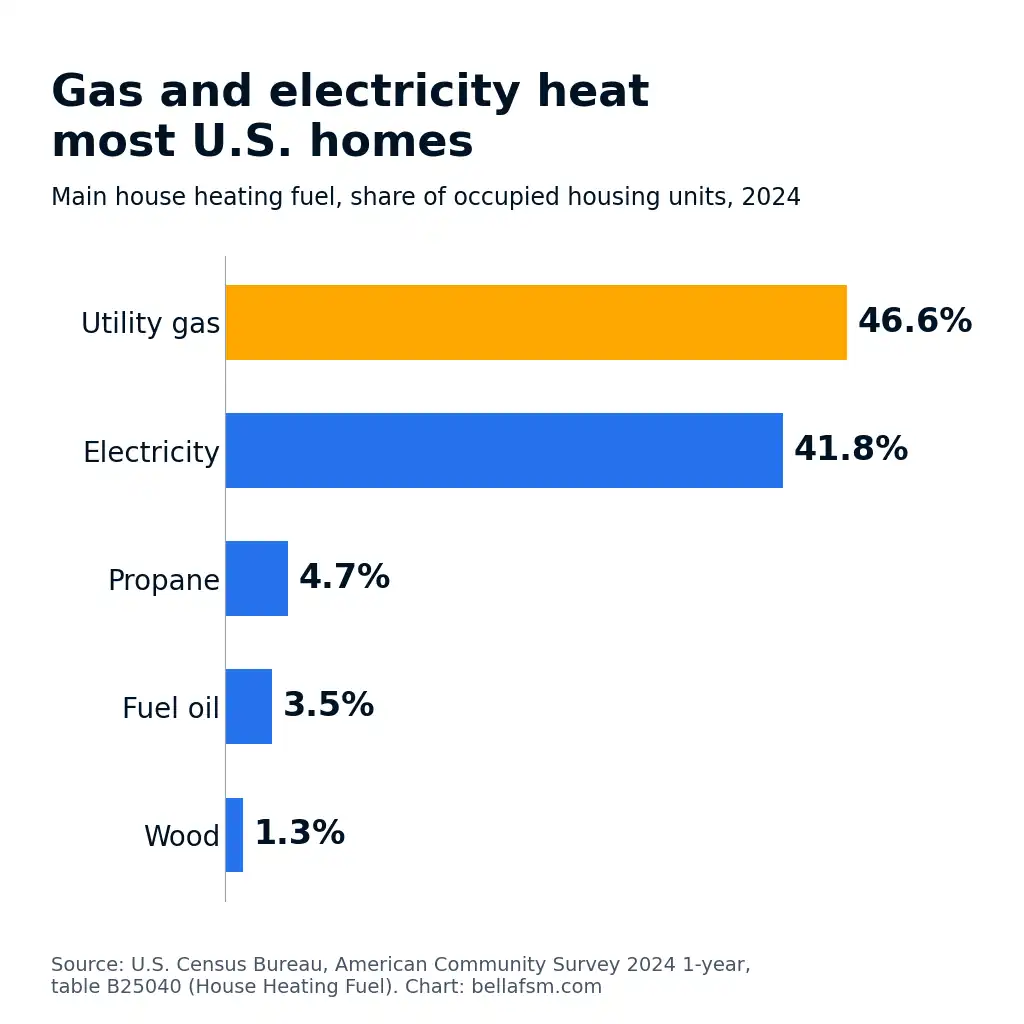
Chart: How U.S. homes heat, by main heating fuel, as a share of occupied housing units. Source: U.S. Census Bureau, American Community Survey 2024 1-year, table B25040. Chart may be embedded with attribution to Bella FSM and a link to this page.
What should you charge for an after-hours no heat call?
Charge an after-hours fee that covers the real cost of putting a technician on the road at night, then price the repair itself from your normal flat-rate book. Homeowners already expect a premium. HomeAdvisor's furnace repair guide, updated June 2026, puts the typical repair at $318, with a normal range of $133 to $505, and tells readers to budget extra for weekend, holiday and middle-of-the-night visits. The cost side starts with overtime. The median HVAC technician earned $29.33 an hour in May 2025, according to Bureau of Labor Statistics wage data, and most on-call work lands after a full week, so it is usually paid at time and a half under the Fair Labor Standards Act rule for hours over 40. That puts a night call at $44.00 an hour before payroll taxes, insurance, the on-call stipend and the truck.
A worked after-hours fee calculation
The table uses the BLS median from our HVAC labor rates page; every other input is an assumption to replace with your own.
| Line item | Amount |
|---|---|
| Overtime wage (BLS median $29.33 x 1.5) | $44.00 |
| Paid hours per call, with drive (assumption) | 3 |
| Overtime labor (3 x $44.00) | $132.00 |
| Payroll taxes and insurance, 25% (assumption) | $33.00 |
| On-call stipend, $75 per night over 1.5 calls (assumption) | $50.00 |
| Truck and fuel per trip (assumption) | $30.00 |
| Cost floor per night call | $245.00 |
| Price at 30% gross margin ($245 / 0.70) | $350.00 |
Source: BLS Occupational Employment and Wage Statistics, May 2025 (SOC 49-9021); Fair Labor Standards Act overtime rule; other inputs are illustrative Bella FSM assumptions.
The formula: price floor equals overtime labor plus payroll load plus stipend share plus truck cost, divided by one minus target gross margin. Here the floor is $350 before parts, so a $150 night fee loses money before the first part comes off the truck.
Price the repair itself from the same flat-rate book you use in daylight; our guide on how to price hvac jobs covers building one.
Run the numbers once with your own payroll, set the fee and stop discounting it at the door.
Quote the fee on the phone, put it on the work order and collect on site with hvac invoicing software, so nobody chases a check in February.
Ready to take your business further?
Start using Bella FSM free and work smarter.
Turning a winter emergency into a long-term customer
A no heat call is the best sales opportunity an HVAC company gets all year, because the customer has just learned what it costs to skip maintenance. The technician who restores heat at midnight has more credibility than any ad. Before leaving, the tech should record the equipment age, model and the failed part, note anything likely to fail next (a cracked igniter, rusted burners, a heat exchanger worth watching), and offer a maintenance agreement that includes priority dispatch on the next cold night. Waiving or discounting the after-hours fee for agreement members gives that offer real teeth. Follow up within a week with a written summary, not a sales call. If the furnace is old enough that the repair quote passes half the price of a new unit, HomeAdvisor's guidance says replacement starts to make sense, so say that plainly and let the customer decide.
Our playbook for a service agreement program covers pricing tiers and renewals.
Every no heat call should leave behind an equipment record, a written summary and one clear offer.
Frequently Asked Questions
Make no heat calls your most predictable work
No heat calls come every winter. The shops that handle them well triage by risk, protect the next day's schedule and charge a night fee that covers the night, and none of that needs more technicians.
Bella FSM keeps customer history, the dispatch board and invoicing in one place. Start a free trial and set up your winter on-call board before the next freeze.
Ready to grow your business?
Try Bella FSM free and simplify your work.