
Grow Your Business
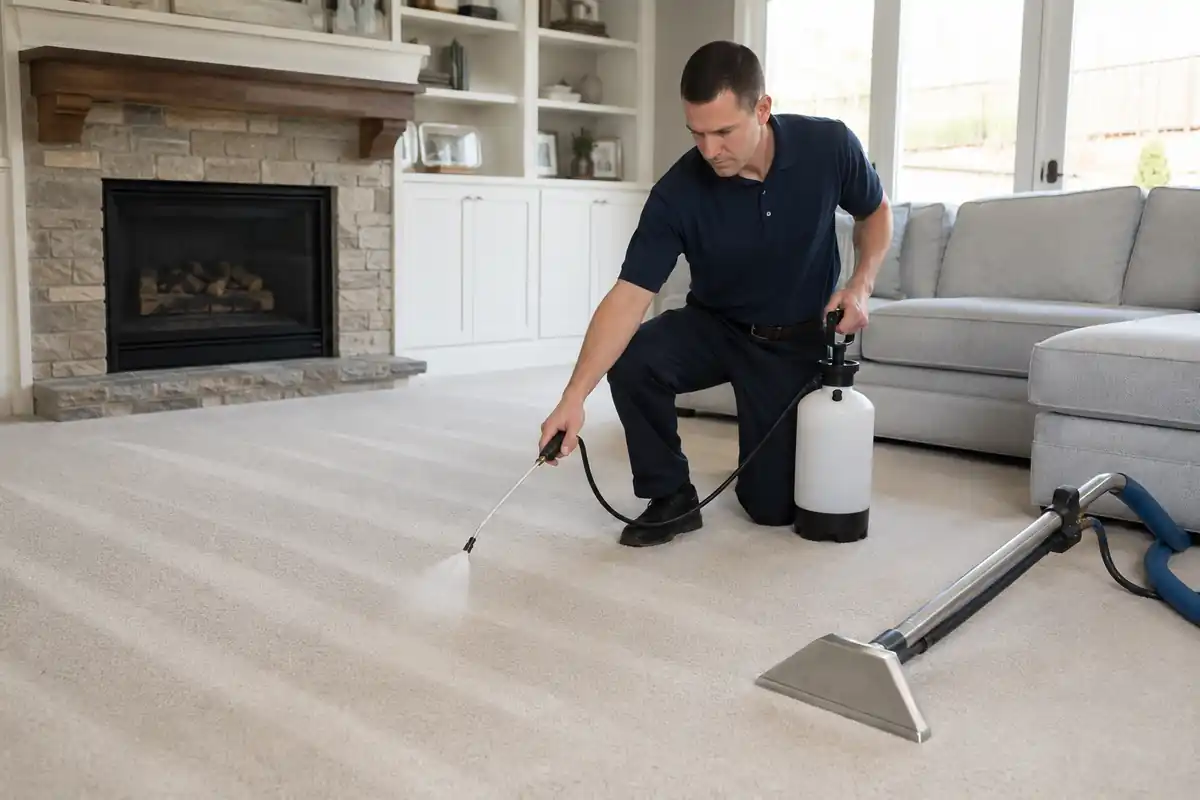
Most carpet cleaners try to grow the hard way: more ads, more leads, more trucks. There is a faster lever sitting inside the jobs you already booked. Carpet cleaning add-on services like protectant, pet odor treatment, and upholstery cleaning can lift a $285 job past $400 without a single extra mile of driving. The customer is already home, the van is already in the driveway, and the equipment is already running. Operators who run their offers through carpet cleaning software instead of memory are the ones who turn add-ons from an occasional tip into a repeatable revenue system. This guide covers what to offer, what to charge, and how to build the ask into every job.
Why Carpet Cleaning Add-On Services Beat Chasing New Jobs
The math favors the customer you already have. Winning a new residential job in a crowded market costs real money in ads, lead fees, and quote time. Selling a $75 protectant application to a customer standing in her own living room costs you about four minutes of conversation and a few dollars of product.
Consider a typical solo operator running 5 jobs a day at the industry average of $285 per residential job. That is $1,425 in daily revenue. If just two of those five customers accept a $90 add-on, the day jumps to $1,605. That is a 12.6 percent revenue increase with zero additional drive time, fuel, or marketing spend. Across a 250-day working year, it adds roughly $45,000 per truck.
Add-ons also fit inside your existing schedule instead of fighting it. A protectant application adds 10 to 20 minutes to a job, not a new two-hour slot. Building a 20-minute buffer into each appointment inside carpet cleaning scheduling software means an accepted add-on never cascades into a late arrival at the next job.
The takeaway: before you spend another dollar acquiring customers, build a system that earns more from each visit you already have on the calendar.
The Add-On Menu: What to Offer and What to Charge
Keep the menu short. Five or six proven options outsell a laundry list every time. Here is what is working for operators in 2026, with realistic price ranges:
| Add-on | Typical price | Added time |
|---|---|---|
| Carpet protectant application | $0.15 to $0.30 per sq ft, or $50 to $130 per job | 10 to 20 min |
| Pet odor and enzyme treatment | $30 to $40 per room; subfloor treatment priced separately | 15 to 30 min |
| Upholstery cleaning | $50 to $400 per item depending on size and fabric | 30 to 90 min |
| Upholstery protector | Around $10 per seat | 5 to 10 min |
| Area rug cleaning | Priced per rug by size and material | 20 to 45 min |
| Antimicrobial or allergen treatment | $10 to $40 per room | 10 to 15 min |
Protectant deserves the top spot on your list. Product cost is low, application is fast, and it gives the customer a real benefit: spills wick instead of soaking in, and carpets go longer between cleanings. Antimicrobial treatments are the fastest riser; indoor air quality and allergen awareness are now among the strongest demand drivers in the residential market, and customers increasingly ask for treatments that keep working between visits.
Margins matter more than menu size. If you are still deciding which services justify their product and labor cost, the numbers in our breakdown of whether carpet cleaning is a profitable business show where the healthiest margins in this trade actually sit.
Price every add-on as its own line item rather than burying it in a lump sum. Quoting through carpet cleaning invoicing software lets the customer see exactly what the protectant or pet treatment costs, which builds trust and makes the yes easier.
The takeaway: a six-line menu with firm prices beats improvised offers. Decide your prices once, then sell from the sheet.
Put the Offer Inside Your Job Workflow
Attach rate is mostly a function of when you ask. There are three natural moments, and strong operators use all three.
First, the booking call. When a customer mentions a dog, a toddler, or a light-colored carpet, note it and plant the seed: "We can add an enzyme treatment for pet areas; your tech will take a look and confirm the price before starting." No pressure, just an expectation.
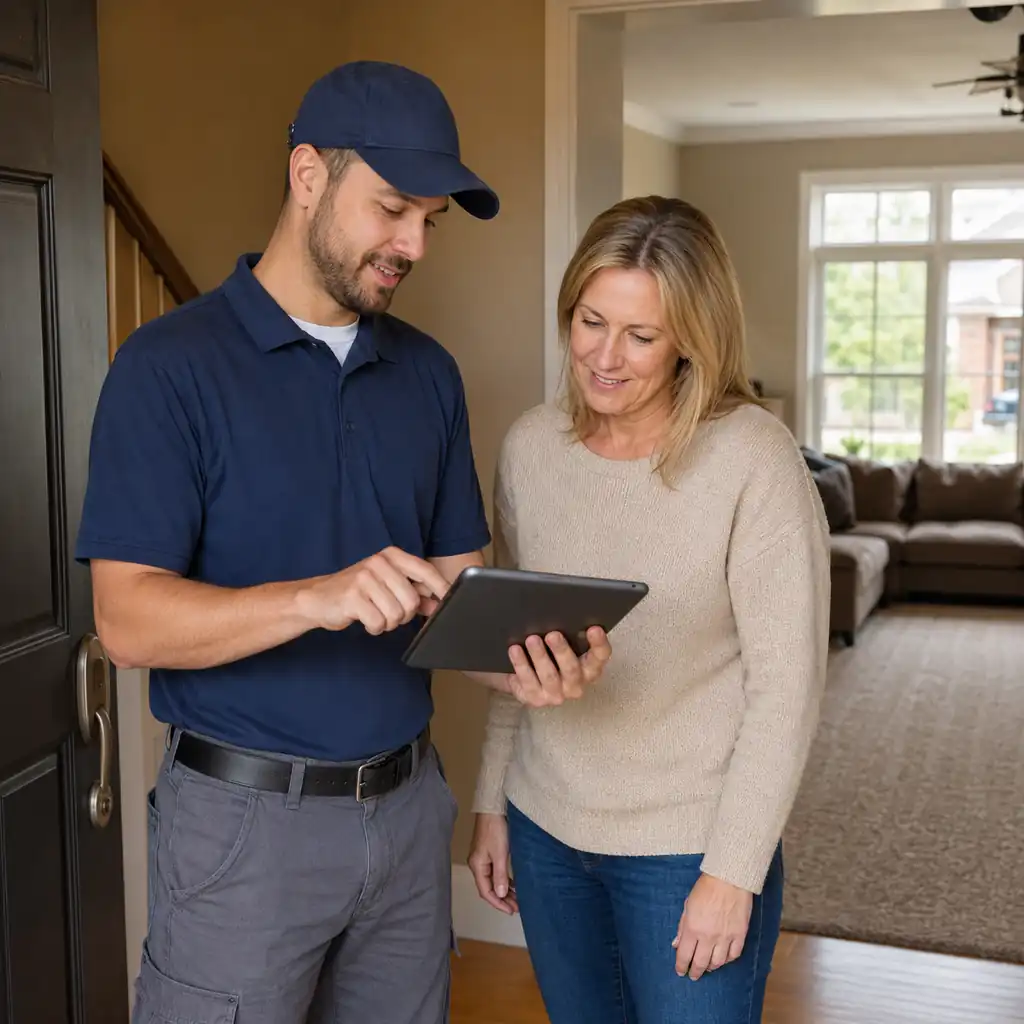
Second, the pre-job walkthrough. This is where most add-ons are actually won. The technician sees the traffic lanes, the pet stains, and the sectional sofa, and can make a specific recommendation tied to what the customer just showed them.
Third, the post-job moment. Clean carpet is its own sales pitch. "Protectant would keep it looking like this longer" lands best when the customer is looking at the result.
The booking note only helps if the technician actually sees it. Service history stored in carpet cleaning crm software tells the tech before arrival that this household has two dogs, declined protectant last spring, and asked about the sofa. That context turns a generic pitch into a specific one.
Here is how it plays out for a real two-truck operation. The dispatcher flags a repeat customer with a pet note. The tech reviews the job on his phone in the driveway, walks the home, and quotes the enzyme treatment on the spot. Adding the approved line item from a mobile field service app takes under a minute, and the office sees the updated total before the wand touches carpet.
The takeaway: script all three moments. An add-on program that lives only in the post-job pitch leaves half its revenue on the table.
Ready to level up your business?
Try Bella FSM free and transform the way you work.
Train Technicians to Offer Without Being Pushy
Most technicians hate selling because they picture pressure. Reframe the job: they are not closing, they are informing. The customer decides.
Three habits make offers feel like advice instead of a pitch:
- Tie every offer to something observed. "These traffic lanes will re-soil first; protectant slows that down" beats a canned speech.
- Give the price immediately. Hiding the number until the invoice feels like an ambush. Stating "$85 for the whole living room" up front builds trust.
- Accept the first no. One clear offer per moment. Repeated asks burn the relationship that repeat cleanings depend on.
Consistency is the other half of training. If one tech charges $60 for protectant and another charges $110 for the same room, referrals and reviews suffer. A shared price book inside your carpet cleaning business software keeps every truck quoting the same numbers, so the offer sounds professional no matter who is holding the wand.
Avoid commission-only incentives on add-ons. A small flat bonus per accepted add-on rewards the behavior without pushing techs toward the hard sell that generates refund requests and one-star reviews.
The takeaway: train the observation, the price, and the stop. Pushy is what happens when any of the three is missing.
Add-Ons on Commercial Accounts
Residential is where add-ons start, but commercial is where they compound. A quarterly contract for an office or restaurant multiplies every accepted add-on by four or more visits a year.
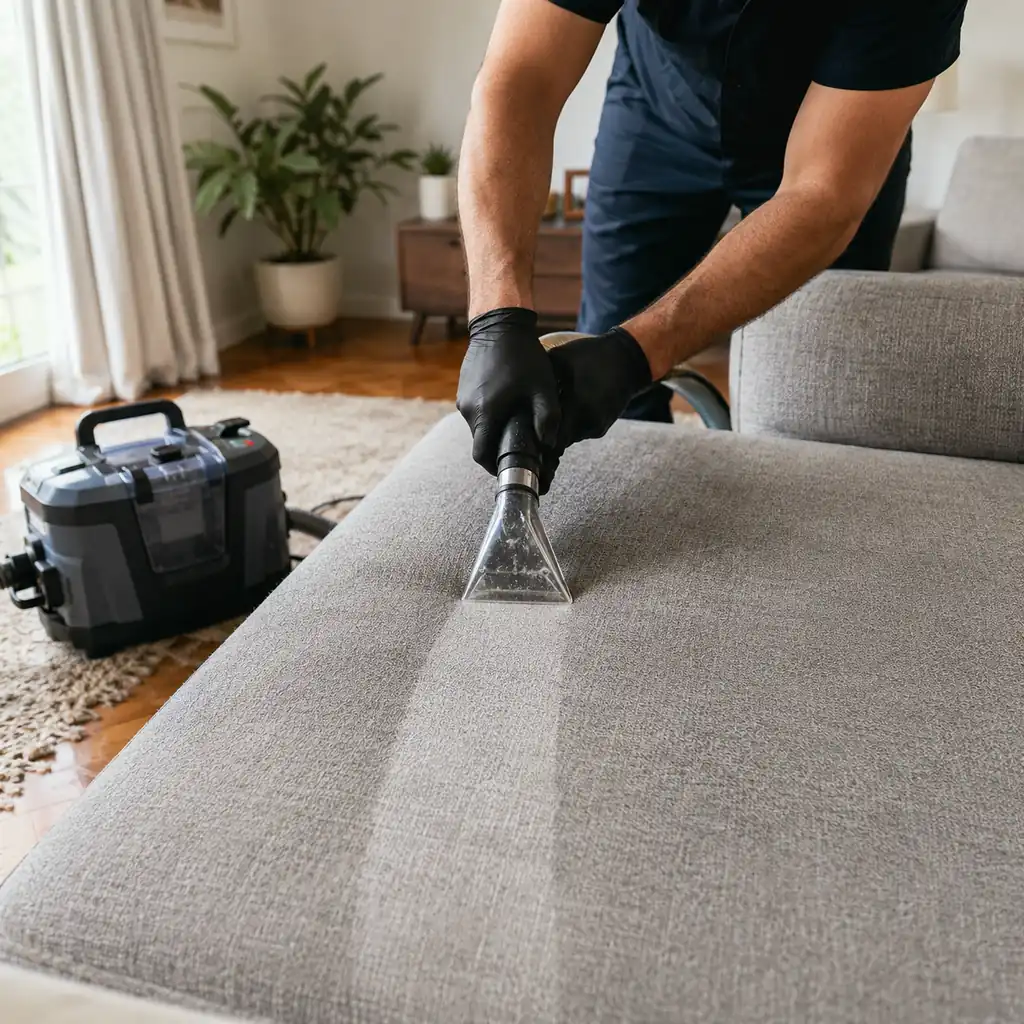
The offers change shape for business customers. Protectant on lobby and corridor traffic lanes extends the life of expensive commercial carpet. Upholstery cleaning for office task chairs and reception furniture is a natural annual rotation. Enzyme and antimicrobial treatments appeal to medical offices, daycares, and gyms that answer to their own customers on cleanliness.
Structure matters here. Rather than pitching each visit, write the add-on rotation into the agreement itself: carpet every quarter, protectant twice a year, chairs annually. Our guide to commercial carpet cleaning contracts covers how to price and win these recurring accounts in the first place.
Recurring work also has to show up on the calendar without anyone re-entering it. Setting the full rotation as repeating visits in a carpet cleaning scheduling app means the protectant visit in month six books itself the day the contract is signed, instead of depending on someone remembering it.
The takeaway: on commercial accounts, sell the rotation once and let the contract do the repeat selling for you.
Ready to take your business further?
Start using Bella FSM free and work smarter.
Measure Attach Rate and Average Ticket
Two numbers tell you whether any of this is working.
Attach rate is the percentage of jobs that include at least one add-on. Divide jobs with an add-on by total jobs for the month. Operators just starting a structured program typically land between 20 and 30 percent. A trained crew using all three offer moments can push past 40 percent.
Average ticket is total revenue divided by job count. Watch it monthly. If attach rate climbs but average ticket does not, techs are probably discounting the base cleaning to win the add-on, which defeats the purpose.
Track both per technician, not just per company. One tech at a 15 percent attach rate and another at 45 percent is a training gap you can close in a week of ride-alongs. Review the numbers in a five-minute monthly meeting and celebrate the leader.
Bundling deserves a note of caution. A "clean plus protect" package at a small discount can raise attach rates quickly, but it trains customers to expect the discount forever and hides the value of each service. Test a bundle for 60 days and compare margin per job, not just acceptance rate, before making it permanent.
The takeaway: attach rate tells you whether the ask is happening; average ticket tells you whether it is profitable. You need both on one page every month.
Frequently Asked Questions
Turn Every Job Into a Bigger Job
Carpet cleaning add-on services are the rare growth lever that needs no new leads, no new trucks, and no new hires. Build a six-line menu, price it firmly, script the three offer moments, and measure attach rate and average ticket monthly. The operators winning in 2026 treat every accepted and declined offer as data for the next visit, with each customer's history logged in a crm for carpet cleaning so the next technician picks up where the last one left off. Bella FSM gives carpet cleaners scheduling, customer records, mobile quoting, and invoicing in one place. Start a free trial and see how much more your current calendar is worth.
Ready to grow your business?
Try Bella FSM free and simplify your work.