
Grow Your Business
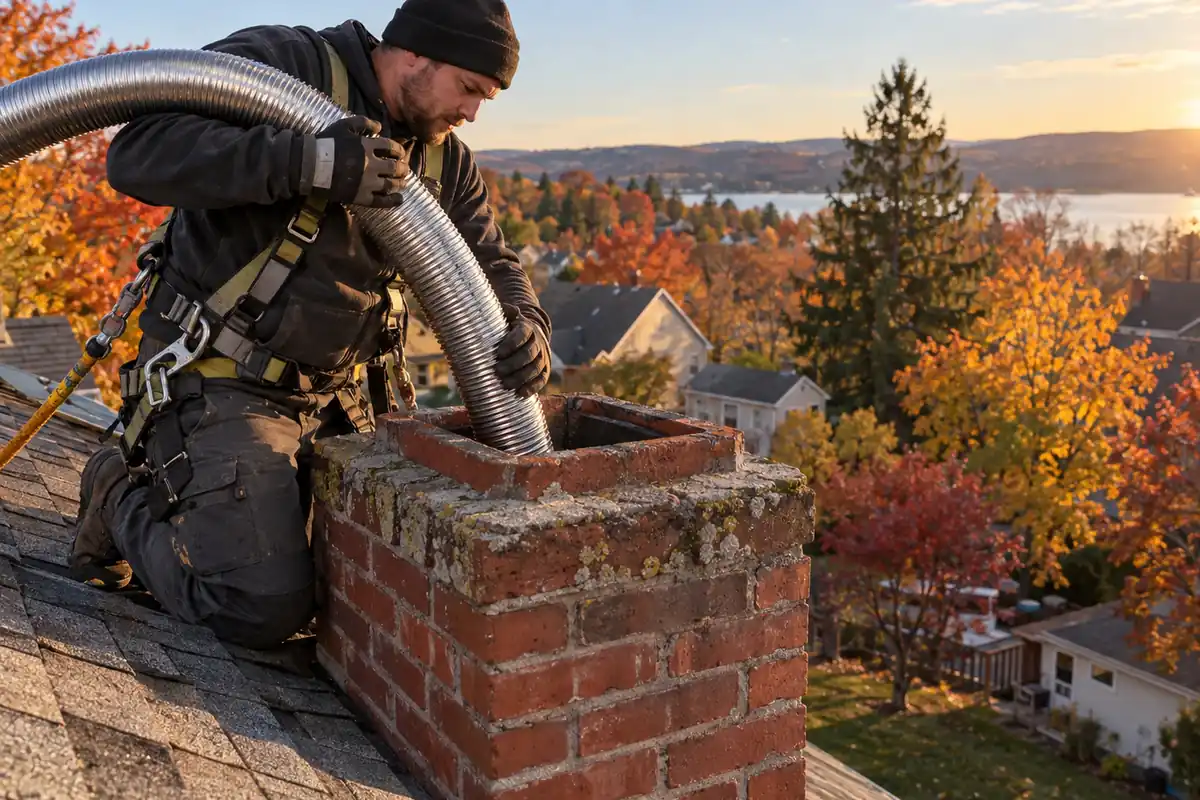
Your tech drops the camera down a 1950s masonry flue on a Tuesday sweep and finds three open mortar joints and a cracked tile halfway up. The homeowner booked a $275 cleaning. What they need is a reline, and a stainless steel reline costs $900 to $3,800 installed, according to HomeGuide's February 2026 chimney liner cost guide. That gap is the business case for chimney relining jobs. Most sweeps find this work every week and lose much of it to slow quotes and follow-ups nobody makes. If you already run your shop on chimney sweep software, you have the tools to fix that. Below: 2026 liner costs, a worked job-cost example, and how to sell and schedule the installs.
Why chimney relining jobs outearn the sweep
A chimney relining job replaces or repairs the flue liner, the channel that carries smoke and gases out of the house and keeps heat away from the masonry and framing around it. For a sweep company, it is the highest-ticket job that grows straight out of routine work. HomeGuide's February 2026 guides put the national average chimney sweep at $275, while an average relining runs $1,200 to $4,600 once removal of the old liner is included. One reline can therefore equal roughly 4 to 17 cleanings in revenue, using the same trucks, roof skills and customer list. The safety case is real too. NFPA's Home Heating Fires report (December 2022) found that non-confined fires involving fireplaces or chimneys were 7% of home heating equipment fires but caused 22% of the direct property damage. Recommending the reline is part of doing the sweep properly.
You don't have to go looking for this work, because your techs are already standing in front of the flue. Running findings through chimney sweep business software ties each one to a customer, a photo set and a follow-up date instead of a sticky note on the dash.
Takeaway: track relines as their own service line with their own close rate, so you can see how many findings you lose.
What does a chimney liner installation cost in 2026?
Liner type drives the price more than anything else. The table compiles HomeGuide's February 2026 installed-cost ranges, which combine materials and labor the way a homeowner sees them on a proposal.
| Liner type | Installed cost | Material per foot | Expected life |
|---|---|---|---|
| Aluminum (gas only) | $625 to $2,250 | $5 to $30 | 5 to 15 years |
| Stainless steel | $900 to $3,800 | $20 to $90 | 15 to 25 years |
| Ceramic (Thermocrete) | $1,000 to $5,000 | $50 to $200 | Up to 50 years |
| Clay / terracotta | $2,000 to $3,500 | $6 to $15 | Up to 50 years |
| Cast-in-place | $2,000 to $7,000 | $40 to $120 | Up to 50 years |
Source: HomeGuide, "How Much Does a Chimney Liner Cost to Install? (2026)," February 9, 2026.
Ready to level up your business?
Try Bella FSM free and transform the way you work.
Stainless steel is the workhorse
Stainless works with every fuel type and handles offsets, and a flexible liner comes in one piece up to 50 feet. HomeGuide lists flexible stainless at $20 to $90 per foot, with labor adding $500 to $1,500 on a typical install. Single-wall liners cost less but collect more creosote. Double-wall liners are smooth inside and easier to sweep next year.
The add-ons that decide your margin
Proposals usually go wrong on the lines around the liner. HomeGuide prices insulation at $8 to $15 per foot, old steel liner removal at $250 to $800, clay tile removal at $500 to $2,500, and permits at $100 to $150 or more. Solid-fuel installs usually need insulation to meet code, so a wood stove quote without it understates the job. To see how these numbers compare with your regular rates, read our chimney sweep pricing guide.
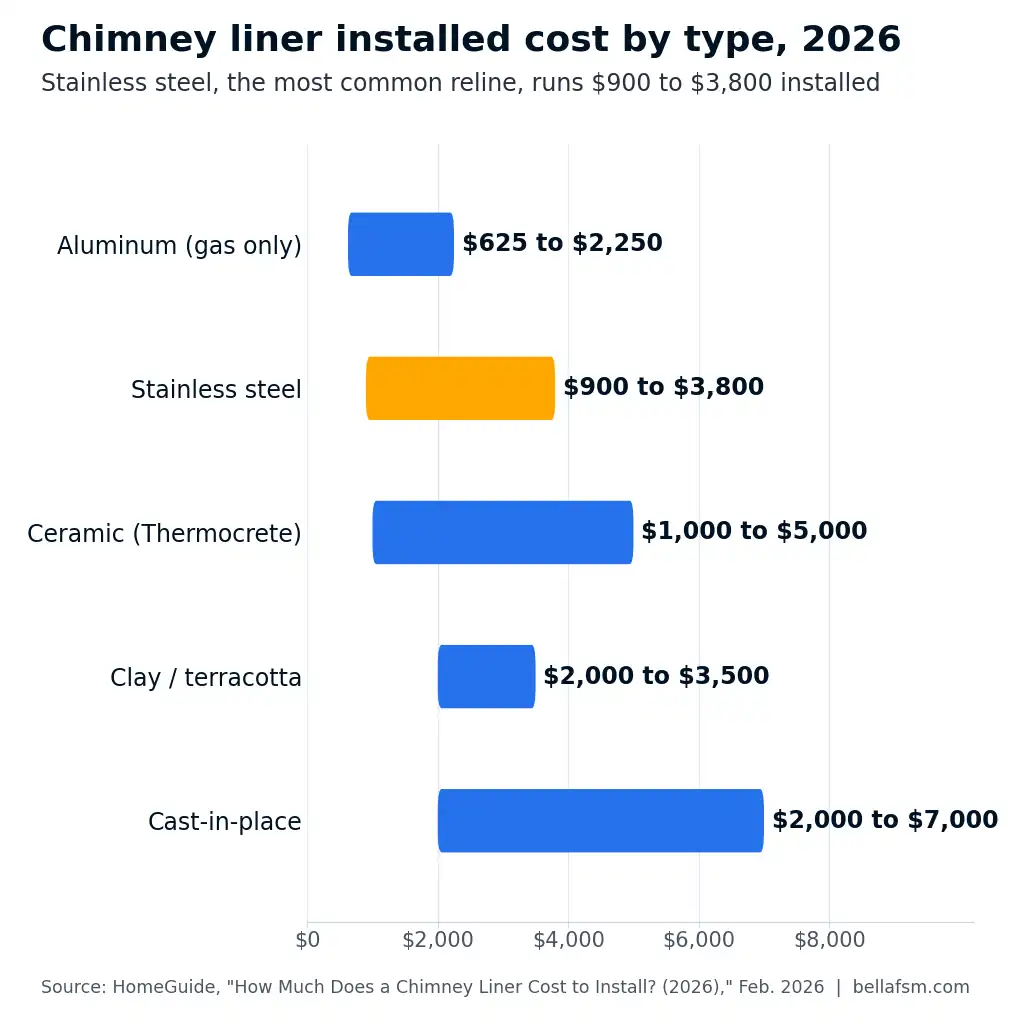
Installed chimney liner cost ranges by liner type, 2026, from HomeGuide. Chart may be embedded with attribution to Bella FSM and a link to this page.
Takeaway: give liner, insulation, removal, cap and permit their own price book lines so no quote goes out short.
How do you turn a Level 2 finding into a signed reline?
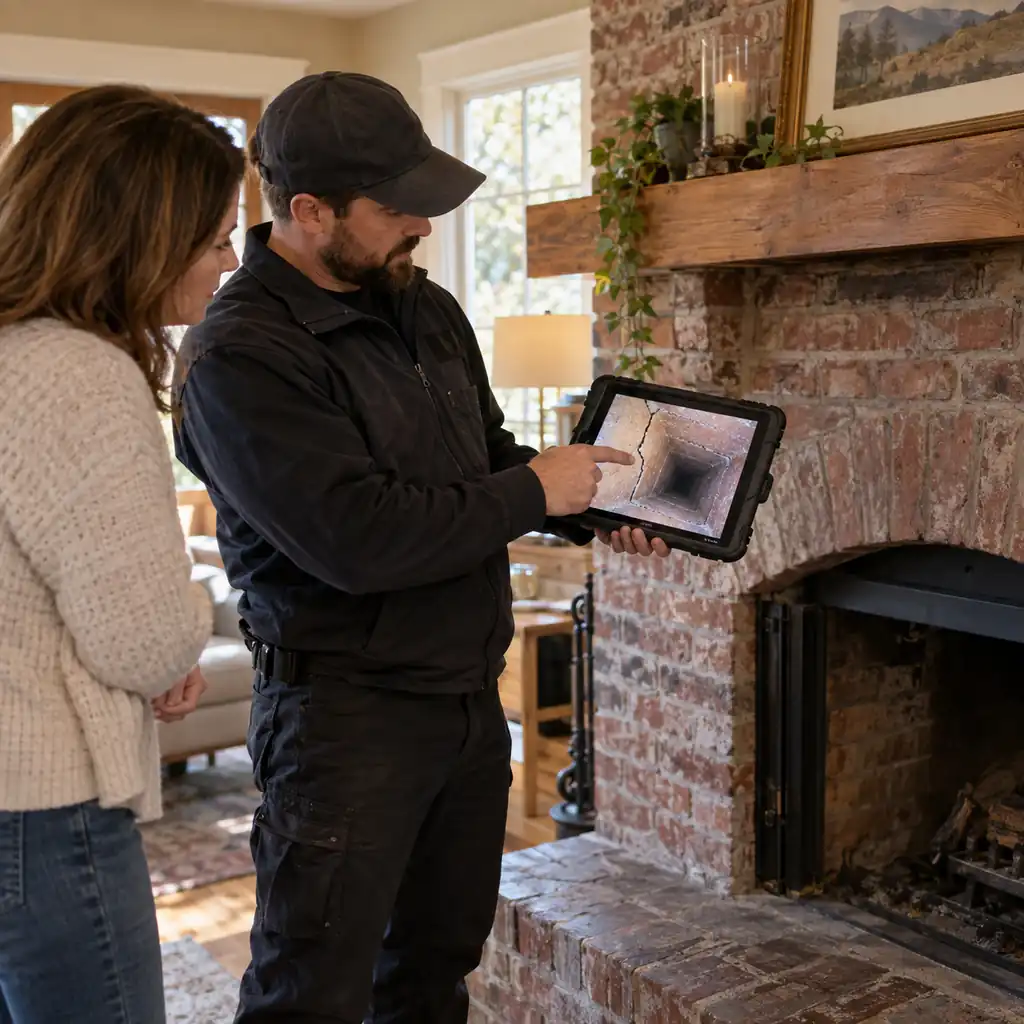
You turn a Level 2 finding into a signed reline by showing the homeowner what the camera saw, explaining in plain words what it means for their household, and handing over a priced proposal the same day. NFPA 211 calls for a Level 2 inspection when a property changes hands, after a chimney fire, and when the appliance or fuel type changes, so the finding often arrives when the owner is already paying attention. That attention fades fast. A homeowner who hears "we'll send a quote" at 3 p.m. and gets a PDF four days later has had time to call two competitors and talk themselves out of it. HomeGuide also warns homeowners about inspectors who claim a full reline is needed when it isn't. Your evidence has to be clear enough to beat that suspicion, which means footage, plain language and a written price, delivered while the tech is still fresh in the homeowner's mind.
Capture evidence the homeowner can follow
Save the camera clip, not just a still, and note the footage marker for each crack or open joint. Pair it with one exterior photo so the owner can place the problem in the house. Filing the clip and written finding in chimney sweep crm software lets the office, the tech and next year's sweep all see the same history.
Present two options and follow up
Offer two sound fixes, such as an insulated stainless liner versus cast-in-place for a masonry chimney with structural wear. Two options turn "should I?" into "which one?" Keep severity language consistent across techs; the findings scale in our guide to real estate chimney inspections carries straight over. Follow up at 3 and 10 days. If the owner declines, get the decline signed on the proposal. That protects you if the flue fails later and keeps the job in your spring pipeline.
Takeaway: get the proposal in front of the owner while the finding is still fresh.
Ready to take your business further?
Start using Bella FSM free and work smarter.
Job-costing a stainless reline: a worked example
Here is one way to price a 30-foot insulated stainless reline for a wood stove insert. Unit prices sit inside HomeGuide's 2026 ranges. The kit, crew rate and disposal lines are assumptions to replace with your own numbers.
| Cost line | Basis | Cost |
|---|---|---|
| Flexible stainless liner | 30 ft at $40 per ft | $1,200 |
| Liner insulation wrap | 30 ft at $10 per ft | $300 |
| Top plate, cap and connector | Illustrative kit cost | $250 |
| Crew labor | 2 techs x 6 hours at $45 loaded | $540 |
| Permit | Local fee | $125 |
| Truck, fuel and disposal | Illustrative | $60 |
| Total job cost | $2,475 | |
| Price at 40% gross margin | $2,475 / (1 - 0.40) | $4,125 |
Source: Bella FSM worked calculation, 2026. Liner, insulation and permit unit prices from HomeGuide's February 2026 chimney liner cost guide; kit, labor rate and disposal figures are illustrative assumptions.
The formula to use on every proposal
Price equals total job cost divided by one minus your target gross margin. A 40% markup on $2,475 gives only $3,465, a 28.6% margin, and leaves $660 on the roof. The $4,125 result sits above HomeGuide's $3,800 top for stainless alone, which is expected once insulation and a permit are included; HomeGuide's full cost-factor table runs to $7,000. At the $275 national average sweep price, this one job equals 15 cleanings.
Actual costs drift on every job, from a longer liner than planned to an extra roof bracket. Logging footage and fittings per job in a field service inventory management system shows where estimates run short and when to reorder.
When the install is done, bill it that day with the completion photos attached. Sending the invoice from chimney sweep invoicing software with a payment link keeps a $4,000 receivable from sitting open for a month.
Takeaway: price from job cost and target margin, then compare estimate to actuals after every install.
When should you schedule reline installs?
Schedule reline installs outside the fall sweep rush whenever the homeowner can safely wait, and book them the week of the finding when they can't. HomeGuide puts a typical liner install at 4 to 8 hours, so each reline takes a two-person crew off the sweep board for most of a day. In peak season, that one install can push out three or four cleanings customers booked weeks ago. The fix is to sort findings by urgency. A cracked liner serving a stove the family heats with in January is a do-not-use condition and goes on the calendar now, even on a Saturday. Hairline mortar wear on a fireplace used twice a year can be sold in October and installed in March. Put the install date on the proposal so the deferral reads as a plan, not neglect. Spring installs also keep crews busy in months that are usually thin.
Book each reline as a full-day, two-tech job rather than a long sweep. Setting up chimney sweep scheduling software to block both techs together keeps the office from filling their afternoon with cleanings they can't reach.
Deferred relines are also the best off-season filler you have. The capacity planning in our chimney sweep busy season playbook treats them as the spring pipeline.
Takeaway: urgent flues go on the calendar now; everything else becomes a dated spring install.
Frequently Asked Questions
Make chimney relining jobs a planned service line
Chimney relining jobs already show up on your camera every week. Winning them comes down to speed and records: clear footage, two priced options, a signed decline when the answer is no, and an install date that fits the crew calendar. Price from cost and margin, not habit. To keep findings, proposals, crew days and invoices in one place, start a free trial of Bella FSM and set up your reline workflow before spring.
Ready to grow your business?
Try Bella FSM free and simplify your work.