
Grow Your Business
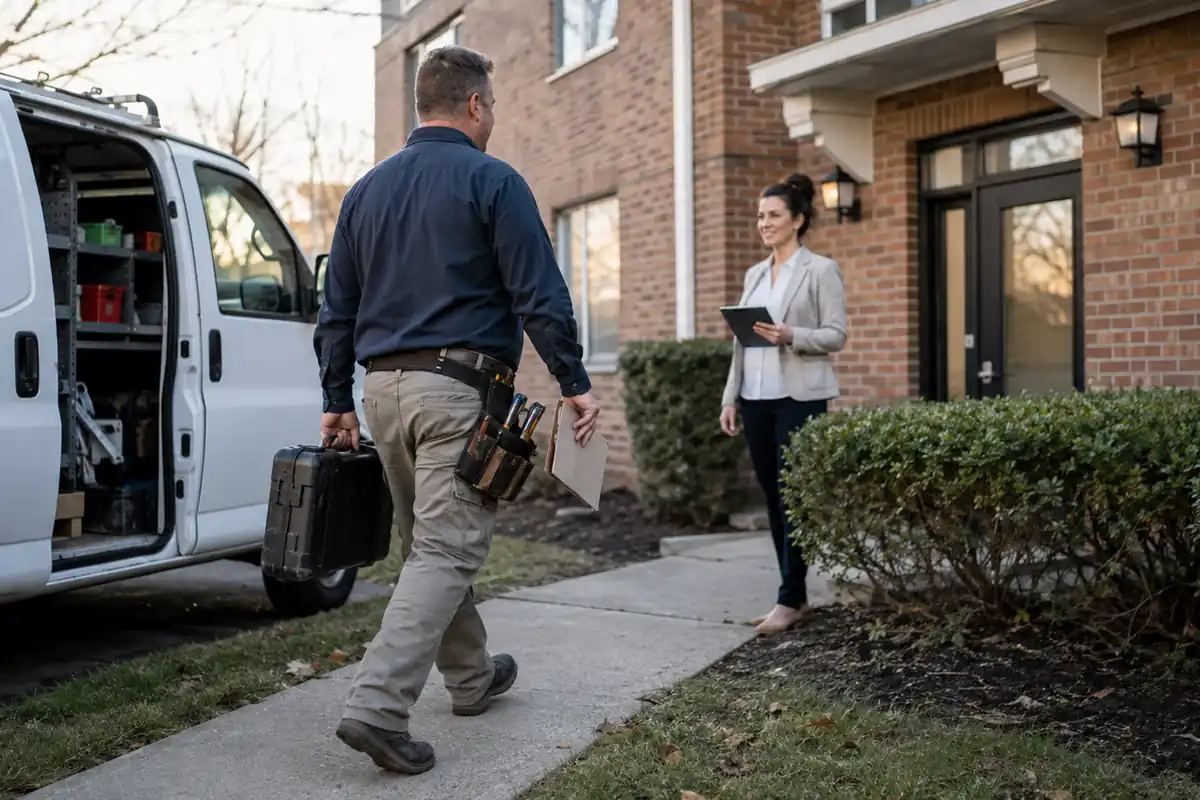
A property manager with 220 doors just lost her regular repair vendor. She needs someone this week: a leaking supply line in one unit, three make-ready punch lists, a fence gate that will not latch. If she can reach you, and your insurance paperwork is ready, that one call can turn into years of steady work. Handyman property management contracts are the most dependable revenue a one-truck or two-truck operation can land, but they run on different rules than homeowner jobs. You bid against rate sheets, wait on net-30 payments, and answer to work orders instead of phone calls. This guide covers how to win the contract and run it profitably with handyman software built for portfolio work.
Why property managers are worth chasing
A property management contract is a standing vendor agreement: the management company sends you repair and turnover work orders across its portfolio, and you bill an agreed rate instead of quoting every job from scratch. The customer pool is deep. The United States has about 304,000 property management businesses, roughly 238,000 of them residential, serving a market of just over 45 million rented homes, according to iPropertyManagement's 2026 industry statistics compilation. Every one of those companies needs somebody to handle the small tickets that plumbers and electricians will not drive across town for: a sticking door, a broken blind, a wobbly ceiling fan. Managers do not want to hunt down a new vendor for each ticket. They want one dependable generalist who answers the phone, documents the work with photos, and invoices cleanly. Become that vendor and the contract tends to renew itself.
The relationship compounds, too. One manager often controls dozens or hundreds of units, and management companies talk to each other. Keep every contact, property address, gate code, and unit note in handyman crm software from the first walkthrough on. Six months in, you will be bidding repairs on units you have already visited, and that job history is what makes your quotes fast and accurate.
What do handyman property management contracts actually pay?
Start from retail pricing, then negotiate from strength. HomeAdvisor's 2026 True Cost Guide puts standard handyman rates at $60 to $125 per hour plus materials, with the average project at $390 and most jobs landing between $165 and $615. Property managers know these numbers. What they buy with a contract is priority access and predictable billing, not a bargain-bin hourly rate.
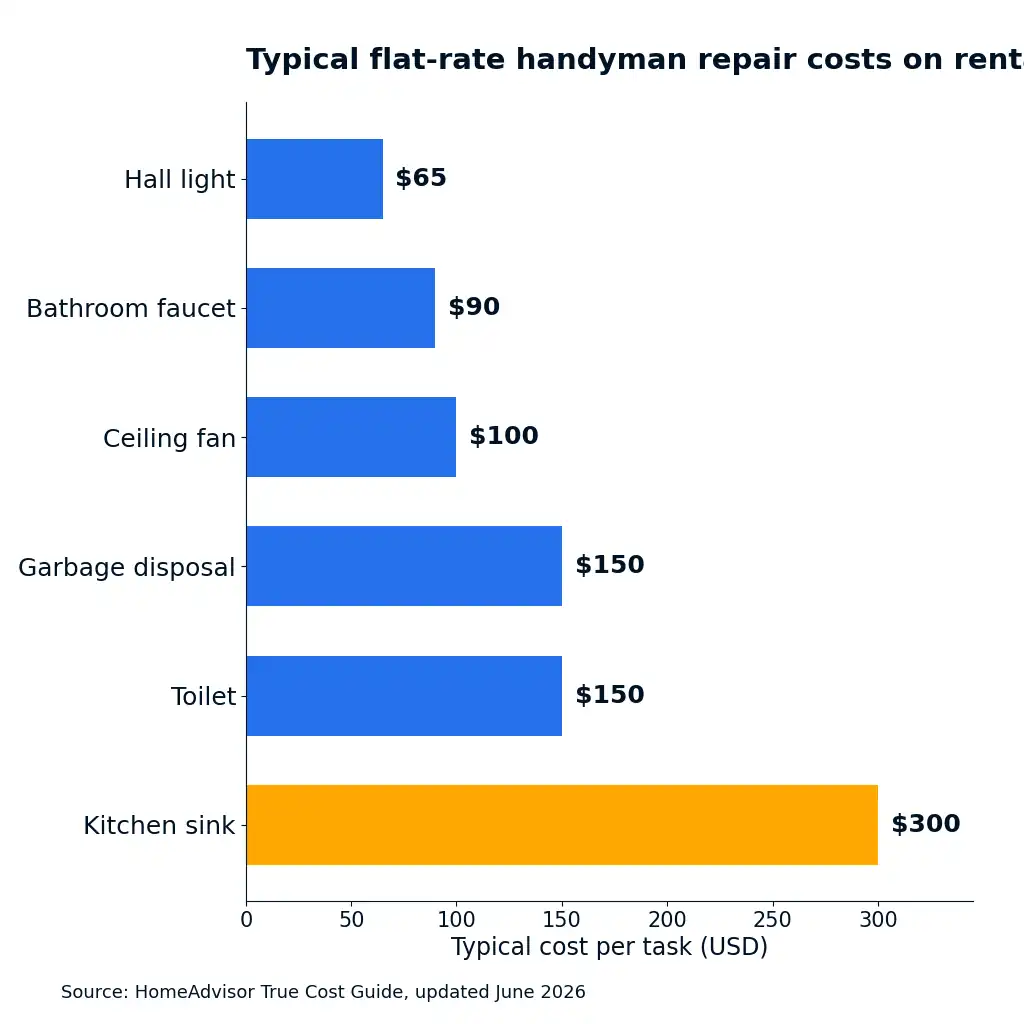
Most agreements combine an hourly rate locked for the contract term with flat prices on repeat tasks. Flat pricing works because turnover repairs repeat constantly across a portfolio. The same HomeAdvisor guide prices a hall light at $65, a bathroom faucet at $90, a ceiling fan at $100, a garbage disposal at $150, a toilet at $150, and a kitchen sink at $300. Build your rate sheet around benchmarks like these and you can quote a make-ready in minutes instead of driving out first.
Two contract terms matter more than the rate itself. A not-to-exceed limit (NTE) is the dollar ceiling you can bill on a work order without extra approval, typically a few hundred dollars on residential tickets. And nearly every management company pays on net-30 terms, meaning your invoice is due 30 days after submission. Send the invoice the same day the work order closes through handyman invoicing software with photos attached, because the 30-day clock starts at submission, not at job completion.
How do you land your first property management contract?
You land the first contract by looking like a vendor before anyone asks. Assemble a vendor packet, pitch a free property walkthrough instead of pitching yourself, and start with small independent management companies rather than national operators. Managers rarely wake up planning to switch vendors; they switch the week their current handyman misses two work orders in a row. Your job is to be the obvious replacement sitting in their inbox when that week arrives. Email ten local management companies your packet, follow up by phone within three days, and offer to walk one property at no charge. Most will say no. One or two will file your packet, and the first callback usually comes within a quarter. A single yes is enough, because one management company can fill more of your calendar than fifty homeowner leads.
Build the vendor packet first
A vendor packet is one PDF with your certificate of insurance, W-9, license details where your state requires them, three references, and your rate sheet. Managers cannot onboard you without the paperwork, so having it ready is itself a selling point. Name the management company as an additional insured on your policy when they ask; their asset managers usually require it.
Pitch the walkthrough, not yourself
A free walkthrough of one property, delivered as a one-page report with photos and flat-price fixes, beats any brochure. It shows the manager exactly how you document work, and it hands them a small, low-risk way to try you out. Quote the report items from your rate sheet and close the first three work orders fast.
Start with small independent companies
National single-family operators route everything through vendor portals and take months to onboard. A local shop managing a few hundred doors can approve you in a week, and the owner is often the person reading your email. When a manager asks how you track jobs, demo your handyman business software during the pitch; showing a real work order with photos and history answers the reliability question better than references do.
Ready to level up your business?
Try Bella FSM free and transform the way you work.
Set up your operation for portfolio work
Portfolio work arrives as tickets, so run it on tickets. Work order management software gives every request a number, a status, a photo trail, and a paper history you can pull up when a manager disputes a charge eight months later. Managers live inside their own ticket systems all day, and a vendor who works the same way is easy to keep.
Route density is where the margin hides. Batch non-urgent tickets by property and knock out five small jobs in one visit instead of five drive-outs. The same thinking behind handyman job stacking applies here, just concentrated on buildings you visit every month.
You need to see the density before you can use it. Handyman scheduling software shows that Tuesday already has two tickets at the same complex, so the third one drops in beside them.
Set response-time expectations in writing. A same-day acknowledgment and a 48-hour site visit for routine tickets is sustainable for a solo operator; promising two-hour emergency response across a whole county is not. Managers prefer honest windows they can relay to tenants.
Invoicing, net-30 terms, and protecting your cash flow
Net-30 changes how you have to think about money. On homeowner jobs you collect the day you finish. On contract work, the job you finish on March 3 pays in early April, and a slow approval chain can stretch it further. The fix is process, not patience. Invoice the day each work order closes, attach before-and-after photos so approval needs no follow-up questions, reference the manager's work order number on every line, and track receivables weekly so a late payer surfaces at day 35 instead of day 60. Handymen who batch invoicing for the end of the month are effectively lending their biggest customer free money for weeks. Keep enough cash on hand to float 45 days of materials and payroll before you take on a large portfolio, because growth on net-30 terms consumes cash before it returns it.
Materials markup belongs in the contract, not in an argument later. A written handling markup on parts, say 10 to 15 percent stated right on your rate sheet, is easy for managers to accept because it is visible and predictable. Run the paper trail through handyman billing software so every invoice ties to a work order, a property, and a photo set.
Ready to take your business further?
Start using Bella FSM free and work smarter.
Mistakes that kill property management relationships
Skipping photo documentation is the fastest way out the door. The manager was not there. Your photos are the only proof the work happened, and one disputed invoice without them can undo a year of goodwill.
Letting one contract swallow your whole calendar is the quieter risk. When a single management company is 80 percent of revenue, a leadership change or an acquisition on their side can gut your business in a month. Keep homeowner work and a second contract in the mix, and use handyman customer management software to keep marketing to your homeowner list even when contract work is heavy.
Sloppy scheduling shows up as tenant complaints, and tenant complaints land on the manager's desk with your name on them. Confirm arrival windows, notify when you are en route, and reschedule proactively when a job runs long. A handyman scheduling app that sends automatic arrival notifications does most of this without you thinking about it. And get every scope in writing before you start, because a verbal "just take care of it" becomes a billing dispute the moment the owner questions the charge.
Frequently Asked Questions
Turn one contract into a portfolio
Handyman property management contracts reward operators who treat them as a system: a vendor packet that opens doors, a rate sheet built on real market numbers, tickets that close with photos, and invoices that go out the same day. None of that requires a bigger truck, just organization and software that keeps up.
Bella FSM puts the work orders, scheduling, customer records, and invoicing for contract work in one place, and it pairs naturally with handyman maintenance plans for your homeowner base, so both sides of the business feed the same calendar. Start with one management company, run it well for two quarters, and ask for a referral. That is how one contract becomes three.
Ready to grow your business?
Try Bella FSM free and simplify your work.