
Grow Your Business
Septic Scheduling Software
Septic scheduling software that builds pumping routes from tank cycles and truck capacity.
Every tank has a pumping interval set by its size and the household on it - and your best days are tight, full routes that don't send a half-full truck across the county. Bella FSM tracks each tank's cycle, clusters the route, and watches truck capacity so the pumping schedule fills itself.
Start Free Trial
Tank-cycle pumping intervals
Capacity-aware truck routing
Real-estate inspection scheduling
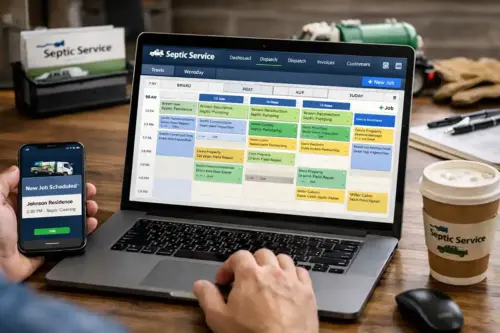
Today's route
9 pump-outs · 1 inspection
Truck load
Near capacity · dump scheduled
Built for septic operators · cycle-based, route-driven work
Why septic service scheduling needs more than a calendar
The reality
The work runs on tanks and miles
- Pump-outs on intervals set by tank size and usage
- Wide rural service areas where routes must be tight
- Real-estate inspection demand that spikes seasonally
- Emergency backups and overflows that can't wait
- Pump-truck capacity that forces a dump-site run
What goes wrong
A flat calendar wastes the truck
- A half-full truck drives across the county for one stop
- Contracted pump-outs slip past their interval
- A backup call buries the planned route with no recovery
- The truck hits capacity with three stops still on the route
- Inspection-season volume overwhelms a paper calendar
With Bella FSM
Scheduling that fills the route
- Pump-outs auto-generated on each tank's real cycle
- Stops clustered geographically for max stops per day
- Capacity tracked so dump runs are planned, not surprises
- Emergency backups slotted around committed pump-outs
- Inspection season absorbed without a scheduling scramble
Tank data · route density · truck loads
Key features of Bella FSM septic scheduling software
Septic revenue comes from full, tight routes built on each tank's pumping cycle. Bella FSM is built for that - generating the recurring pump-outs, clustering the stops, and tracking capacity so trucks aren't running half-empty or hitting a dump-site surprise.
Tank-Cycle Pump Scheduling
Set each tank's interval by size and household usage, and Bella FSM auto-generates the next pump-out as the date approaches - so contracted tanks never slip past their cycle.
Capacity-Aware Routing
A pump truck can only hold so much. Bella FSM tracks gallons against capacity across the route and plans the dump-site run so the truck doesn't fill up with stops still pending.
Geographic Route Density
In a wide rural territory, drive time is the enemy. Cluster pump-outs by proximity so each truck hits the most stops per day instead of crisscrossing the county.
Emergency Backup Dispatch
A sewage backup is an emergency. Flag it urgent, send the nearest truck with room to pump, and reschedule planned stops without losing the day's committed work.
Tank Details on Every Job
Crews arrive with tank size, lid location, last-pump date, and gate codes on the job - so they're not hunting for a buried lid or guessing the gallons before they start.
Mobile App for Crews
Drivers get the route, GPS to rural properties, tank notes, and access codes on their phone, log gallons pumped and tank condition, and sync photos of lids and components back to the office.
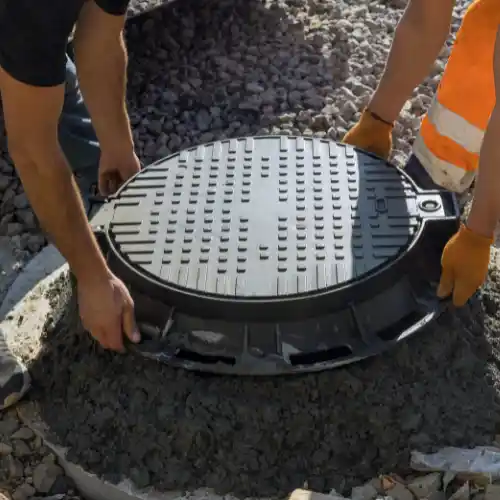
Never past due
Cycle Scheduling · let each tank book the next visit
Cycle-Based Scheduling for Predictable Pumping Routes
A tank on a three-year cycle is reliable revenue - until the date passes because it lived on a spreadsheet. Bella FSM generates the next pump-out automatically from the tank's interval.
- Set intervals by tank size and household usage
- Auto-generate the next pump-out as the date nears
- Track last-pump date and gallons per tank
- Send reminders before each scheduled service
- Never let a contracted tank slip past its cycle

No surprise dump runs
Capacity and Routing · routes the truck can finish
Capacity-aware pump-truck routing and dispatch
Drive time and a full tank are the two things that kill a route day. Bella FSM clusters stops by geography and tracks gallons so the dump run is planned, not a mid-route scramble.
- Cluster pump-outs by proximity for max stops per day
- Track gallons against truck capacity across the route
- Plan dump-site runs before the tank is full
- Sequence the route to cut rural drive time
- Backfill open stops from cancellations automatically
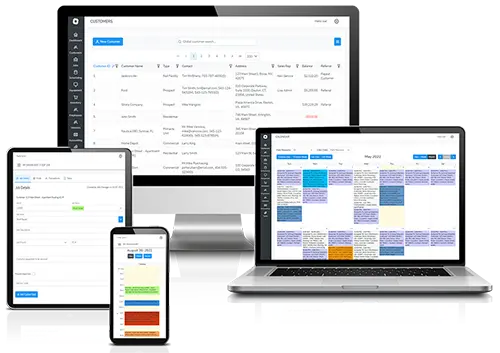
Renews itself
Recurring Contracts · agreements that schedule themselves
Recurring septic pumping contracts and maintenance agreements
Recurring pump-out agreements are the backbone of a septic business. They should populate the calendar on their own cycle so no customer is ever forgotten and no revenue lapses.
- Auto-generate one-, two-, three-, or five-year visits
- Reminders go out before each contracted pump-out
- Track contract status and renewal dates per property
- Group recurring stops geographically for efficiency
- Completed jobs flow into invoicing by gallons pumped
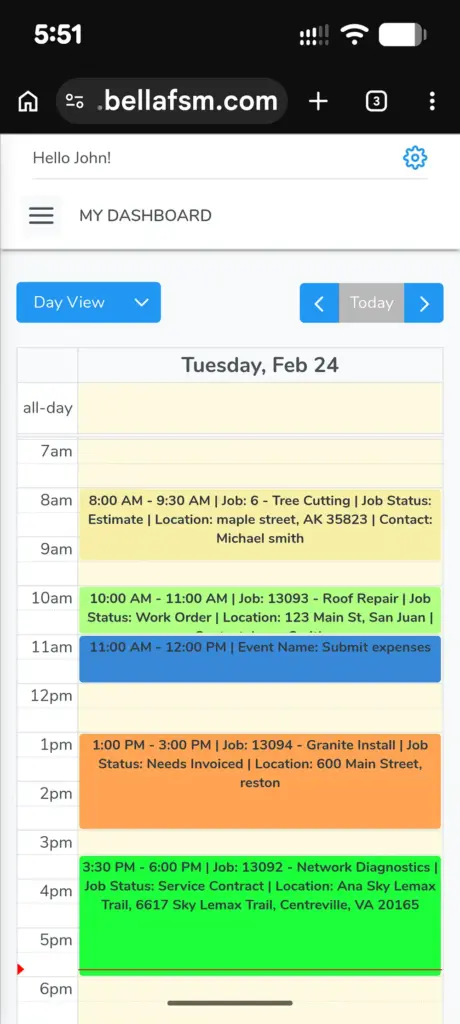
History on every tank
Routes and Day View · every truck full, off the long haul
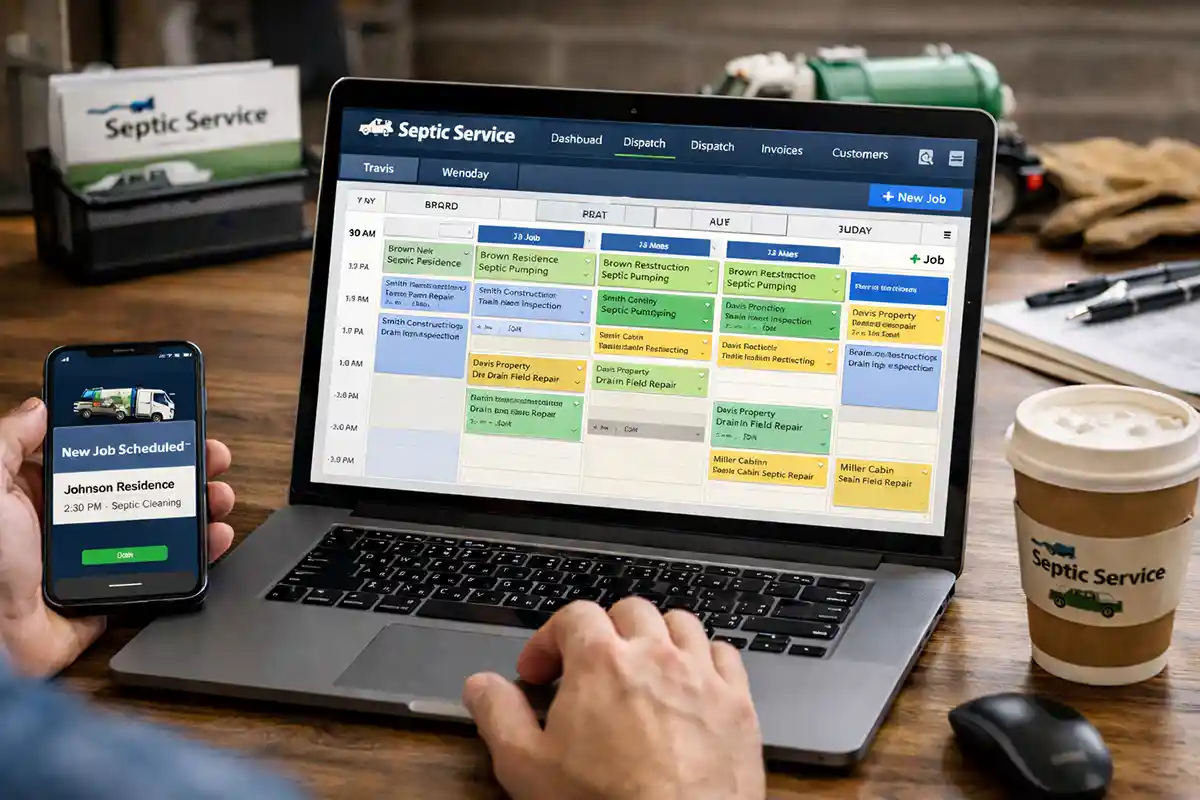
Route board and mobile day view for every pump truck
An empty seat on a route is lost revenue, and a truck crossing the county for one stop is worse. A shared, route-aware board keeps trucks full and the office in the loop.
- See each truck's route, load, and progress in real time
- Balance stops so no truck runs half-empty
- Dispatcher spots room to add a stop or an inspection
- Tank history on mobile - size, lid location, past service
- Open slots from cancellations surface for backfill
No scramble
Inspections and Emergencies · absorb the season and the backup call
Emergency backup dispatch and real-estate inspection scheduling
Real-estate closings spike inspection demand, and a backup call lands without warning. Bella FSM fits both around your route work so neither one wrecks the day.
- Schedule real-estate inspections around committed pump-outs
- Flag backups and overflows as urgent for the nearest truck
- Reschedule planned stops safely to open a slot
- Track inspection results and reports on the job record
- Auto-notify customers whose visit moved
3stops left at capacity
Scheduling Tip · Watch the Load
Track gallons against capacity so the truck doesn't fill up mid-route.
Nothing kills a route day like a full tank with three stops still on it and an hour to the dump site. Watching gallons against truck capacity as the route runs means the dump-site run is planned in - and every stop you committed to still gets pumped today.
Start Free TrialFrequently Asked
Frequently Asked Questions About Septic Service Scheduling Software
What is septic scheduling software?
It is a routing and dispatch tool built for septic pumping and inspection companies. It auto-generates pump-outs on each tank's cycle, clusters stops geographically, tracks gallons against truck capacity, and prioritizes emergency backups - giving septic management software the tank-data structure a paper calendar and a wall map can't provide.
How does it build efficient pump-truck routes?
It clusters pump-outs by proximity so each truck hits the most stops per day instead of crisscrossing a wide rural territory, and it tracks gallons against truck capacity across the route. The dump-site run is planned before the tank is full, and open stops from cancellations backfill automatically - so trucks stay full and drive time stays low.
Can it schedule pump-outs on each tank's cycle?
Yes. You set each tank's interval by size and household usage, and the system auto-generates the next pump-out as the date approaches, tracking last-pump date and gallons per tank. Reminders go out before each visit, so contracted tanks never slip past their cycle and the recurring revenue stays on the calendar.
Can it handle emergency septic backups?
Yes. You flag a backup or overflow as urgent and send the nearest truck that still has room to pump, rescheduling planned stops safely to open a slot. Customers whose visit moved are auto-notified, so a time-critical backup gets a fast response without losing the route work you already committed to.
Does it support recurring pumping contracts?
Yes. Recurring pump-out agreements auto-generate on one-, two-, three-, or five-year cycles with reminders before each contracted visit, and the system tracks contract status and renewal dates per property. Completed jobs flow into invoicing by gallons pumped, so the recurring backbone of your business runs without manual scheduling.
Can customers book septic service online, and is there a mobile app?
Yes. As complete septic management software, Bella FSM offers online booking so a property owner can request service from your website and it lands on the route with the tank's details attached. Drivers work from a mobile app with GPS to rural properties, tank notes, and gallons logging - keeping booking, the office, and the field connected.
Fill every route, miss no tank
Get started with septic scheduling software from Bella FSM
Stop building septic routes off a wall map and a stack of cards. Free 14-day trial. No credit card required. Cancel anytime. Real human support from a team that understands tank cycles, route density, and truck capacity.
What you get on day one
- Tank-cycle pump-out scheduling
- Capacity-aware route building
- Emergency backup dispatch
- Recurring pumping contracts that rebook
- Gallons-pumped logging and tank history
- Mobile app and automated customer reminders