
Grow Your Business
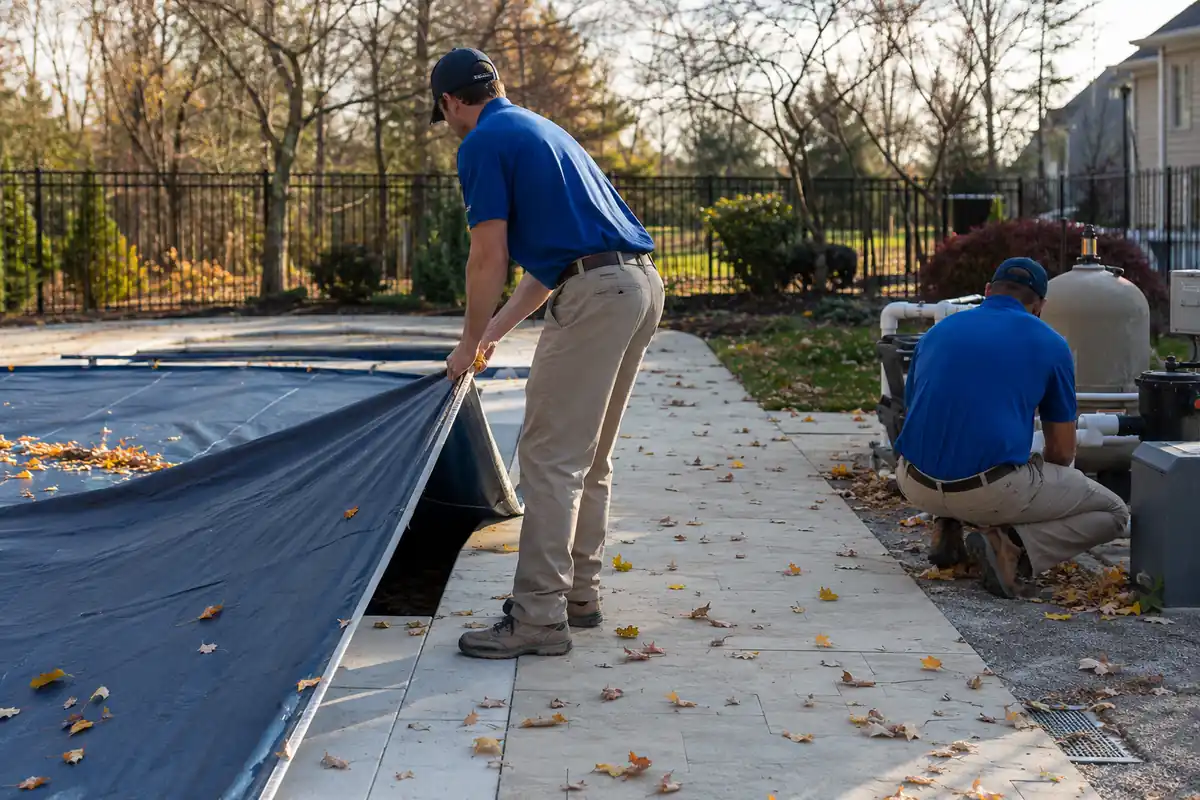
The first cold snap always beats the schedule. It is a Tuesday in late September, the overnight low is forecast at 38 degrees, and forty customers call the same office line asking when their pool is getting closed. Two crews are already booked solid. One tech called out. The heater repair you found last week still has not been quoted. Pool closing season scheduling is the hardest operational problem in this trade because it compresses a large slice of your annual revenue into a six week window that weather can shorten without warning. Weekly route work is predictable. Closings are not. The owners who finish October with clean books plan the season the way an airline plans a flight schedule, and they run it inside pool service software rather than on a whiteboard.
Why Pool Closing Season Scheduling Breaks Down in Late September
Run the arithmetic on your own book and the problem becomes obvious. Say you service 300 accounts and 220 of them need a closing. Most northern markets close between the week after Labor Day and the end of October, which is roughly 33 working days. That is 6.7 closings per day, every day, with zero slack.
Capacity looks fine on paper. A two-person crew can complete four to six standard inground closings in a day, so two crews give you eight to twelve. Then reality arrives. Six days disappear to rain. Four more get eaten by repair discoveries and callbacks from the summer. Your 33 day window is now 23 days, your required pace jumps to 9.6 closings per day, and your real capacity is eight.
That gap is where the season goes wrong. Booking chaos is a symptom of an oversubscribed calendar, not a symptom of bad phone manners. A shared calendar and dependable service scheduling software will not create capacity you never had, but it will show you the shortfall in August instead of the third week of October. Takeaway: calculate your required closings-per-day before you book a single appointment, and compare it honestly against crew capacity.
Build the Calendar Backward From Your First Freeze Date
Most companies build the closing calendar forward from whenever the phone starts ringing. Build it backward instead.
Start with the 50 percent first-frost date for your service area, which NOAA publishes by station. Subtract ten to fourteen days as a safety buffer, because a closing done after a hard freeze is a warranty claim waiting to happen. That gives you the last safe closing day on the calendar. Count backward from there in working days, subtract an honest weather allowance for your region, and you have the true number of slots you can sell.
Then book to 80 percent of that number, not 100 percent. The reserved 20 percent absorbs rain days, equipment failures, and the repairs your techs will inevitably find once the water drops. Owners who sell every slot in September spend October calling customers to move them.
Pricing should follow the calendar. A modest early booking discount in the first two weeks pulls demand forward into your least constrained days, standard pricing carries the peak, and a genuine after-hours or post-frost surcharge protects the tail. Owners running this inside pool service business software can open the booking window on August 1 and watch the fill rate by week rather than guessing. Takeaway: your last safe closing date is a hard constraint, so price and sell the calendar against it.

Batch Closings by Zone Instead of by Who Called First
Drive time is the quietest profit leak in closing season. Six closings clustered in one subdivision with twelve minute hops between stops costs you about 72 minutes of windshield time. The same six spread across a metro area can cost three hours, which is most of a seventh closing you did not get paid for.
The fix is a rule, not a tool: one zone per crew per day. Divide your territory into four to six zones, assign each zone specific days of the week for the whole season, and tell customers which days you are in their neighborhood rather than asking what day they prefer. Most people accept a named day. The ones who insist on a specific date pay a scheduling premium.
Zone batching only works if the office knows what is actually at each pool before the truck rolls. Cartridge, DE, and sand filters take different amounts of time. A heater, an automatic cover, or a spa spillway adds thirty to forty-five minutes each. Storing that equipment history against the account in a field service crm for small business is what lets a dispatcher build a six-stop day that a crew can genuinely finish. Takeaway: assign zones to fixed weekdays for the whole season and let equipment history drive how many stops you put in a day.
Ready to level up your business?
Try Bella FSM free and transform the way you work.
Bill at the Truck Before the Cover Goes On
Closing season is a cash flow event as much as an operations event. Inground pool closings run roughly $250 to $500 depending on region and pool complexity, and above-ground closings run about $150 to $300. Multiply the mid-point by 220 closings and a large share of the year's revenue lands in one quarter.
The trap is timing. If October's work gets invoiced in November and collected in December, you have pushed six to eight weeks of float straight into your slowest season, right when payroll is still running and chemical bills are due. Two habits fix it. Take a deposit of 40 to 50 percent when the appointment is booked, which also cuts no-shows sharply. Then collect the balance on site before the crew leaves.
Add-on work found at the pool deserves the same discipline. Winter filter cleaning, a cracked skimmer, a heater winterization, or a replacement plug all need to be approved, documented, and billed on the same visit. Issuing the invoice from the deck with field service invoicing software removes the office step entirely.
Getting the number right matters as much as collecting it on time. If you are still deciding what closings and add-ons should cost this season, our guide to pricing pool service jobs works through the margin math line by line. Takeaway: deposit at booking, balance at the truck, and no add-on leaves the property unbilled.
Standardize the Closing So Any Crew Can Run It
Seasonal labor is a fact of life in this trade, which means your closing procedure has to survive a tech who has been on the truck for three weeks. Write it down as a checklist and make every step mandatory:
- Water level dropped below the skimmer
- Lines blown clear and plugged
- Pump, filter, and heater fully drained
- Winterizing chemicals added and logged
- Pressure gauge photographed at zero
- Cover secured and photographed
Photos matter more than most owners realize. Every spring brings a handful of customers convinced the liner tore or the cover failed because of something your crew did in October. A timestamped photo set from the closing visit settles that conversation in under a minute and protects a customer relationship you spent years building.
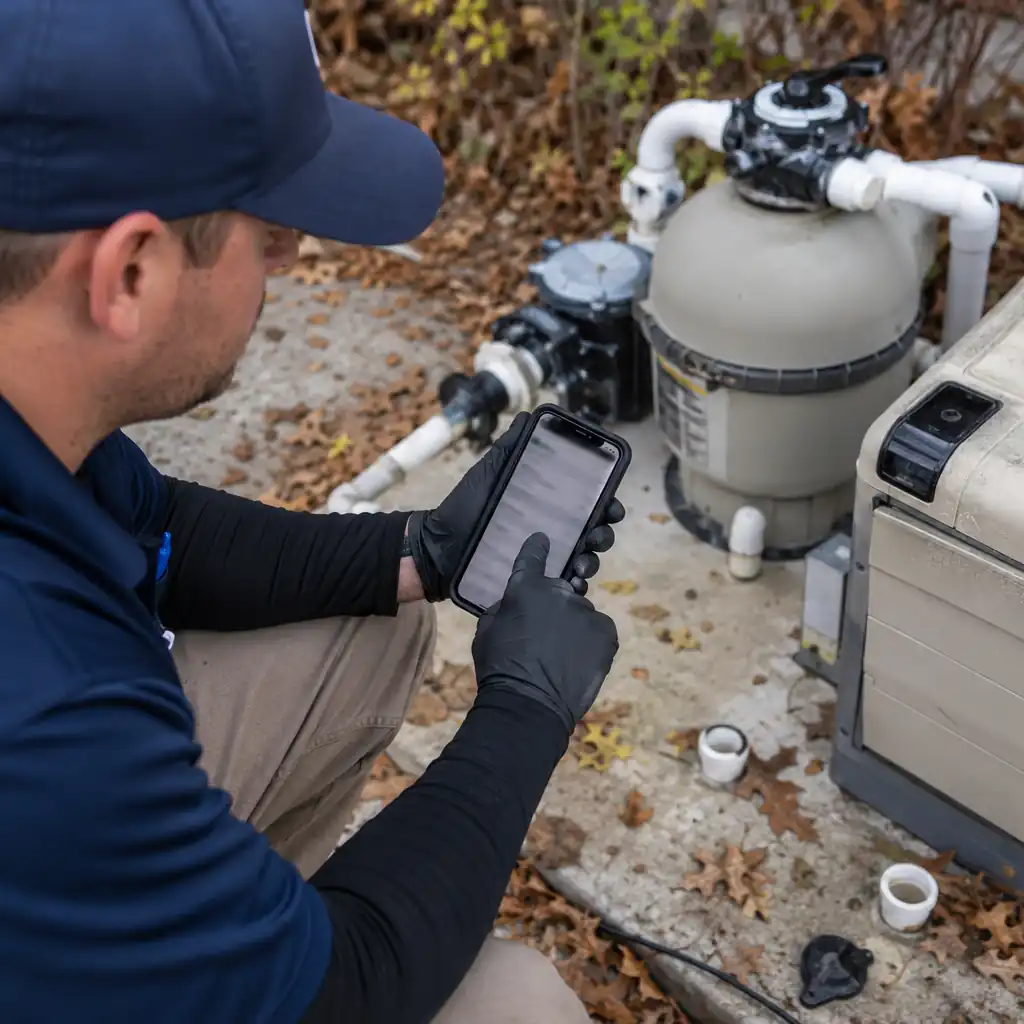
Checklists only get followed when they live where the tech already is, which means on the phone in their pocket. A mobile field service app that forces each step to be checked and each photo to be attached before the job can be closed out turns your procedure into something enforceable.
None of this is new work if your crews already document their weekly stops. The same capture habit behind good digital pool service reports pays off twice as much at closing, because the record has to survive six months of winter before anyone looks at it again. Takeaway: a closing is not complete until the checklist is ticked and the photos are attached.
Ready to take your business further?
Start using Bella FSM free and work smarter.
Track Four Numbers to Know Whether the Season Worked
Most owners judge closing season by how tired they feel in November. Four numbers tell you far more.
| Metric | What it tells you | Healthy range |
|---|---|---|
| Closings per crew-day | Whether your zones and stop counts are realistic | 4 to 6 inground |
| Revenue per crew-day | Whether add-ons are actually being sold | Rising year over year |
| Reschedule rate | Whether you overbooked the calendar | Under 10 percent |
| Attach rate | Percent of closings with paid add-on work | 25 percent or better |
Attach rate is the one most companies never measure, and it is usually the fastest money in the season. Your crew is already standing at the equipment pad with the customer's full attention. A worn cover, a corroded union, or a heater that limped through August is an easy conversation in October and an emergency call in May.
The closing visit is also the best moment of the year to pre-sell next spring's opening. Roughly a quarter of customers will book on the spot if you ask, which fills April before your competitors have started dialing. Capturing those bookings requires technician scheduling software that can hold a dated appointment seven months out without it falling off the board. Takeaway: measure attach rate and pre-booked spring openings, not just how many closings you completed.
Frequently Asked Questions
Turn the Hardest Six Weeks Into Your Most Profitable Ones
Pool closing season scheduling rewards preparation more than hustle. Calculate your real capacity, build the calendar backward from your last safe closing date, sell to 80 percent, batch by zone, bill at the truck, and enforce the checklist with photos. Then measure attach rate and pre-booked spring openings so next year starts from data instead of memory.
Bella FSM was built for route-based trades that live and die by the calendar, and it brings scheduling, customer and equipment history, mobile checklists, and on-site invoicing together in one place. See how our pool service company software handles a compressed season, then start a free trial before your booking window opens and walk into September with a plan instead of a whiteboard.
Ready to grow your business?
Try Bella FSM free and simplify your work.