
Grow Your Business
How to Add a Solar Panel Cleaning Add-On to Your Window Cleaning Business
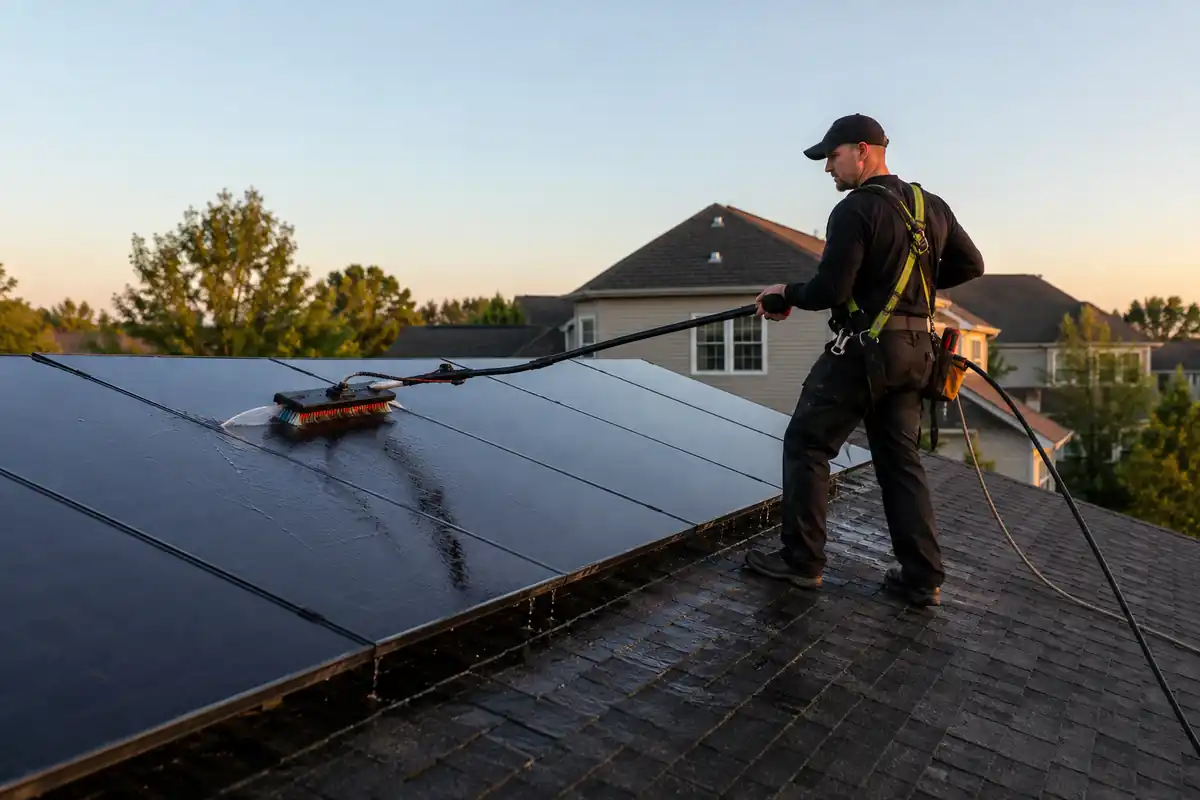
You already own the ladders, the water-fed poles, and the customer list. Every Tuesday your crew drives past two dozen roofs with solar panels quietly losing output under a film of pollen and dust. A solar panel cleaning add-on turns those same driveways into a second invoice, and it does it without buying a new truck or chasing a new market. If you run a window cleaning shop, you are already using window cleaning software to route jobs and send reminders, which means the hardest part of launching a new service, the operational plumbing, is mostly built.
This guide walks through the demand, the startup cost, the pricing, and the scheduling that make solar cleaning a real profit center rather than a novelty upsell you mention once and forget.
Why a Solar Panel Cleaning Add-On Pays Off in 2026
Residential solar keeps getting installed, and every panel that goes up is a panel that will get dirty. The global solar panel cleaning market is on track to reach roughly $1.1 billion by 2027, growing at about 11.4% a year. That growth is not abstract. It shows up as homeowners in your service area who spent $20,000 on a system and do not want it running at 90% because nobody told them the glass needs washing.
The performance argument sells itself. Soiling can cut panel output by up to 25% in dusty or high-pollen conditions, and a typical cleaning restores 5% to 10% of lost production for an average two-story home. When you frame the service as protecting an investment the customer already made, the objection stops being price and starts being scheduling.
The best part for a window cleaner is the overlap. You are trained to work at height, handle glass without scratching it, and deliver a streak-free finish with purified water. Those are the exact skills solar cleaning requires. Manufacturers generally recommend cleaning one to two times a year, and some warranties ask for documented maintenance, so the work naturally repeats. That recurring cadence is the same engine behind a strong window cleaning crm software, and solar cleaning slots right into it.
What It Costs to Launch the Service
You do not need a warehouse of new gear. Most of your window cleaning kit already carries over. The additions are modest and pay back fast.
- Carbon-fiber water-fed pole. If you already run pure-water window cleaning, you may only need longer sections or a roof-safe brush head.
- Deionized (DI) water system. Tap water leaves mineral spots that reduce output and annoy customers. DI or reverse-osmosis water is non-negotiable for panels.
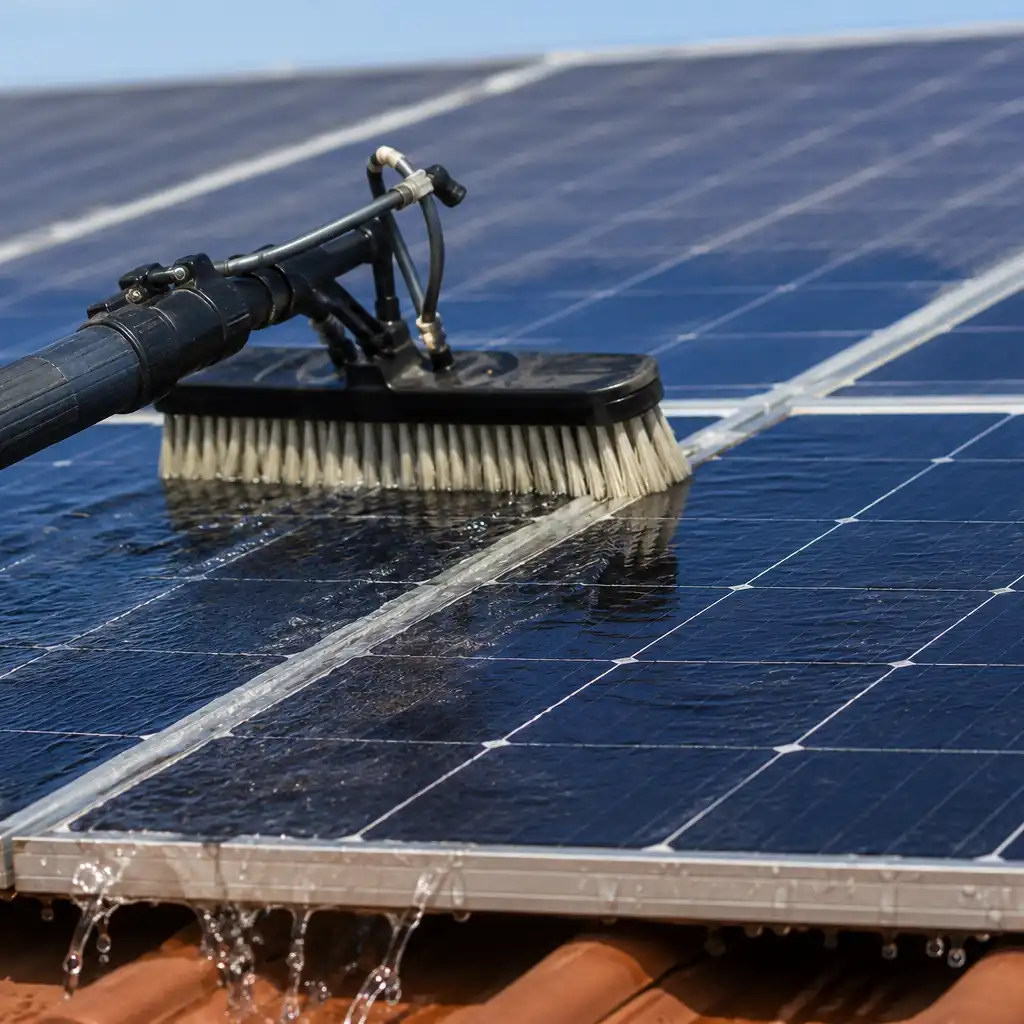
- Soft, non-abrasive brush heads. Anything stiff can scratch the anti-reflective coating and void a warranty.
- Portable tank and pump for homes without a convenient water source.
A professional setup runs about $2,000 to $5,000. If you want to test demand first, a basic starter kit under $600 lets you clean a handful of jobs before committing. At healthy per-visit pricing, the equipment often pays for itself within two to four months of regular work. Because much of this equipment doubles for glass, you can review your current inventory against the best window cleaning tools and buy only the gaps.
One cost people forget is training time. Budget a paid afternoon for your crew to practice on a cooperative customer's roof or a low-slope commercial array. Panels get slick, they get hot, and the electrical side deserves respect. A dry run turns hesitation into confidence before the meter is running on a paid job.
Ready to level up your business?
Try Bella FSM free and transform the way you work.
How to Price a Solar Panel Cleaning Add-On
Two models dominate the market, and most successful operators use a blend. Pick the one that keeps your day profitable and your quote easy to say out loud.
Per-panel pricing is the industry standard for residential work. Rates commonly land between $10 and $20 per panel. A 25-panel home therefore prices at $250 to $500 per cleaning. Commercial arrays, where access is easier and volume is higher, usually run $5 to $12 per panel.
Flat-rate pricing is simpler for the customer and faster for you to quote. A common structure charges $129 to $149 for a residential system up to 32 panels, a job that typically takes 90 minutes to two hours for one technician.
Whichever you choose, set a minimum service charge so a tiny six-panel job still covers your drive time. Price around your actual costs, not a competitor's coupon. The mechanics here mirror what you already do when you set rates in your window cleaning invoicing software, so lean on the estimating instincts you have built over years of glass work. If you are cleaning solar during the same visit as the windows, a small bundle discount protects the total ticket while making the add-on feel like a bonus rather than an upsell.
Building Solar Cleaning Into Your Existing Routes
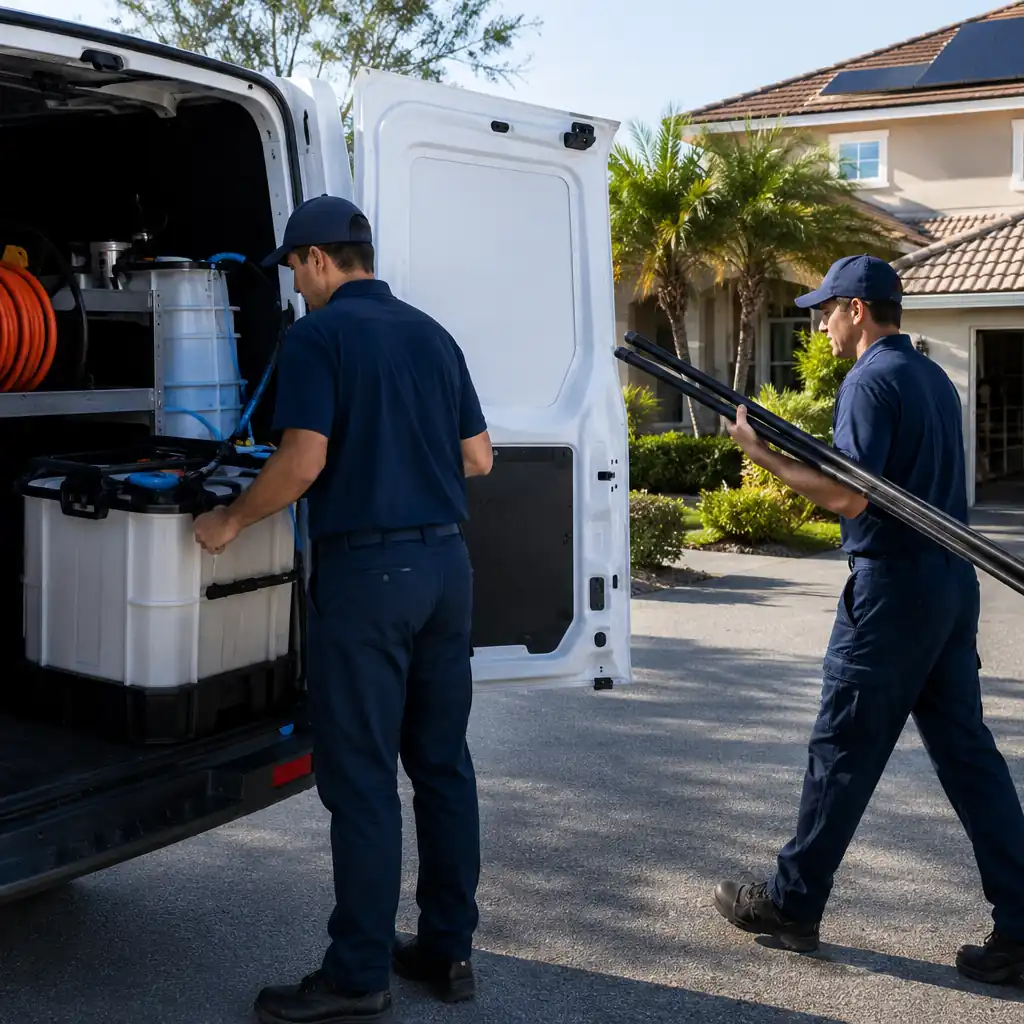
The margin in a solar panel cleaning add-on lives and dies on routing. A single solar job across town rarely justifies the drive. The same job stacked onto a window route you were already running that morning is close to pure profit.
Start by tagging every customer who has visible panels. Field crews can flag them from the driveway, or you can note them at the estimate. Over a season you build a map of solar-equipped homes clustered inside routes you already service. When you dispatch a neighborhood for window cleaning, you offer solar to the tagged homes on that same street and turn one stop into two invoices.
This is where good window cleaning scheduling software earns its keep. Route density is the metric that matters. If you can add three solar jobs to an eight-stop window day without adding a second truck, your revenue per mile climbs and your fuel cost per dollar earned falls. Group solar cleanings by neighborhood and season, then set the recurring visit at six or twelve months in your window cleaning scheduling app so the calendar refills itself.
Track the numbers that prove it works
Watch three figures in the first quarter: attach rate (how many tagged customers say yes), revenue per route hour with solar added versus without, and repeat-booking rate at the six-month mark. If attach rate is low, the problem is usually the pitch or the timing, not the demand. If revenue per hour is flat, your routing is too loose and you are burning the margin in windshield time.
Ready to take your business further?
Start using Bella FSM free and work smarter.
Selling the Add-On to Customers You Already Have
Your warmest leads are the people who already trust you with their glass. They have seen your work, paid your invoice, and let your crew onto their property. Introducing solar cleaning to that list costs almost nothing compared with winning a stranger.
Make the offer concrete. Instead of a vague "we also clean solar," send a short seasonal note: "Your panels are heading into pollen season. A cleaning now can recover output you are paying for anyway." Add it as a checkbox on your booking form and a line on every invoice you send from your window cleaning invoice software. When a technician is already on site, a 20-second mention while pointing at the roof converts better than any email.
For new-customer growth, the same channels that fill your glass calendar will surface solar prospects, so the tactics in your playbook for finding new window cleaning customers apply directly. Solar owners tend to be higher-income, sustainability-minded, and receptive to maintenance plans, which makes them ideal candidates for a recurring agreement rather than a one-off wash.
Mistakes That Sink a Solar Cleaning Add-On
The service is simple, but a few errors can cost you a warranty claim or a bad review. Avoid these.
- Using tap water or a pressure washer. Hard water spots reduce output and high pressure can crack seals or force water into junction boxes. Pure water and a soft brush only.
- Cleaning hot panels at midday. Cold water on hot glass risks thermal shock and streaking. Work early morning or on overcast days.
- Ignoring the electrical reality. You are washing an energized surface. Follow the installer's guidance, never touch damaged panels or exposed wiring, and carry the right insurance.
- Under-scoping the quote. Steep roofs, ground-mount arrays, and heavy bird droppings take longer. Inspect before you commit to a flat rate.
- Treating it as one-and-done. The money is in the repeat. Book the next visit before you leave the driveway.
Document each job with before-and-after photos. They justify your price, protect you against disputes, and give the customer proof that the service was worth it. Stored against the customer record in your window cleaning crm, those photos also make the next year's rebooking conversation effortless.
Frequently Asked Questions
Turn Idle Routes Into a Second Revenue Stream
A solar panel cleaning add-on is one of the rare growth moves that asks almost nothing new of a window cleaning business. You keep your crews, your trucks, and your customers, and you add an invoice to driveways you already visit. Price it around your real costs, stack the jobs into existing routes, and sell the recurring cadence rather than the one-time wash. Bella FSM helps you tag solar customers, build tight routes, automate the seasonal reminders, and track the attach rate that tells you it is working. Explore how Bella FSM's window cleaning business software can turn your next window route into two invoices instead of one.
Ready to grow your business?
Try Bella FSM free and simplify your work.