
Grow Your Business
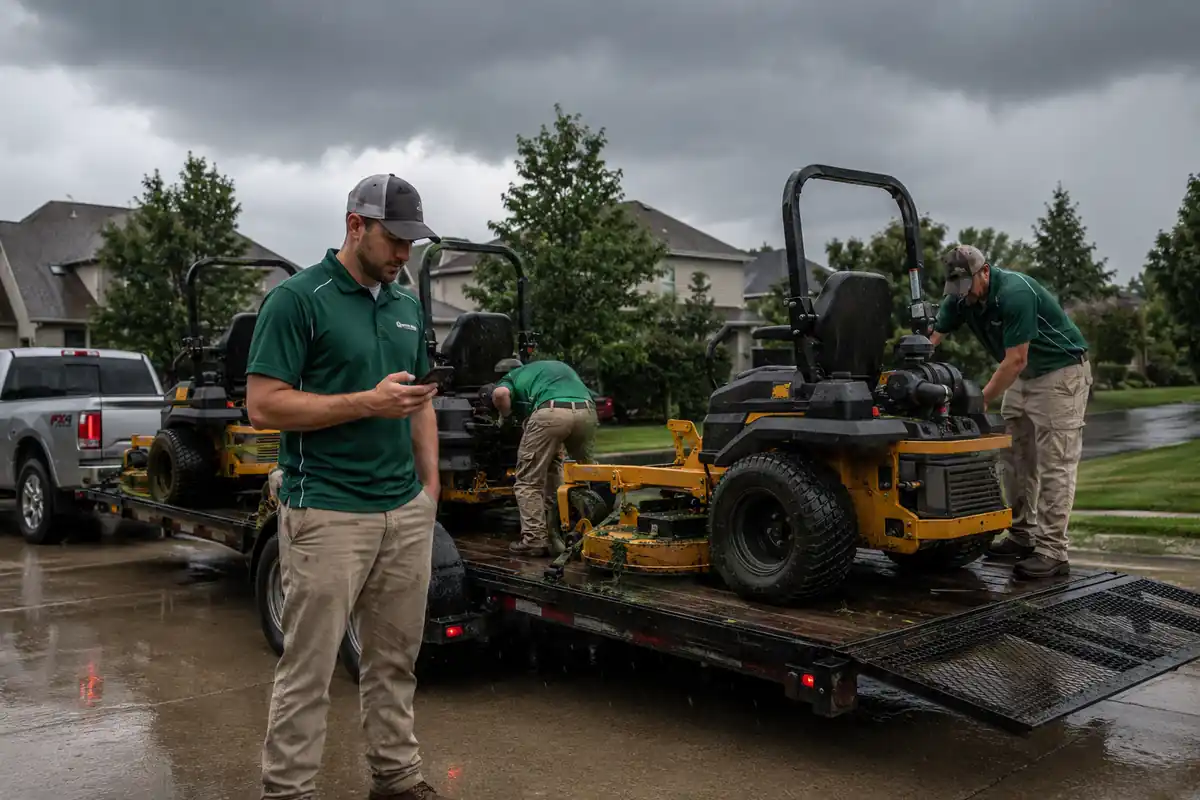
It is 6:40 on a Tuesday in June, the radar is solid green, and three crews are sitting in the yard with mowers still on the trailers. Every minute they wait costs you payroll, and every job you skip today has to land somewhere later this week. This is the part of running a lawn business nobody puts on the brochure. Good lawn care software can take most of the sting out of it, but only if you have a real plan for the weather. Lawn care rain delay scheduling is the difference between a soggy week that quietly bleeds profit and a week where you simply shift the board, tell customers, and keep mowing the second the grass dries.
This guide covers how small and mid-sized lawn operations actually handle rain: the policy you set before the season, how you move a full day in minutes, how you keep customers calm, and what crews do when the sky wins.
Why Rain Delays Quietly Drain Lawn Care Profits
Most owners track fuel, labor, and equipment to the dollar but treat weather as bad luck. It is not luck. In a typical mowing season you will lose 8 to 20 working days to rain depending on your region, and a recent report singled out states like Tennessee where weather disrupts weekly mowing more than almost anywhere else. If your crews bill $1,200 a day, even ten washed-out days is $12,000 that has to be recovered or written off.
The damage is rarely the rain itself. It is the scramble that follows. When a day collapses with no system behind it, three things go wrong at once:
- Crews idle on the clock while someone decides whether to call it. You pay for the indecision.
- Skipped jobs pile onto already full days, so the next dry day runs long, overtime creeps in, and quality slips.
- Customers hear nothing, then call the office annoyed, and your account manager spends the morning apologizing instead of selling.
Strong lawn care rain delay scheduling attacks all three. The goal is not to beat the weather. It is to make the recovery boring and predictable so a rained-out Tuesday costs you a few phone notifications instead of a week of chaos.
Build a Rainy Day Policy Before the Season Starts
The worst time to decide how you handle rain is at 6 a.m. with a crew watching you. Write the rules in February — and load them into your lawn care business software — so the answers are automatic by June. A practical rainy day policy for lawn care covers four questions.
1. What weather actually stops work?
Set a clear trigger. Many operations use a standard like "active rain or more than a quarter inch in the last 12 hours" rather than a vague "if it looks bad." Light drizzle on established turf is often workable; standing water and saturated soil are not, because wet ground ruts under mower weight and tears grass instead of cutting it. If you want a customer-friendly explanation of why crews skip soaked lawns, point clients to your post on whether landscaping companies work in the rain so the office is not re-explaining it on every call.
2. Who makes the call, and by when?
Name one person per region and a cutoff time, usually the night before plus a morning confirmation. A single decision-maker prevents the "I thought you canceled" gaps that strand crews.
3. How do contract and per-cut customers get handled differently?
Under a flat seasonal contract you get paid whether or not a specific visit happens, so skipping a low-priority cut during a wet stretch can be smart. With per-cut billing you do not want to lose the revenue, so those jobs move to the front of the recovery line. Recurring agreements give you the most weather flexibility, which is one reason a service agreement program protects cash flow during a rainy month.
4. What is the makeup window?
Decide in advance whether rained-out jobs slide to the next dry day, the weekend, or the next cycle. Customers tolerate delays far better when the answer is a confirmed date instead of "we will fit you in."

Lawn Care Rain Delay Scheduling: Move a Full Day Fast
This is the operational heart of lawn care rain delay scheduling. When a day washes out, you are not canceling work; you are relocating it. The faster and cleaner that move, the less it costs.
Doing it on a paper route sheet or a whiteboard is where weeks fall apart. You drag jobs around, double-book a crew, forget the customer who pushed twice last week, and lose an hour you did not have. Cloud-based service scheduling software turns the same move into a few taps because the calendar already knows crew capacity, job duration, and customer location.
A clean recovery sequence looks like this:
- Confirm the call early. Check radar the night before and again at your cutoff time. Deciding at 5:30 a.m. beats deciding after crews have driven 20 minutes to a flooded site.
- Bulk-move the day. Push the entire day's stops to the next available slots in one action rather than editing jobs one at a time.
- Rebuild the route, do not just re-date it. Inserting yesterday's stops into today's map without re-sequencing adds drive time fast. The same thinking in our lawn care route optimization guide applies double on recovery days, when you are squeezing extra stops into a full board.
- Rebalance across crews. If one team is buried and another has a light afternoon, shift jobs by region. Real-time dispatch software lets you reassign and notify a tech instantly instead of making five phone calls.
- Protect priority accounts. Commercial properties, HOA contracts, and per-cut jobs go to the top of the makeup list. Flat-rate residential cuts that can wait a few days fill the gaps.
Done well, a rained-out Tuesday becomes a slightly longer Wednesday and Thursday rather than a domino that knocks the whole week sideways.
Ready to level up your business?
Try Bella FSM free and transform the way you work.
Keep Customers Informed the Moment a Visit Moves
Reducing lawn crew downtime is half the job. The other half is communication, and it is where most operators lose goodwill they did not need to lose. Customers almost never get angry that it rained. They get angry when a crew silently no-shows and they are left guessing.
The fix is simple and it should be automatic. The instant you mark a day as a rain delay, every affected customer should get a text or email that says the visit moved, names the new date, and explains why in one friendly line. Automated notifications do three things for you:
- They cut inbound calls. A customer who already got a text rarely phones the office to ask where the crew is.
- They protect your reviews. Proactive updates read as professional; silence reads as flaky.
- They free your office staff to handle sales and scheduling instead of fielding "are you coming today?" calls all morning.
Set the message templates once, before the season, so a wet morning is a two-tap broadcast rather than 60 individual apologies. A short, consistent script ("Rain is keeping our crews off lawns today to avoid turf damage; your service is rescheduled for Thursday") does more for retention than any discount.
Protect Billable Hours: What Crews Do on Rain Days
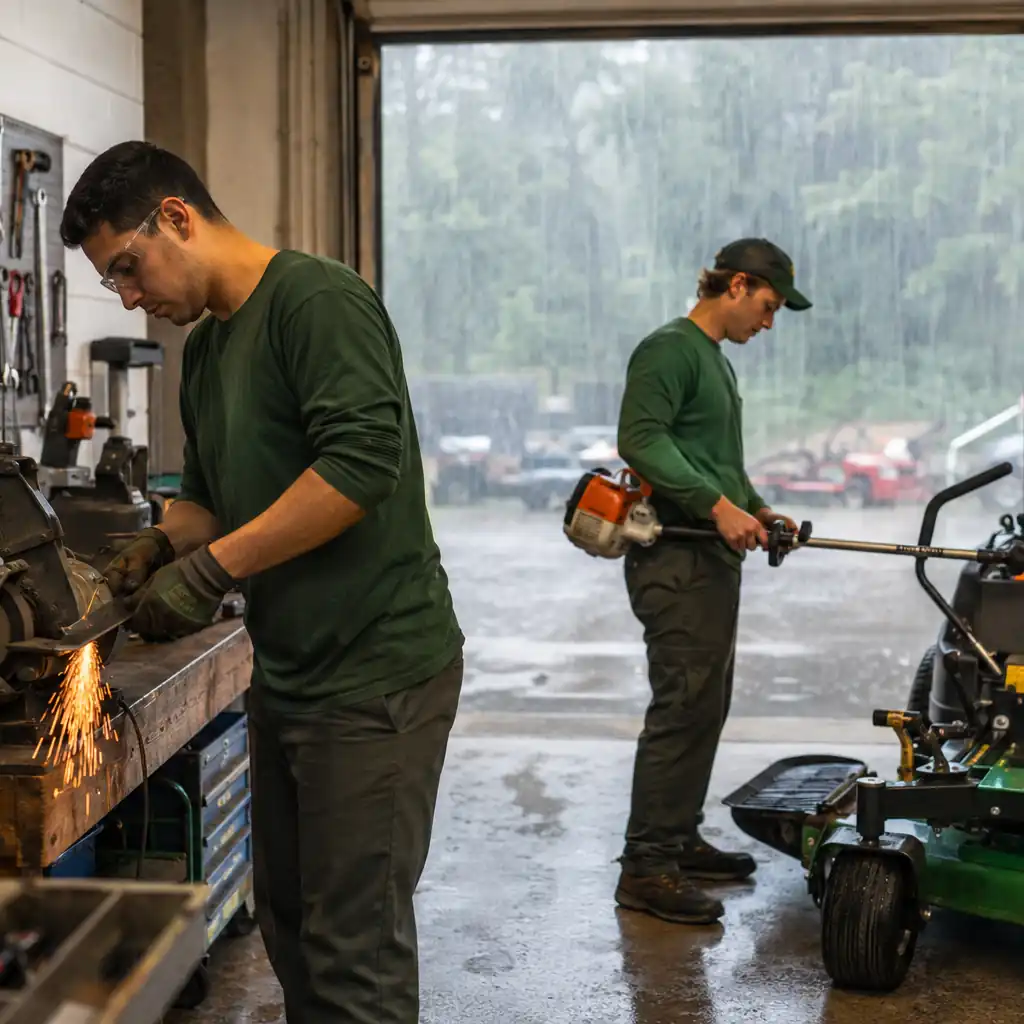
A washed-out morning does not have to be a paid-for nothing. The best operators keep a standing rain-day task list so crews stay productive and you recover some of the labor cost. Useful wet-weather work includes:
- Equipment maintenance: blade sharpening, oil changes, trailer checks, and the small repairs that always get skipped in peak season.
- Shop and inventory work: restocking trucks, organizing chemicals, and counting parts so dry days are not lost to "where is the trimmer line."
- Estimates and sales follow-up: a wet morning is a good time to walk a few properties for quotes or call warm leads.
- Detail and indoor jobs: any covered or low-rain-sensitivity work, such as mulch staging or hardscape prep, that can move up the calendar.
The point is to plan this in advance. A crew told "go home, we will call you" earns nothing and may not answer when the sky clears. A crew with a rain-day checklist keeps your fixed labor cost from becoming a total loss.
Ready to take your business further?
Start using Bella FSM free and work smarter.
Track the Numbers So Rain Stops Surprising You
You cannot manage what you never measure, and weather is no exception. A few simple metrics turn rain from a recurring crisis into a planned-for line item:
- Weather days lost per month: compare against last year so you can staff and route for the pattern, not the surprise.
- Recovery time: how many days it takes to get fully caught up after a washout. If it is climbing, your makeup window is too tight.
- Reschedule-driven overtime: watch whether recovery days are quietly generating expensive overtime.
- Customer churn after delays: if cancellations spike after rainy stretches, your communication, not the weather, is the problem.
When you keep recovery costs from spiraling, the math also affects pricing. If you are not sure your per-cut rate accounts for lost weather days, our lawn care pricing chart is a useful gut check before you set next season's rates.
Frequently Asked Questions
Turn Rainy Weeks Into a Solved Problem
Rain is the one variable you will never control, but the chaos around it is entirely within your control. With a written policy, fast lawn care rain delay scheduling, automatic customer notifications, and a productive rain-day plan, a green radar stops meaning a lost week. It becomes a routine shift of the board that your crews, your customers, and your bank account barely feel.
If you are still moving jobs by hand every time a storm rolls through, see how Bella FSM software for small business helps lawn and landscape teams reschedule, dispatch, and notify customers in minutes, so the next downpour costs you a few taps instead of your whole week.
Ready to grow your business?
Try Bella FSM free and simplify your work.