
Grow Your Business
Post Construction Window Cleaning: How to Bid, Price and Protect the Job
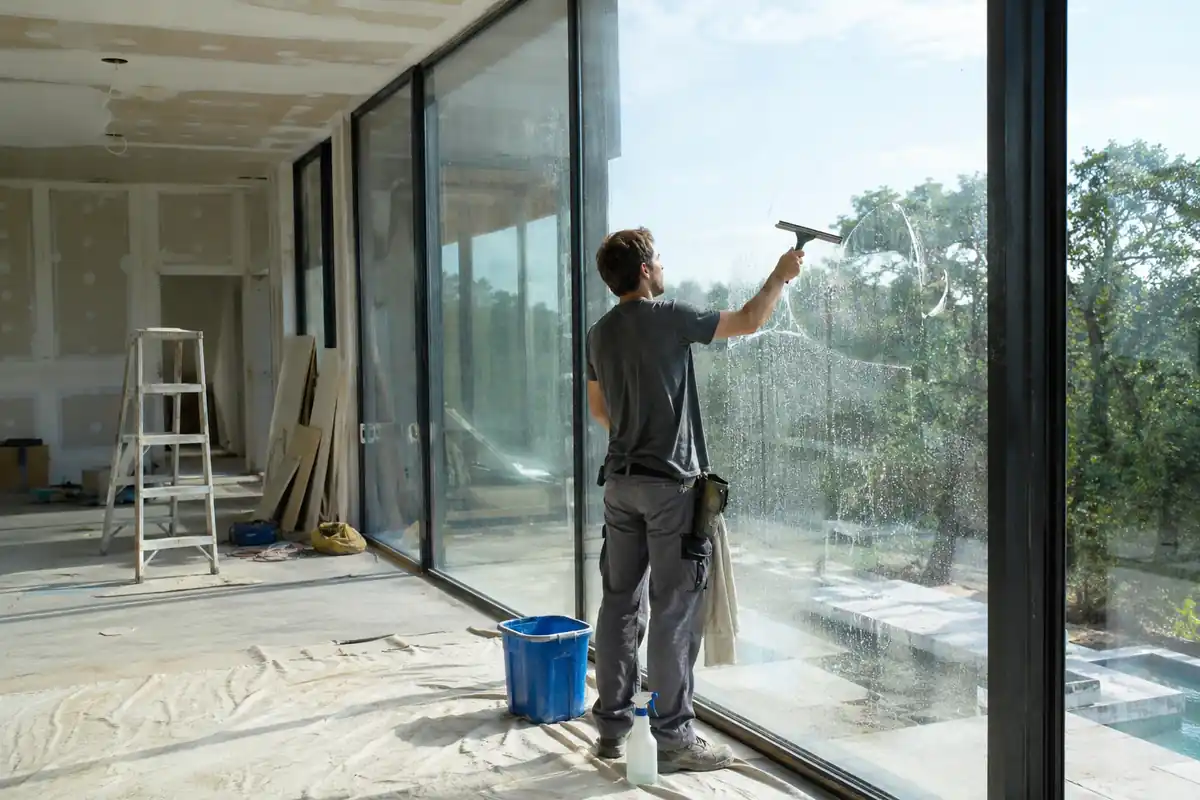
It's Monday morning and a builder texts you: 38 windows, closing on Friday, the painter oversprayed half of them, can you start tomorrow? That is post construction window cleaning, and how you answer decides whether the job pays. Angi's 2026 cost guide (updated October 8, 2026) lists post-construction work at $12 to $20 per window, against $8 to $16 for a regular clean of both sides. That gap looks small, and bidding from it can burn you. Operators in a 2011 WindowCleaner.com forum thread report charging 2 to 3 times their regular price, and this glass can carry a scratch claim that route work rarely does. If you run jobs in window cleaning software, your site notes, photos and sign-offs already have a home.
What makes post construction window cleaning different from a regular clean?
Post construction window cleaning is the first cleaning of new or newly exposed glass after building work, and it differs from routine cleaning because the dirt is stuck on and the glass may already be damaged. Paint overspray, stucco, mortar, silicone, drywall mud and manufacturer stickers all have to come off, and some of that takes a blade. The IWCA Glass Protection Checklist (June 2025) treats debris removal as non-routine work: it tells contractors to run test cleanings, get written approval before proceeding, and leave damaged or scratched glass alone until someone has reviewed it. The risk lands on whoever touched the glass last. The checklist warns that heavy debris can conceal existing defects, so the builder may first see those scratches on the day you finish. Price and paperwork both have to account for that.
Why tempered glass changes the blade decision
Tempered glass can carry fabrication debris, which are tiny particles of dust and glass lodged in the surface during heat treating. WindowCleaner.com's post-construction training module explains the mechanism: the blade itself won't scratch glass, but it pushes those particles across the surface. You usually hear it first, as a gritty or popping sound.
The same module notes that builders can order glass without labels, so treat every pane as tempered until a test says otherwise.
Who buys this work, and where the demand sits
Your buyers are general contractors, custom builders and remodelers. The U.S. Census Bureau's September 2026 construction spending report (released November 2, 2026) puts private nonresidential construction at a $790.6 billion annual rate, up 1.1 percent from August. Private residential fell 5.5 percent to $848.8 billion.
That favors learning commercial bids alongside new homes. A builder who likes your first clean also holds the next phase, so keep each contact, past bid and glass note in window cleaning crm software and start the next quote from real history.
How to walk a construction site before you quote
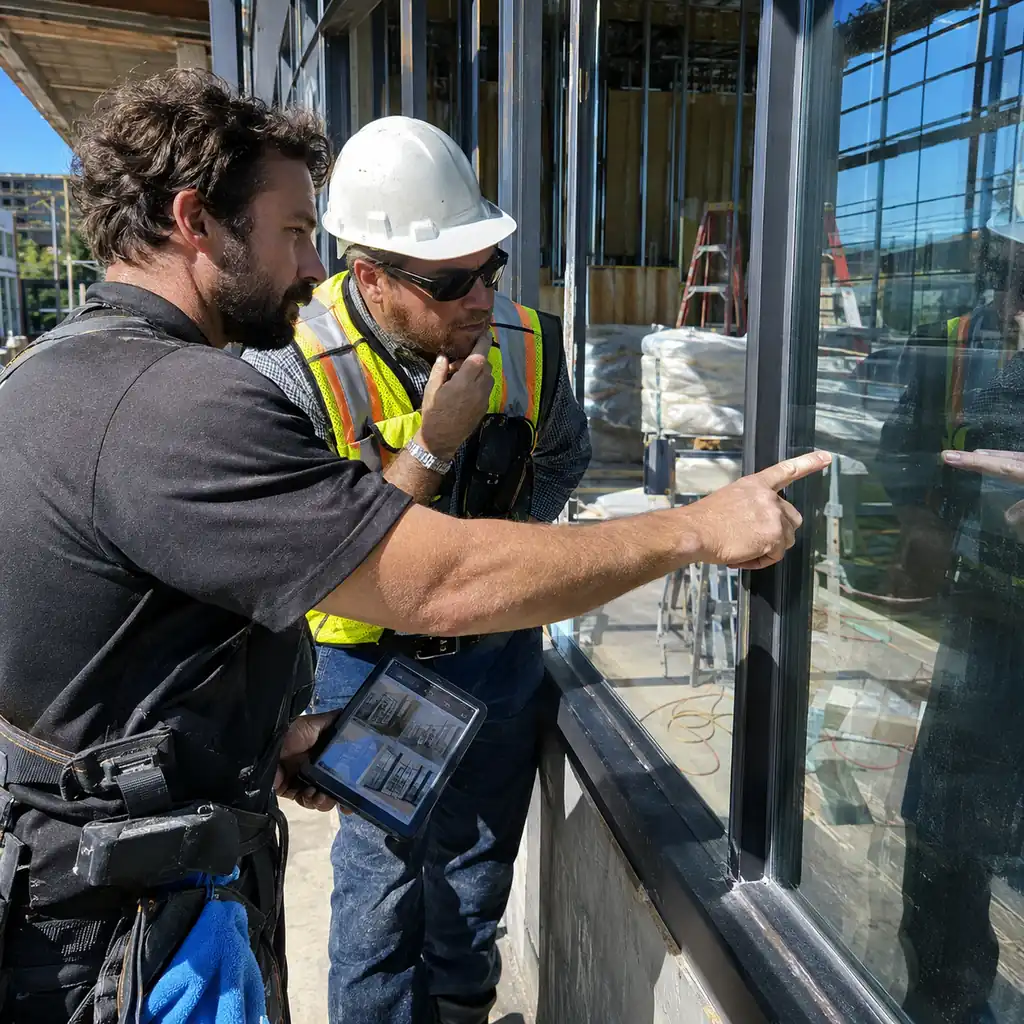
Never price this work from a photo or a window count. A poster on a 2011 WindowCleaner.com forum thread described some windows on these jobs taking barely longer than normal and others taking ten times as long.
What to record at each opening
- Glass type: tempered stamp, tint, or a reflective coating. The GANA bulletin on cleaning architectural glass (01-0300) says surface damage shows more on reflective glass.
- What's on it, including any scrape marks left by another trade.
- Protective film, and how long it has been on. Detroit Sponge's 2024 pricing guide warns that sheeting left on too long adds significant time.
- Access: ladder or lift, ground conditions, and other trades working around you.
Attach those notes and photos to the job in work order management software, so the crew works from the list you bid from.
Test one pane before you commit
GANA's bulletin strongly recommends cleaning a small area or one window, then stopping to examine the surface. It also says direct sunlight is needed to properly evaluate the glass, because light scratches may not show under a gray sky. So a test pane on an overcast afternoon proves very little.
Our guide to the best window cleaning tools covers the everyday gear for that test. Your takeaway: no signed bid until one pane has been cleaned and inspected in good light.
Ready to level up your business?
Try Bella FSM free and transform the way you work.
How much should you charge for a construction window clean?
Start from your regular price, multiply by a debris factor, then check the answer against your site-walk hours. Published consumer guides make that factor look small. Comparing Angi's low ends ($12 against $8) and high ends ($20 against $16) gives 1.5 and 1.25 times a regular clean, and Thumbtack's example of $4 per window rising to $5 after construction (updated March 31, 2026) is also 1.25 times. Operators report much more. In the 2011 WindowCleaner.com thread, one company charged 2 to 3 times its regular price, another charged 2.5 to 3 times for existing customers and up to 5 times for contractors, and the poster who asked had charged about 57 percent extra and said the hours burned them. Those forum figures are old and anecdotal, but they come from people who absorbed the labor. A guide's range has to cover a dusty remodel. Your bid has to cover the site you walked.
Published price benchmarks
| Source | Regular price | Post-construction price | Implied multiple |
|---|---|---|---|
| Angi, per window | $8 to $16 | $12 to $20 | 1.25x to 1.5x |
| Thumbtack example, per window | $4 | $5 | 1.25x |
| FieldCamp, per pane | Not listed | $4 to $6 | Not stated |
| WindowCleaner.com forum operators | Your own rate | Your rate x 2 to 3 | 2x to 3x |
Sources: Angi (updated October 8, 2026), Thumbtack (updated March 31, 2026), FieldCamp (modified October 26, 2026; up to $12 per pane with heavy mineral removal), WindowCleaner.com forum (2011). Multiples calculated by Bella FSM.
A worked bid for a 40-window home
This illustrative example uses a $10 per window regular price for both sides, inside Angi's $8 to $16 range. Our guide on how to price window cleaning covers setting your own base rate.
| Site condition | Multiple | Per window | 40-window bid |
|---|---|---|---|
| Dust and stickers only | 1.25x | $12.50 | $500 |
| Light overspray on some panes | 2x | $20 | $800 |
| Overspray, silicone and tape throughout | 2.5x | $25 | $1,000 |
| Stucco or mortar on unprotected glass | 3x | $30 | $1,200 |
Source: Bella FSM illustrative calculation, 2026. Multiples from the table above; condition labels are examples.
Then run the time check: windows x minutes per window / 60 x your target hourly rate. At 20 minutes per window and $60 an hour (again, example numbers), 40 windows comes to 13.3 hours and $800, which matches the 2x row. If the two answers disagree, trust the hours. Lift rental goes on top.
Quote the base clean, debris removal and equipment as separate lines. When they carry through to window cleaning invoicing software, a surprise painted elevation becomes a new line item for the builder to approve.
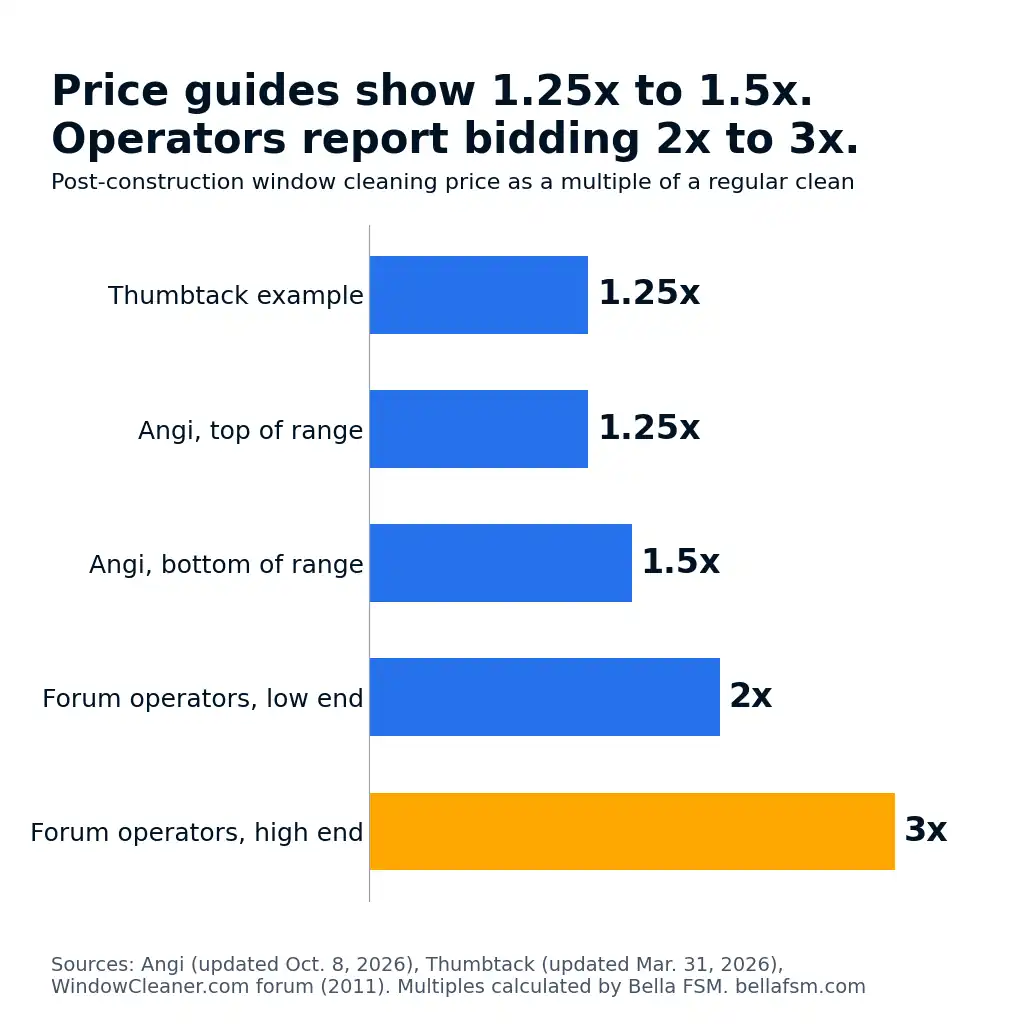
Chart: post-construction price as a multiple of a regular clean. Chart may be embedded with attribution to Bella FSM and a link to this page.
The paperwork that protects you from a scratched-glass claim
A scratched-glass dispute usually comes down to what you documented before the blade touched the glass, and the IWCA Glass Protection Checklist gives you the sequence to follow. It says window cleaners should require liability waivers from the general contractor when removing excessive debris that may conceal existing defects or scratches. It calls for test cleaning and written approval of methods before non-routine work, photos before, during and after the whole process, and defects reported to the contractor in writing. It also asks you to request routine inspections and daily sign-off on acceptable work. On insurance, the IWCA advises asking a qualified agent about General Liability, Care, Custody and Control coverage, and project limits, and it calls that protection essential when non-routine methods are used. If a builder won't sign, decide before you mobilize whether you still want the job.
What the waiver should spell out
Name the building, the glass types, your methods (including blades), and the fact that debris may be hiding existing damage. Have a lawyer in your state review the wording. The same file should hold your fall protection records, since OSHA window cleaning requirements still apply when the glass is on a job site.
A waiver also has limits. Cardinal FG's warning, quoted in a 2022 forum thread, says metal blades will scratch glass, particularly tempered glass, and places that risk on the owner or contractor. In the same thread, one operator says that if glass feels crunchy, the blade stays away. Offer a no-blade scope when you hit that glass.
Run a daily sign-off
A dated photo set and a one-line approval tell Friday's inspector what Monday's crew found. Store signed waivers against the builder's record in your crm for window cleaning so they're findable later.
Ready to take your business further?
Start using Bella FSM free and work smarter.
Scheduling the clean around the builder's closeout
Get on the job before the glass goes in
The IWCA checklist says builders should have an approved window cleaning contractor on board before installation, both for the final clean and for emergency mobilization after a concrete spill. GANA's bulletin says concrete or mortar slurry can be especially damaging and should be washed off as soon as possible. Offer a same-day spill response as part of your bid.
Book last, and protect the rest of your route
Ask for the paint, flooring and punch-list dates, then hold a slot after them. Add a re-clean clause, since trades working behind you can soil finished glass. In window cleaning scheduling software, put the job on the calendar as a tentative block and move it when the builder slips, so your recurring customers don't absorb the delay.
Bill in stages on big jobs
Builders pay on their own cycle, which can sit behind your payroll. On multi-phase work, tie each charge to a signed floor or building in your window cleaning billing software. Your takeaway: treat the date as a moving target, and don't let your cash wait on it.
Frequently Asked Questions
Make post construction window cleaning a repeatable line
Post construction window cleaning pays when you follow the same process every time: walk the site, test a pane in good light, price from a multiple and check it against hours, then get the waiver signed before a blade comes out. Once the builder hands the keys over, offer the owner a spot on a window cleaning maintenance program so the first clean turns into a standing account.
Our window cleaning business software ties your site photos, line-item quotes and invoices to the same job.
With commercial window cleaning scheduling software, you can move a builder's date without disturbing your route. Start a free trial and run your next construction bid through it.
Ready to grow your business?
Try Bella FSM free and simplify your work.